- Tel: +86-18852916580
- Suzhou CERS Commercial Equipment Co., Ltd.
- Email: [email protected]
- Tel: +86-18852916580
- Suzhou CERS Commercial Equipment Co., Ltd.
- Email: [email protected]


 Español
  عربى
عربى  Deutsch


Manual Replenishment vs Gravity-Fed Shelf: How Shelf Management Reduces Labor and OOS
Content
Three weeks after opening a 1,200-square-meter grocery store, the store manager noticed a familiar problem: 40% of restocking time was spent on shelves that were half-full, not empty. The stockroom had product. The selling face did not. The reason was simple — staff were busy refilling the same spots all day while the back rows of each shelf remained untouched. This is the exact problem a shelf management module is designed to solve. By combining gravity-fed shelf behavior with dividers, hooks, and guardrails, a store can keep its front rows filled and reduce both labor cost and out-of-stock events at the same time.
What Manual Replenishment Actually Costs a Retail Store
Manual replenishment is not a one-time task. It is a daily cycle of checking, pulling, rotating, and straightening products. A typical supermarket employee spends 10 to 15 minutes per aisle every day just correcting front-facing order and checking stock levels. For a store with 20 aisles, that is 3 to 5 hours of labor per day before any actual stocking begins.
The cost shows up in three measurable areas:
- Labor overrun: Wages spent on observing shelf gaps rather than moving goods. This is pure overhead because the shelf state does not remain fixed even after the check is completed.
- Out-of-stock events: When staff are busy elsewhere, an empty facing is a permanent loss at the point of sale. A single missed SKU on a high-traffic shelf can cost a supermarket thousands of dollars per month in unfulfilled demand.
- Inventory distortion: Slow-moving items stack up at the back of the shelf while fast movers are always out. Staff often do not notice this because the shelf front looks acceptable.
Manual replenishment also creates a second-order problem: the restock process itself disrupts shopping. When an employee restocks during business hours, the aisle is blocked, products are displaced, and the shelf often looks worse than before. This affects the store's perceived quality without any measurable inventory gain.
Retail industry benchmarks often recommend an out-of-stock target below 4%, but many stores without a structured shelf system run at 8 to 12%. The difference between these two ranges is frequently the shelf module itself.
The Gravity-Fed Shelf Difference: How It Works
A gravity-fed shelf uses a sloped track or roller surface. When the customer takes the front unit, the item behind slides into the front position automatically. This is not a complicated mechanism — it is a simple physical principle that has been used in retail for decades. But it produces a constant, full facing without staff intervention.
The operating principle is straightforward. The shelf surface is angled 10 to 15 degrees or fitted with roller channels. Products move by their own weight. Dividers keep each SKU lane isolated, so large and small products do not mix. Because the front is always occupied, the oldest product sells first — a natural First-In-First-Out system. When the front row becomes visibly empty, that is a stock signal, not a hidden problem.
Consider a 40 cm deep shelf holding a single row of shampoo bottles. With manual replenishment, the employee pulls forward eight bottles from the back, aligns the caps, and repeats this three times per day. With a gravity-fed module, the same shelf is angled slightly. When a customer takes a bottle, the next one slides forward using the weight of the remaining products. The shelf looks aligned from 9 AM to 9 PM without anyone touching it.
| Aspect | Manual replenishment | Gravity-fed shelf |
|---|---|---|
| Restocking frequency | 2-3 times per day per aisle | 1 time per day or less |
| Facing condition | Deteriorates through the day | Remains consistent |
| OOS detection | After a customer arrives | Immediate from the shelf front |
| FIFO compliance | Depends on staff discipline | Built into the system |
| Daily labor per aisle | 15-30 minutes | 5-10 minutes |
The practical effect of this shift is that a retailer can reduce the daily labor allocation for shelf maintenance by roughly 30 to 50% while simultaneously improving the on-shelf availability of high-demand SKUs. The module is not magic — it is a structural design.
Building the Shelf Management Module That Delivers
A gravity-fed effect is only useful if the shelf accessories support it. A complete shelf management module has three main functional parts:
1. Shelf Dividers for SKU Separation
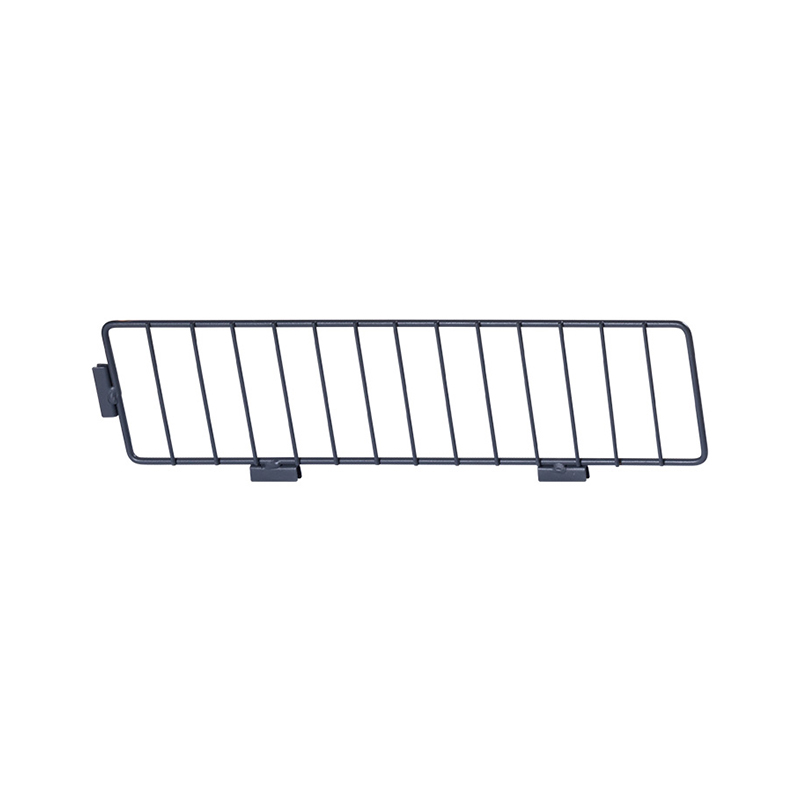
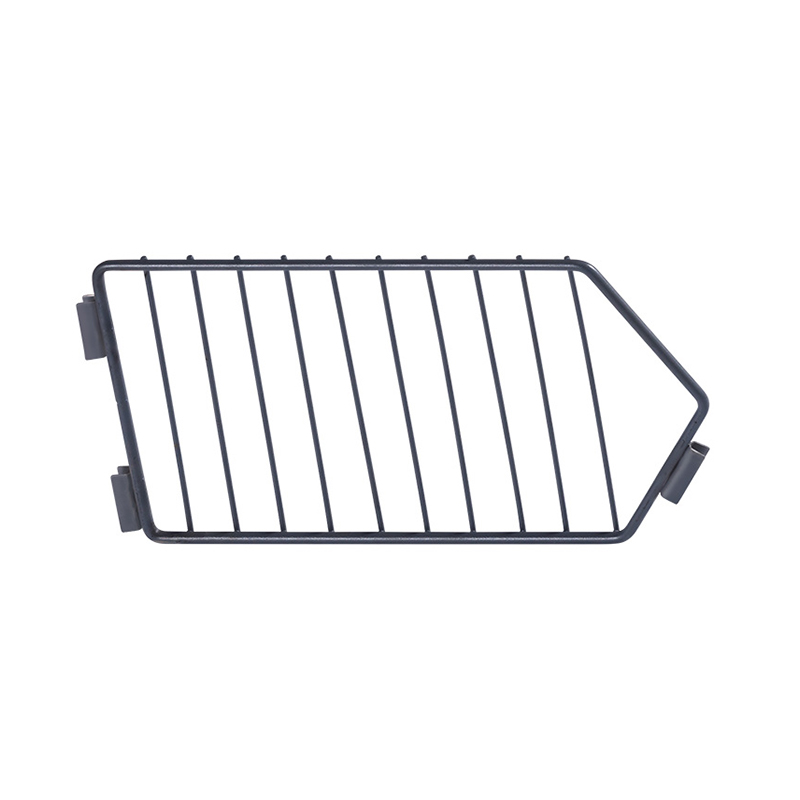
Dividers are the backbone of a gravity-fed module. They keep each product lane independent, preventing items from drifting sideways. Without dividers, a shelf with two different bottle sizes quickly becomes a single mixed row, and the gravity effect breaks down. A wire shelf divider is a strong choice because it does not block product visibility and it fits perforated and mesh shelf surfaces. A good divider must match the product width — too wide allows sideways movement, too narrow creates friction and jams.
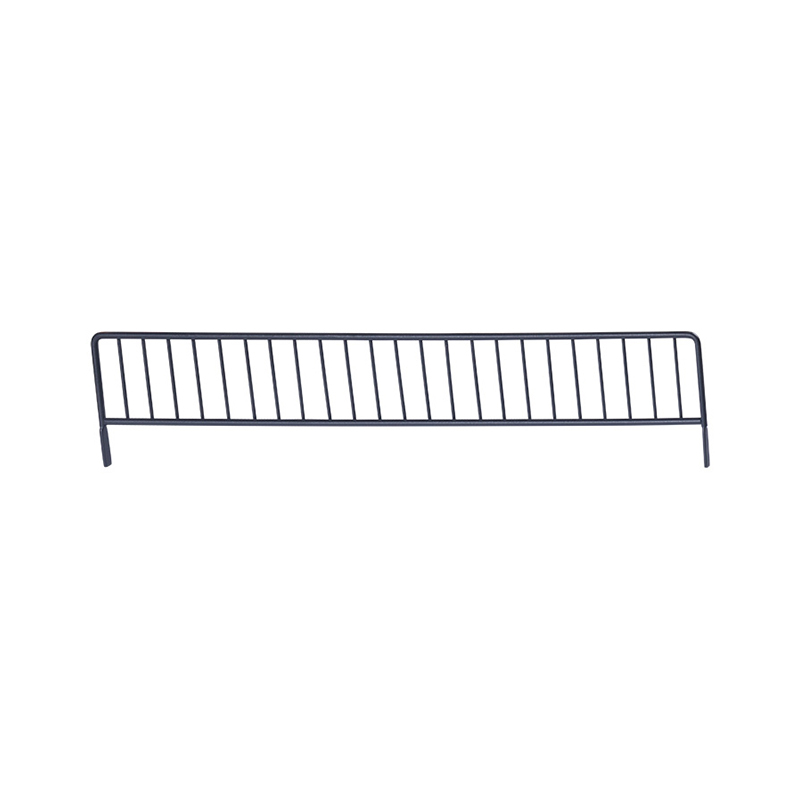 Anti-Slip Wire Shelf Dividers for Product SeparationThese wire dividers keep product lanes independent on angled or flat shelves, preventing items from mixing. Available in four lengths with anti-slip pads and tool-free installation, they suit bottled, canned, and boxed goods in retail settings.View Product →
2. Guardrails for Front Edge Safety
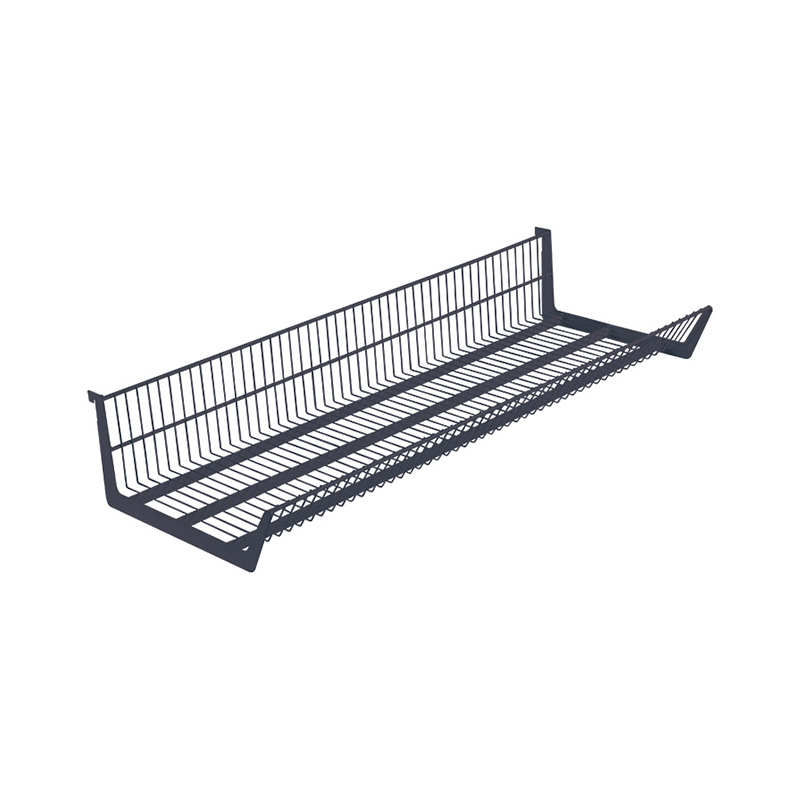
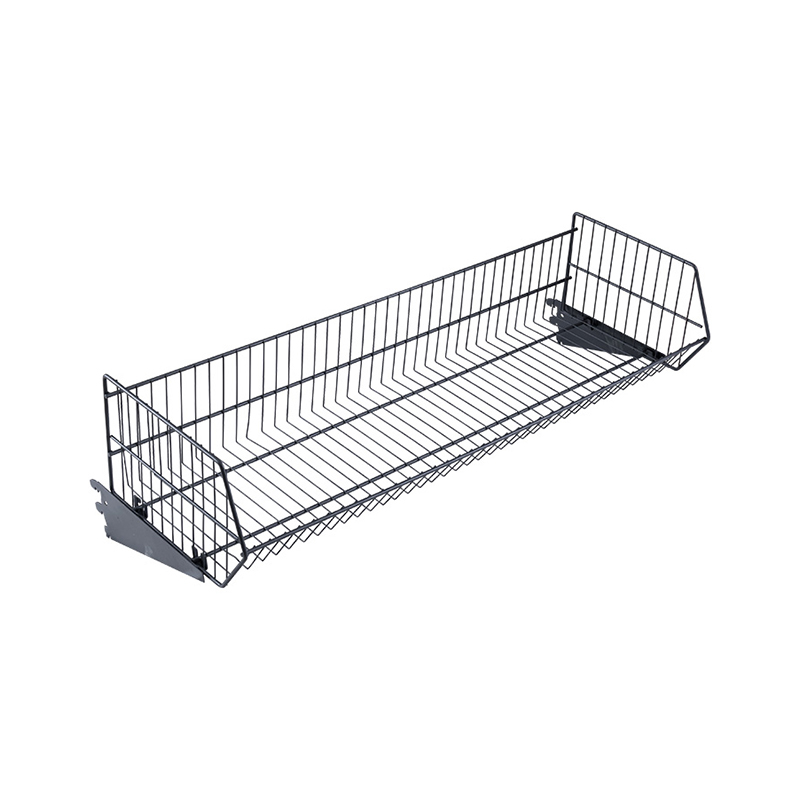
When a shelf is angled, the risk of a product falling off the front edge increases. Guardrails prevent this while still leaving the front row visible and reachable. A specialized shelf guardrail is particularly useful for the bottom shelves, where heavy items are stored and the angle is most visible to customers.
3. Hooks for Hanging Sections
For pegboard or slatwall areas, double-wire hooks create the same self-managing effect for hanging merchandise. The hook keeps a uniform row of items with the same facing, and the count at the front tells staff when restocking is required.
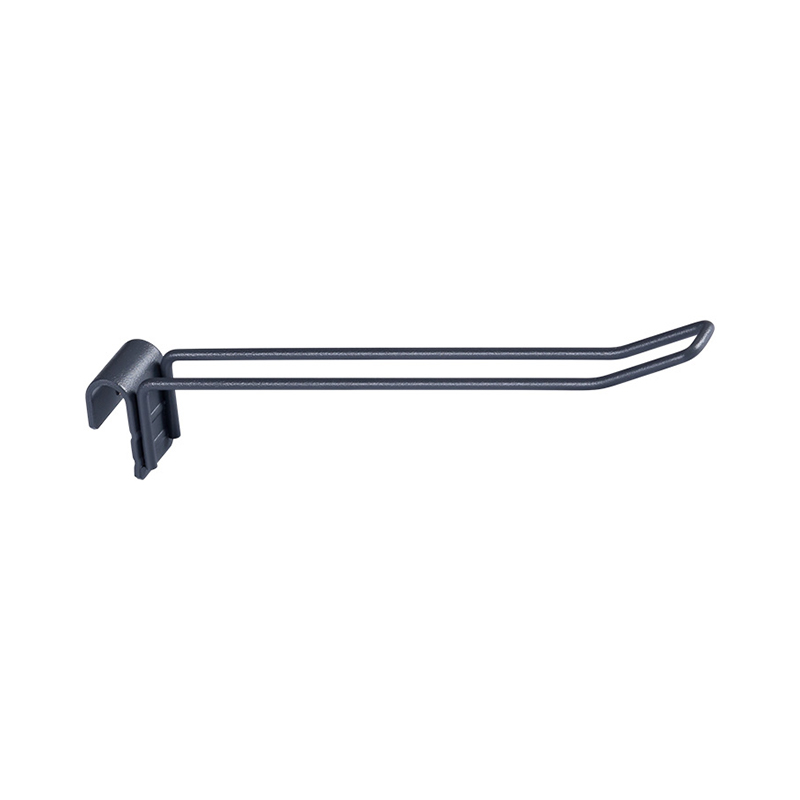 Dual-Wire Heavy-Duty Display Hooks for Retail Hanging DisplaysDual-wire hooks offer increased load capacity and lateral stability compared to single-wire hooks. With lengths from 100 to 400 mm, they are ideal for hanging heavy or bulky merchandise on pegboard or slatwall.View Product →
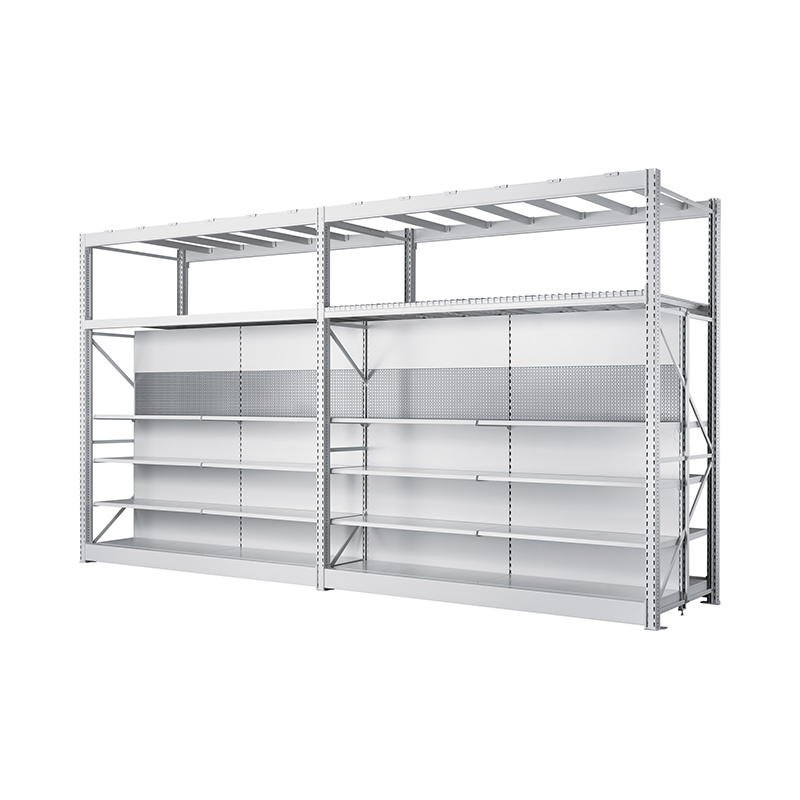
The shelving unit itself also matters. A double-sided supermarket shelf with a perforated back panel is often the most flexible base for a shelf management module because it accepts both flat-pack shelves and hook accessories in the same frame.
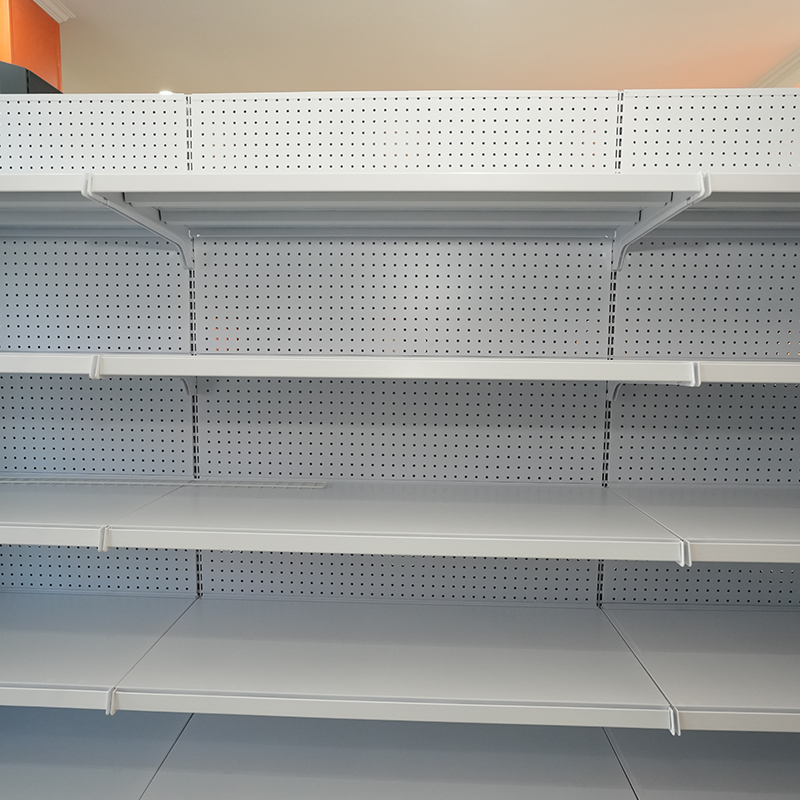 Double-Sided Supermarket Shelf with Perforated Back PanelA robust double-sided shelving unit (2900mm long, 1000mm wide, 2400mm high) with thickened perforated back panels. It accepts various accessories, supports heavy items, and assembles quickly for center-aisle displays.View Product →
Implementation: What Changes After Installation
Once the module is in place, the operating routine changes. The daily shelf check becomes a quick scan of front rows and hook groups. The restocking route follows the shelf layout, so staff do not need to guess which shelf front needs attention.
The restocking process itself becomes simpler. Because each SKU has its own lane, the employee can fill from the back of the shelf in one sweep. There is no need to rearrange front rows or check whether the facing is straight. This reduces the time spent per shelf from a 10-minute judgment call to a 3-minute standard operation.
The quantifiable results look like this:
- Out-of-stock rate: Retailers that configure gravity-fed modules on high-velocity SKUs regularly report OOS falling from 8-10% to below 3% for those items.
- Labor savings: Reassigning 2 to 4 hours of daily shelf-maintenance time to customer-facing or cleaning tasks lowers the operating cost per aisle by a meaningful amount over a month.
- Shelf space utilization: If 30% of shelf space was effectively unused because product sat at the back, the forward-sliding mechanism returns that space to active selling.
The setup must be done correctly. Dividers need to match product width. The shelf angle needs to suit product weight — a 1 kg jar does not slide the same way as a 150 ml aerosol can. Buyers who want to know which shelf types and configurations fit their product categories can start with the store shelving configuration guide.
Procurement Considerations for Retail Buyers
Evaluating the hardware for a shelf management module needs a consistent approach. The following points determine whether the module will deliver the savings or become a maintenance burden.
- Compatibility with existing shelving: Dividers, guardrails, and hooks must match the shelf hole pattern and dimensions. A mismatch creates gaps where products fall or jam.
- Material thickness: For heavy categories like canned goods or bottled beverages, extra-thick steel or reinforced wire prevents deflection. Check the load limit per shelf level against the heaviest SKU in the category.
- Corrosion resistance: Retail cleaning cycles use aggressive chemical sprays. Powder-coated or stainless steel options keep the module in service without frequent replacement.
- Installation ease: If the module requires two installers and special fixtures, the setup cost offsets the labor benefit. Clip-on and snap-in designs are preferable for retrofit projects.
Selecting a single source for the whole module is simpler than coordinating components from multiple suppliers. A manufacturer with a full range of shelf units, dividers, hooks, and guardrails makes it possible to tune the system to the specific store layout. For a more complete view of the available retail store arrangements, the retail store solutions page can help buyers understand which combinations work together.

- Quick Links
- Home
- About Us
- Sustainable
- News
- Contact Us
- Products
- Supermarket shelf
- Storage rack
- Shopping cart
- Shopping basket
- Shelving Accessories
- Display rack
- Contact us
-
-
+86-18852916580

-
[email protected]

-
No. 9 Yongxin Road, Wangzhuang Industrial Park, Shanghu Town, Changshu City, Jiangsu Province, China

-

