- Tel: +86-18852916580
- Suzhou CERS Commercial Equipment Co., Ltd.
- Email: [email protected]
- Tel: +86-18852916580
- Suzhou CERS Commercial Equipment Co., Ltd.
- Email: [email protected]


 Español
  عربى
عربى  Deutsch


Shopping Cart vs Shopping Basket: Which Should Supermarkets Provide for Shopper Types?
Content
When a supermarket operator in Kunshan started planning a 1,800 sqm store, the equipment list came down to two candidates: shopping carts and shopping baskets. The budget allowed for a full fleet of either, but not both in equal measure. The decision, however, is not simply a matter of choosing one. The practical conclusion is that a modern supermarket needs both, and the ratio should match the dominant shopper type. For a store with a weekly-family shopping pattern, plan for 2 to 3 carts per basket. For a community store serving quick trips and daily errands, invert that ratio to 1 cart per 2 to 3 baskets. Getting the mix wrong creates operational friction that is easy to see: customers who cannot find a basket will push a heavy cart through a narrow aisle for a single bag of milk, adding seconds to every transaction and extra time to every queue.
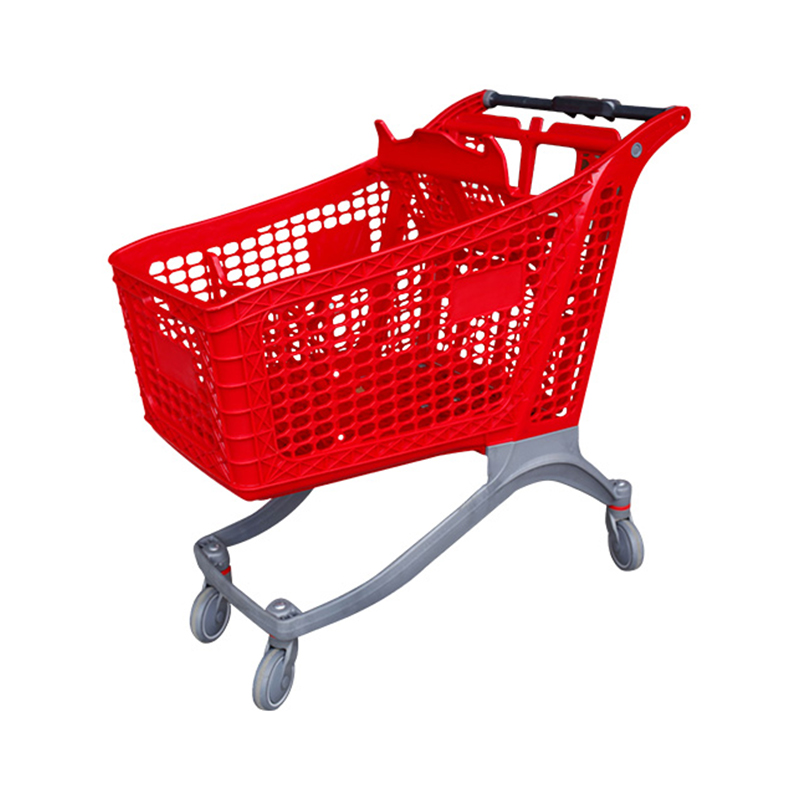 All-Plastic Shopping Cart with Silent Swivel Wheels for Corrosion ResistanceThis injection-molded plastic cart offers lightweight construction and corrosion resistance, with silent swivel casters for smooth movement. Ideal for humid environments like fresh food sections or seafood areas, its nesting design saves storage space.View Product →
The two dimensions that decide the mix: capacity and ease of handling
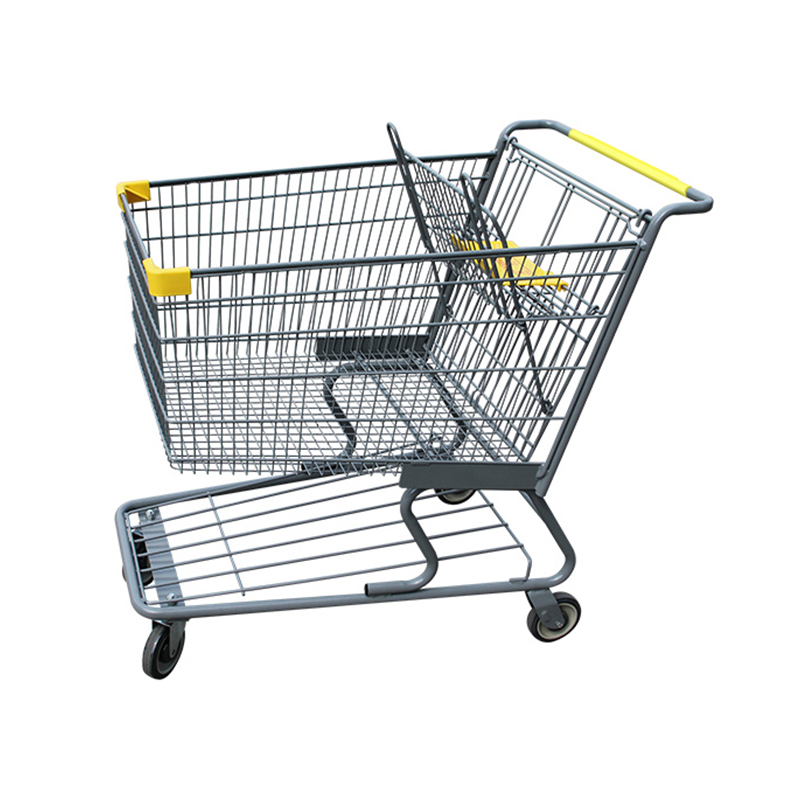
The difference between a cart and a basket is not just size. It is a trade-off between carrying capacity and handling ease, and each one creates a different shopping experience. A shopping cart typically offers 40 to 100 liters of storage, a weight capacity of 10 to 30 kg, and often a child seat. It is designed for the weekly stock-up trip when a customer wants to buy 30 to 60 items. A shopping basket holds 15 to 30 liters and carries 2 to 8 kg comfortably. It is designed for the quick-trip customer who needs three to eight items and values speed above volume.
From a store-management perspective, these differences are what determine the average basket value, the queue length at checkout, and the space needed for storing the equipment itself. A basket is easy to pick up at the entrance and easy to drop off at the checkout, but it sets a hard limit on purchase volume. A cart gives customers permission to buy more, which is exactly what a hypermarket wants, but it also requires parking bays, brake casters, and regular maintenance.
| Criterion | Shopping Cart | Shopping Basket |
|---|---|---|
| Typical capacity | 40-100 liters | 15-30 liters |
| Weight capacity | 10-30 kg | 2-8 kg |
| Best for | Weekly bulk shopping | Quick trips and small purchases |
| Typical users | Families, large-basket shoppers | Seniors, commuters, impulse shoppers |
| Nested space per unit | 0.25-0.4 sqm | 0.05-0.1 sqm |
| Maintenance demand | Wheels, handles, child seats | Minimal |
| Loss risk | Low, bulky to remove | Higher, easy to carry out |
The comparison above makes one point clear. Carts and baskets are not substitutes. They are tools for different shopper segments, and a supermarket that stocks only one is effectively telling a large customer group that they do not matter.
Matching equipment to shopper types
The most reliable approach to deciding the mix is to look at who walks through the door. Four shopper types cover most of the traffic in a retail supermarket, and each one has a strong preference for one type of equipment.
| Shopper type | Trip size | Equipment preference | Why |
|---|---|---|---|
| Weekly family shopper | 30-60 items | Cart | Capacity, child seat, ergonomic comfort |
| Quick-trip commuter | 3-8 items | Basket | Speed, light to handle, easy to put down |
| Senior shopper | 5-15 items | Basket | No need to park a cart, weaker grip strength |
| Impulse or convenience buyer | 1-5 items | Basket | Small footprint, quick decision |
The weekly family shopper is the reason the cart fleet exists. Without a cart, this customer would either reduce their purchase volume or leave the store altogether. The quick-trip commuter, on the other hand, is the reason the basket stack belongs at the entrance. If a large basket stack is not the first thing a customer sees, they lose time finding an alternative and may walk straight past the produce section entirely.
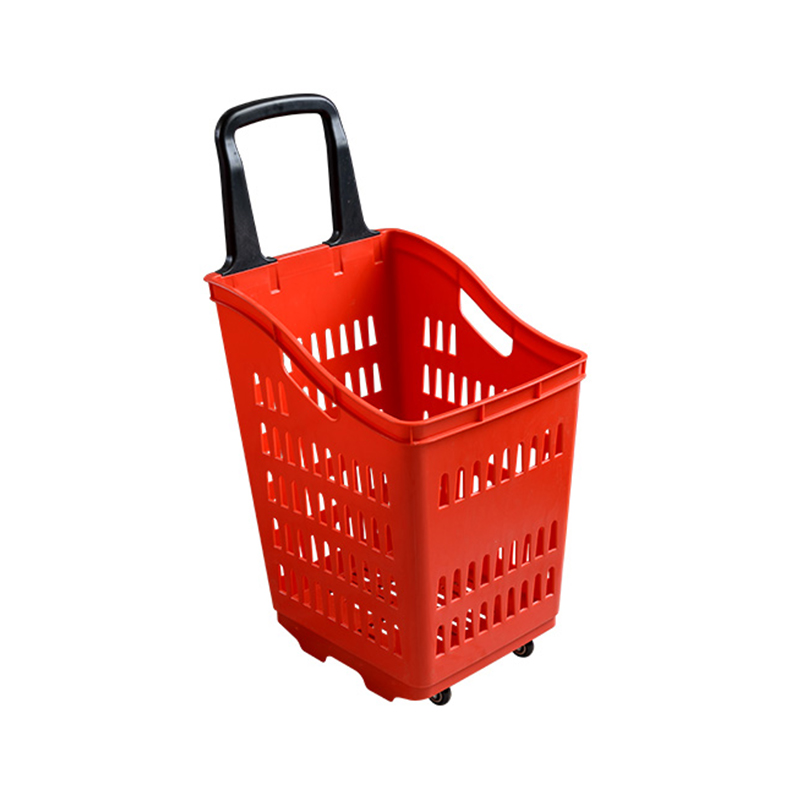
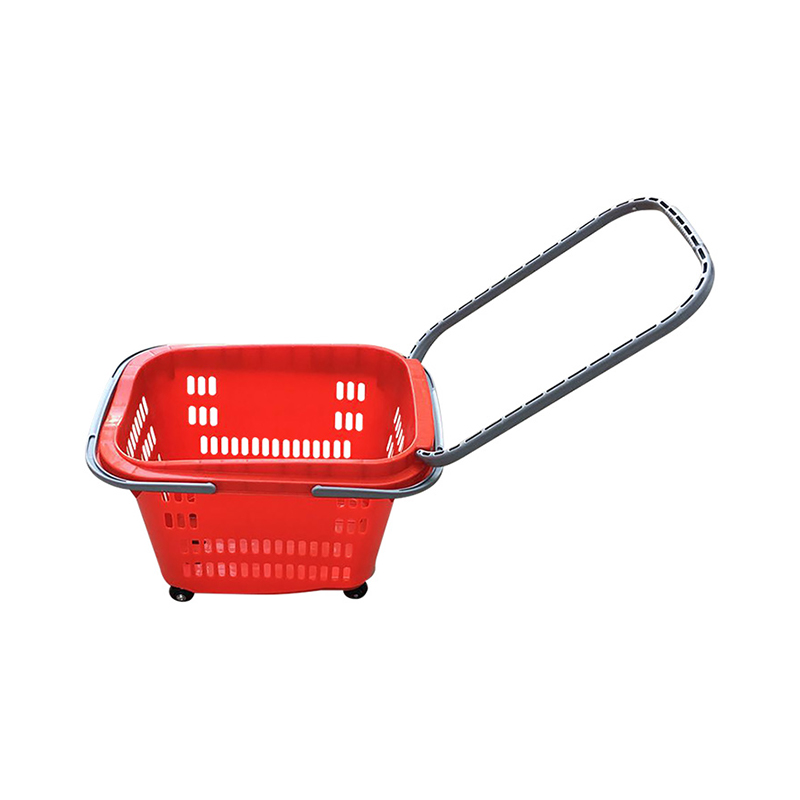 Large-Capacity Shopping Basket with Retractable Handle and WheelsThis rolling basket bridges the gap between handheld baskets and full carts, featuring a telescopic handle and rear casters. Its 20-35L capacity suits medium shopping trips, and the retractable handle aids easy transport, especially for seniors.View Product →
Senior customers deserve a closer look. Some operators assume older shoppers prefer carts because they cannot carry weight. In reality, many seniors find a rolling basket with a retractable handle easier to manage than a cart. A wheeled basket with a telescoping handle converts into a small push trolley, which reduces the effort needed and gives the customer a sense of control. This is an especially important point inside a store with ramped entrances or wide open aisles.
How store format changes the equipment equation
Store format is the second filter that determines the cart-to-basket ratio. A 5,000 sqm hypermarket has the aisle width, checkout lanes, and cart return bays to support a full fleet. In that context, a cart is not a luxury - it is the only realistic way for a shopper to buy more than one bag of groceries. A 300 sqm community store is a different environment entirely. The checkout is compact, the average ticket is small, and the customer is usually in a hurry. Baskets should dominate in this setting, and a small cart fleet is sufficient for the occasional large purchase or for mothers with small children.
The same principle applies to the nesting area. A cart fleet requires roughly 0.25 to 0.4 sqm per cart when nested, depending on the model. A basket stack takes up almost no floor space and can be placed beside the entrance door or at the end of a checkout counter. If the cart return bay is undersized, carts get left in the parking lot or in decorative aisles, creating a safety hazard and a maintenance burden.
At the checkout, the equipment choice also affects the lane layout. Baskets are easy to unload onto a compact counter, while carts require a dedicated unloading area beside the cashier. If your checkout lanes are narrow, a heavy cart line can delay the next customer. Many supermarkets solve this by building a small cart staging area before the checkout that keeps the line moving.
For a formal supermarket or a store with a cafe and fresh produce section, the mixed model works best. Keep the cart bay in a dedicated corridor with clear signage, and place a tall basket stack within the first three meters of the entrance. This simple separation signals to customers which tool suits their trip before they even begin shopping.
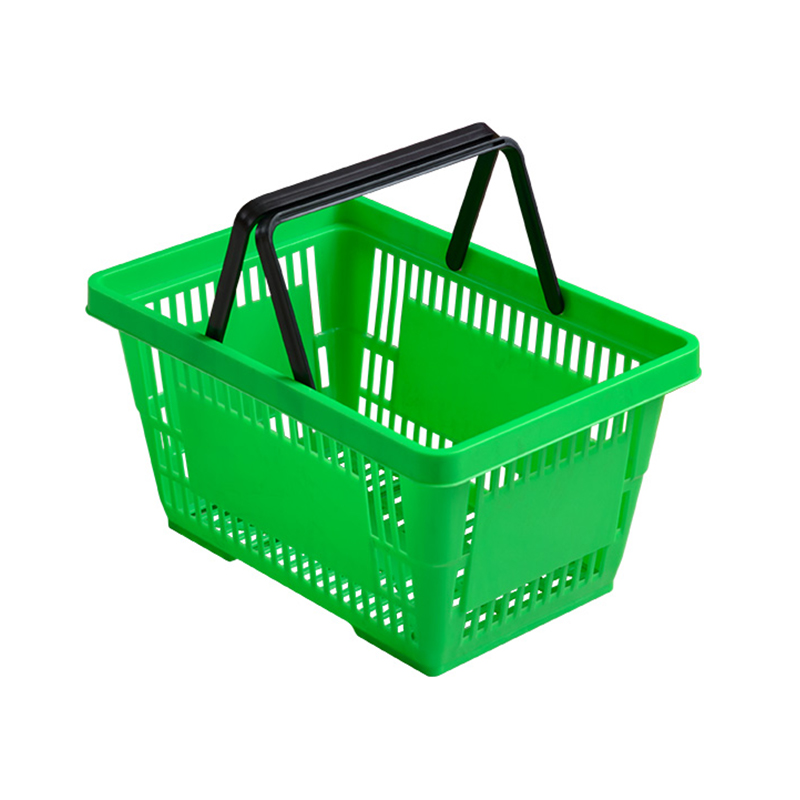 Lightweight Handheld Shopping Basket with Large Capacity for Quick TripsDesigned for small purchases, this basket offers 12-25L capacity with a comfortable handle, nesting for compact storage. Its lightweight build suits quick trips and daily errands, providing an efficient alternative to carts for short shopping sessions.View Product →
Hidden costs and procurement risks
The unit price is only the first line in the total cost of ownership. Carts carry ongoing operating costs: caster replacement, handle repairs, child-seat cleaning, and trolley containment. In a busy supermarket, a standard cart can show noticeable wear within 12 to 18 months, especially on the wheels, which are the most frequently replaced component at the point of use. The material specification matters here. A cart with a high-density all-plastic body and silent swivel casters resists corrosion better than a steel-frame model in a high-humidity environment, such as a store with an open produce section or a bakery that generates steam.
Baskets are cheaper to maintain, but they carry a different risk. They are easy to walk out with. A customer using a basket for a small purchase will often carry it to their car and not return it, which means the store loses a unit every few weeks. That loss does not appear in the first procurement budget, but it shows up in the annual replacement order.
Another procurement risk to consider is the nesting compatibility of the fleet. If baskets or carts from different generations have different nesting ratios, the equipment will not pack tightly, and the storage area will waste valuable floor space. When you order from a single supplier, you can standardize the nesting geometry across the entire fleet, which saves both floor space and handling time.
Before you place an order, verify three parameters: the load rating, the caster specification, and the nesting ratio. These three numbers determine how long the equipment lasts and how well it suits your floor plan. It is also worth reviewing the complete retail equipment solution the supplier offers, because the cart bay, the shelf format, and the checkout counter cannot be planned in isolation.
A practical starting point for your order
If you are opening a new store, use the 80/20 rule as a capital-allocation guide. Invest 80 percent of the equipment budget in the tool that matches your dominant shopper type, and 20 percent in the secondary type. Calculate the fleet size from peak-hour traffic: assume that one cart is in use for every 8 to 10 customers inside the store at the same time. Add at least 25 percent nested inventory to cover weekend peaks and seasonal surges.
For a modern supermarket that serves both weekly and quick-trip customers, a 60:40 cart-to-basket ratio is workable. It also pays to look at the layout quality of the equipment supplier. A manufacturer that also supplies shelving, fencing and dividers can help you coordinate the cart bay with the checkout counter and the gondola arrangement, which makes the overall flow much smoother.
Store equipment is not a one-time purchase either. As customer behavior shifts, the ratio should be re-evaluated. The rise of small-ticket convenience stores and online pick-up points has pushed many operators to increase basket availability even in larger formats.
If you need help deciding the mix for your floor plan, the best next step is to request a quotation for the combined order. The right mix is not an infinite budget question - it is a question of matching the equipment to the customer journey that actually happens inside your store.


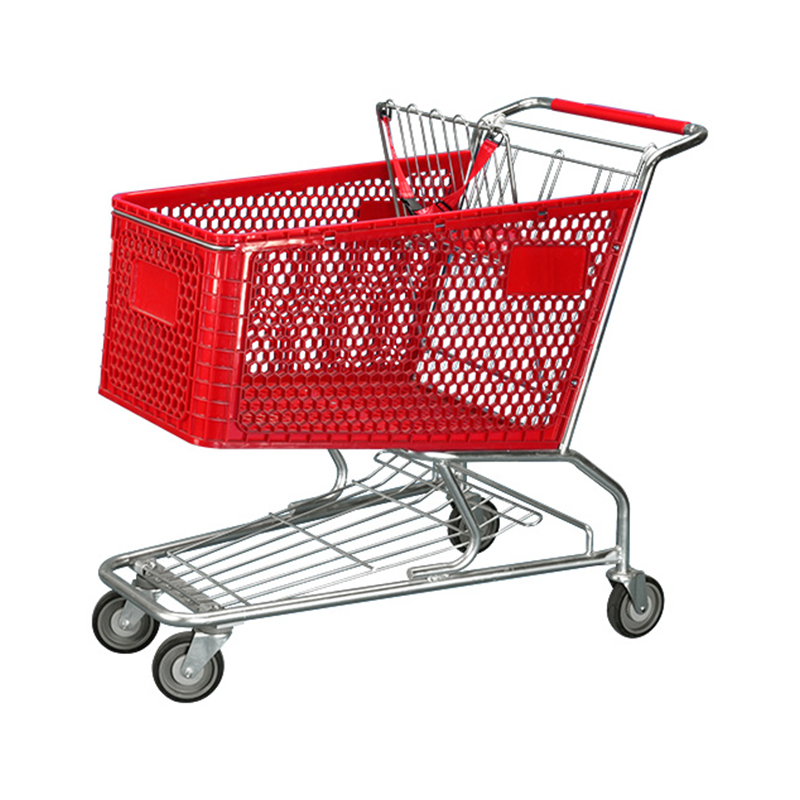


- Quick Links
- Home
- About Us
- Sustainable
- News
- Contact Us
- Products
- Supermarket shelf
- Storage rack
- Shopping cart
- Shopping basket
- Shelving Accessories
- Display rack
- Contact us
-
-
+86-18852916580

-
[email protected]

-
No. 9 Yongxin Road, Wangzhuang Industrial Park, Shanghu Town, Changshu City, Jiangsu Province, China

-

