- Tel: +86-18852916580
- Suzhou CERS Commercial Equipment Co., Ltd.
- Email: [email protected]
- Tel: +86-18852916580
- Suzhou CERS Commercial Equipment Co., Ltd.
- Email: [email protected]


 Español
  عربى
عربى  Deutsch


Double Wire Display Hook Manufacturers
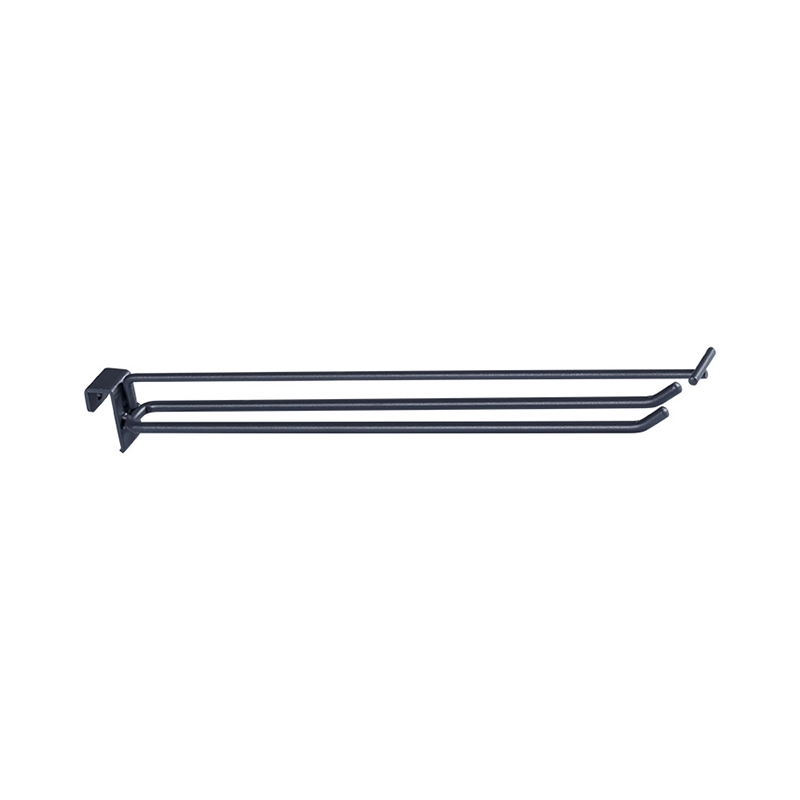
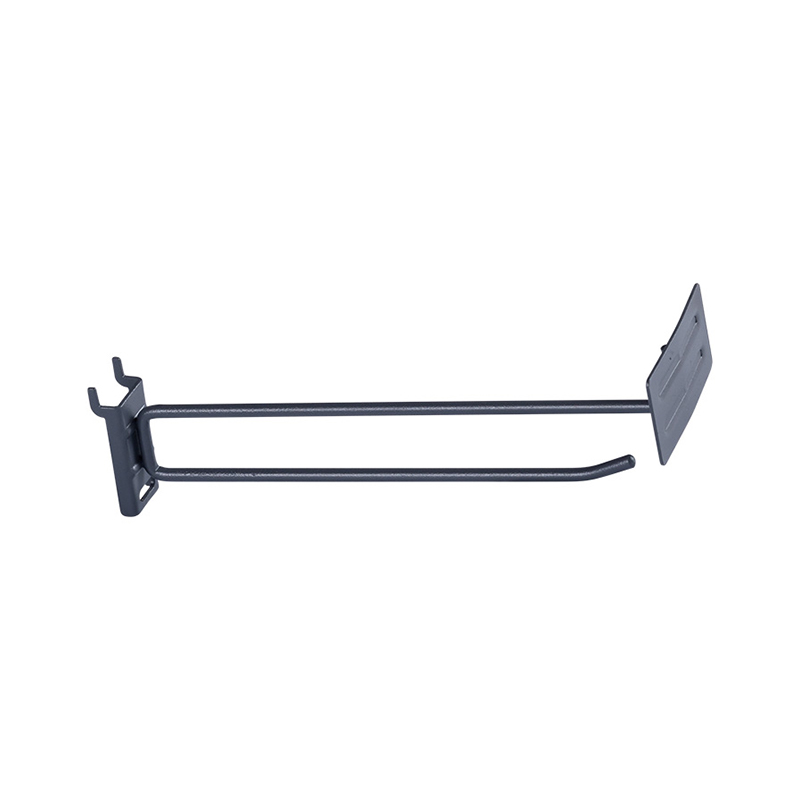
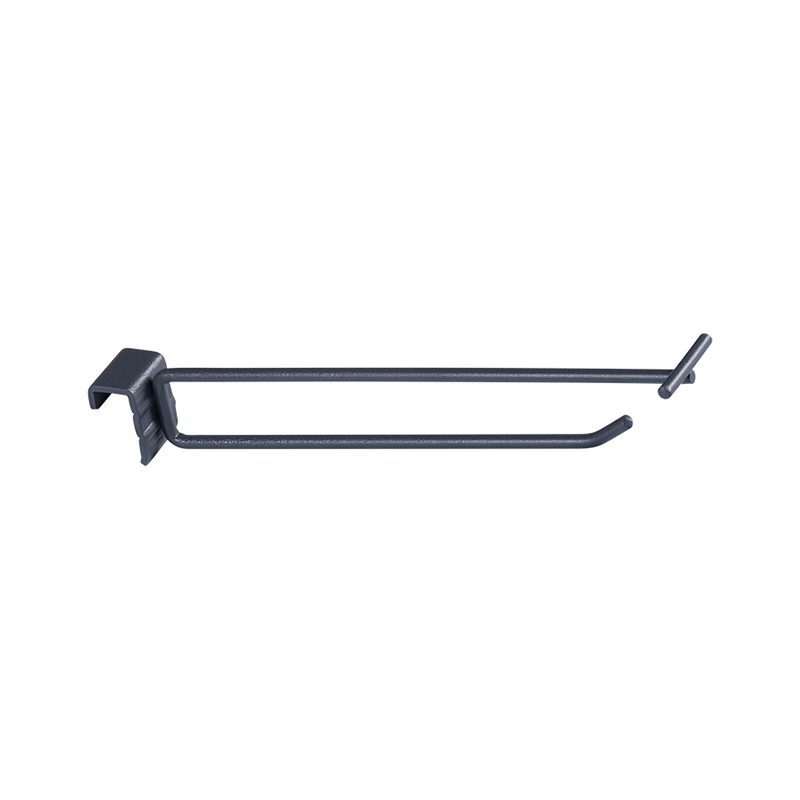
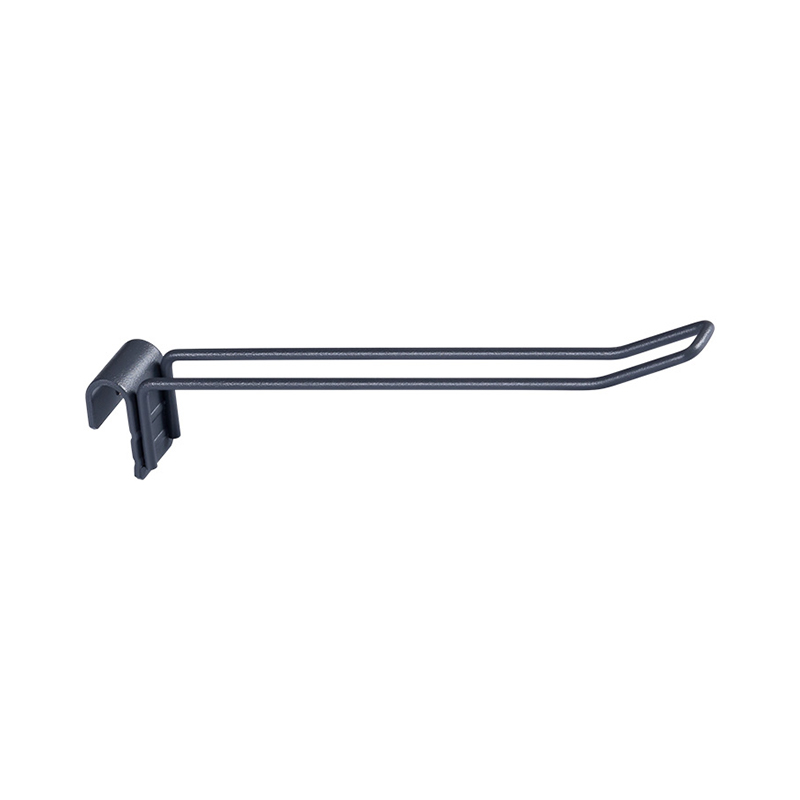
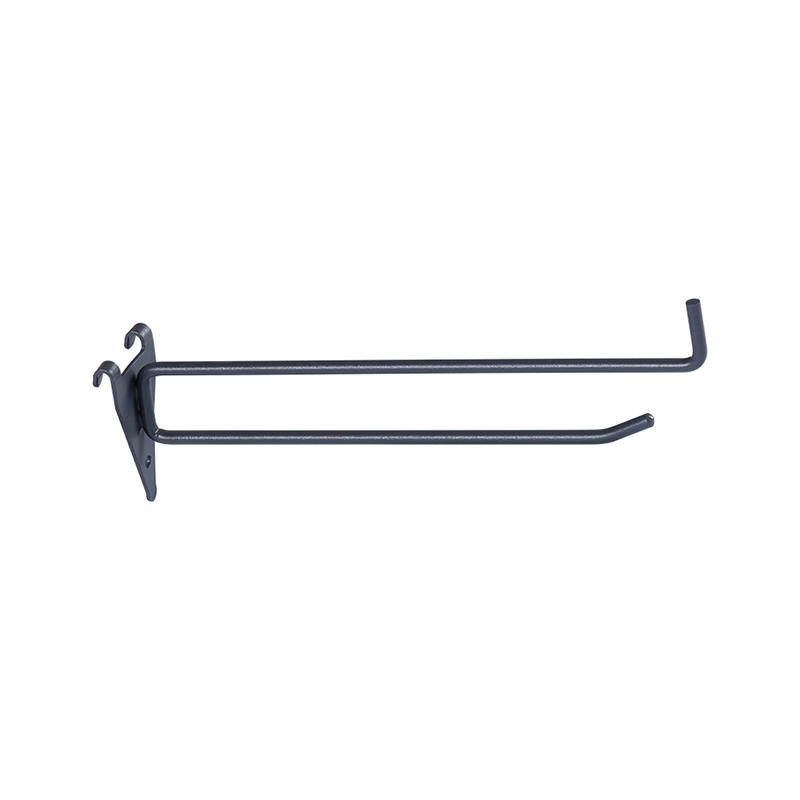
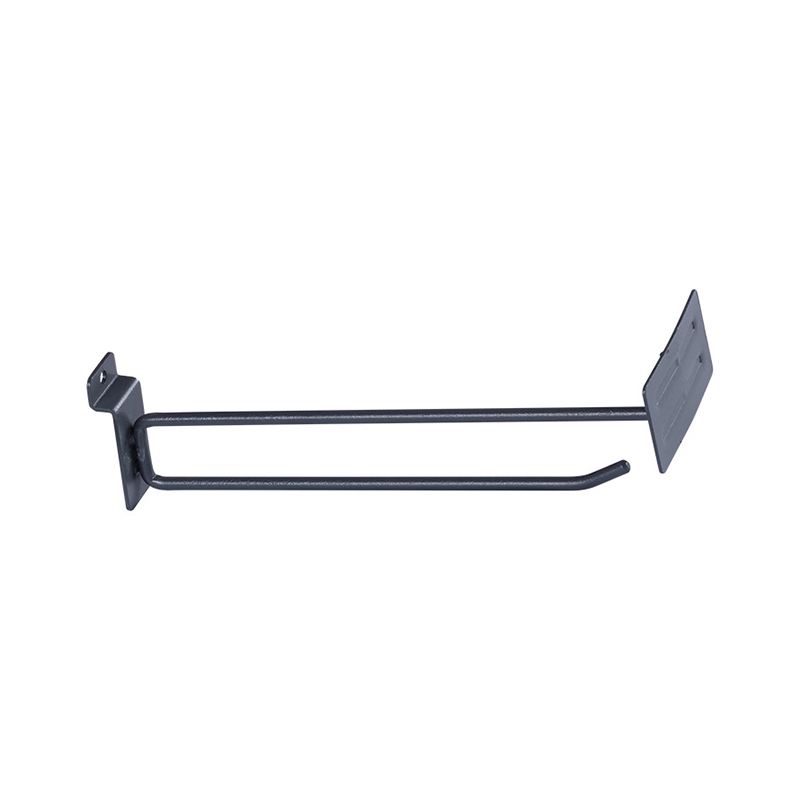
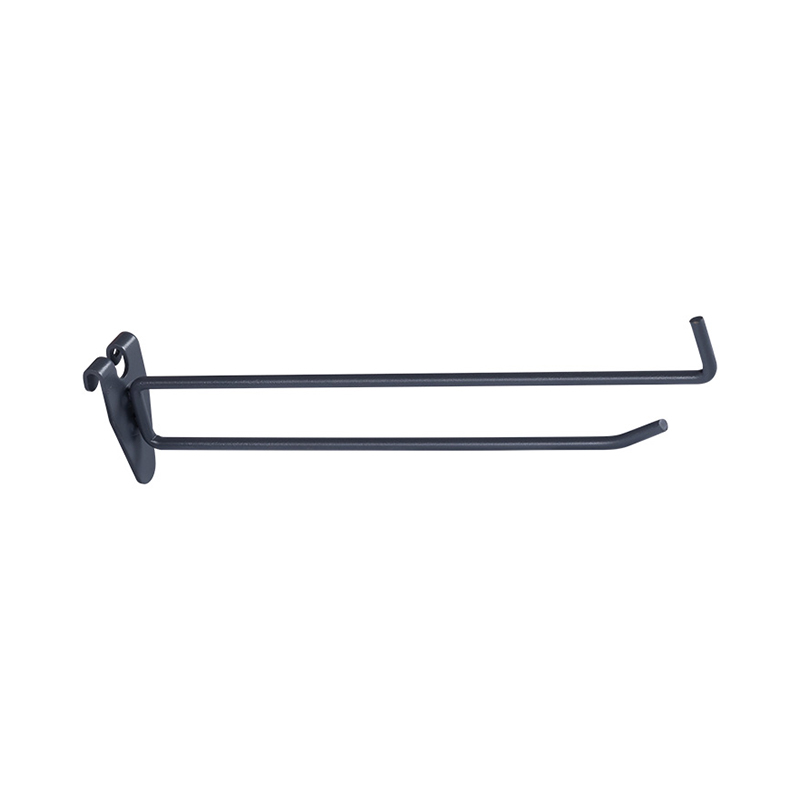
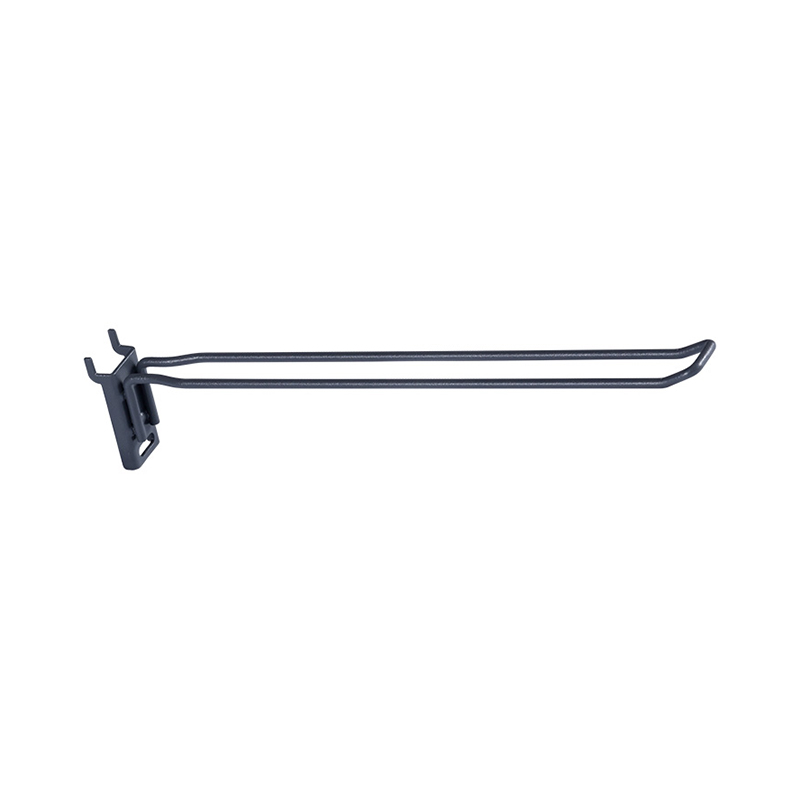
Why Two Prongs Change the Load Equation
The core engineering advantage of a double-prong hook isn't simply "twice the strength" — it's a fundamentally different stress distribution pattern. With a single prong, the entire moment force from a loaded hook concentrates at one insertion point, which is why single hooks are prone to rotating slightly or working loose from a panel over time under repeated loading. Two parallel prongs anchored a set distance apart resist that rotational torque far more effectively, since any downward force on the hook tip is shared between two fixed points rather than pivoting around one.
At Suzhou CERS Commercial Equipment Co., Ltd., prong spacing is calculated in relation to wire gauge and expected load rather than set at an arbitrary standard distance, since prongs placed too close together don't meaningfully improve rotational resistance, while prongs spaced too far apart can create fitting problems on pegboard or slotwall panels with fixed hole intervals.
This dual-point anchoring is also what allows double-prong hooks to carry noticeably wider or heavier merchandise without the drooping or lateral sway that single-prong designs tend to develop after months of loading and unloading cycles in a busy retail environment.
Panel Wear and Long-Term Mounting Integrity
Retailers often underestimate how much a hook's mounting style affects the lifespan of the panel it's inserted into, not just the hook itself. A single-prong hook concentrates repeated insertion and removal stress on one hole, which over time can enlarge the pegboard hole or wear down a slotwall channel's locking edge, eventually causing a loose fit even with a brand-new hook. Distributing that same stress across two prongs reduces wear at each individual point, extending the usable life of the display panel itself.
This becomes particularly relevant in high-turnover retail sections where hooks are frequently removed and repositioned during planogram changes or seasonal resets. A Double Wire Display Hook that seats securely across two mounting points tends to hold its position more reliably through repeated repositioning than a single-point equivalent, reducing the frequency with which store staff need to replace worn-out panel sections.
Prong tip design still matters here too — flat-formed insertion tips with a slight upward angle help the hook seat flush against the panel surface, avoiding the small gap that can develop when only one prong makes full contact with the mounting hole or channel.
Matching Hook Width to Packaging and Product Category
Because double-prong hooks anchor at two points rather than one, they naturally lend themselves to wider merchandising fronts, which makes prong-to-prong spacing an important spec to match against actual product packaging rather than a generic default. Blister-packed hardware, multi-pack consumer goods, and bagged items with a wide hang-hole spacing typically require a broader hook base than what a narrow single-prong design can support without the packaging twisting or sitting unevenly.
Grocery non-food aisles, automotive accessory sections, and tool departments are common use cases where double-prong hooks outperform single-prong alternatives, largely because these categories involve heavier per-unit weight and wider packaging profiles that benefit from the added lateral stability two prongs provide.
Our production team frequently adjusts prong spacing, hook depth, and downward angle across different product runs based on retailer feedback about how specific merchandise sits and moves on the hook during a typical stocking and browsing cycle.
Security Features and Anti-Sweep Considerations
The added stability of a double-prong base makes this hook style a common candidate for integrated security features in categories prone to shrinkage. Locking mechanisms — such as a spring-loaded pin that engages once the hook is seated on the panel — are more mechanically reliable on a two-point base, since the hook can't be rocked or twisted loose the way a single-prong design sometimes can under deliberate manipulation.
Anti-sweep bars or looped safety ends, which prevent an entire row of merchandise from being pulled off in a single motion, also benefit from the added rigidity a double-prong base provides, since the hook itself resists bending under the sideways force a sweeping motion applies.
For retailers weighing security hardware options, a Double Wire Display Hook with an integrated locking base often represents a practical middle ground between full electronic security tags and unsecured open hooks, particularly for mid-value merchandise where the cost of individual item tagging isn't justified but shrinkage risk is still a real concern. Suzhou CERS Commercial Equipment Co., Ltd. offers several of these locking variants alongside standard non-locking versions for retailers who need to mix security levels across different sections of the same store.

- Quick Links
- Home
- About Us
- Sustainable
- News
- Contact Us
- Products
- Supermarket shelf
- Storage rack
- Shopping cart
- Shopping basket
- Shelving Accessories
- Display rack
- Contact us
-
-
+86-18852916580

-
[email protected]

-
No. 9 Yongxin Road, Wangzhuang Industrial Park, Shanghu Town, Changshu City, Jiangsu Province, China

-

