- Tel: +86-18852916580
- Suzhou CERS Commercial Equipment Co., Ltd.
- Email: [email protected]
- Tel: +86-18852916580
- Suzhou CERS Commercial Equipment Co., Ltd.
- Email: [email protected]


 Español
  عربى
عربى  Deutsch


Resin Selection and Injection Molding Precision
The performance of a plastic basket starts long before it reaches the sales floor, with the choice of resin. High-density polyethylene (HDPE) is favored for its impact resistance and flexibility under sudden load, allowing a dropped basket to flex rather than crack. Polypropylene (PP), by contrast, offers greater rigidity and a higher heat-deflection temperature, making it a common choice in regions where baskets may sit in direct sunlight near store entrances for extended periods.
Wall thickness consistency is one of the more technical variables that separates a well-molded basket from one prone to premature cracking. Uneven cooling during injection molding can create internal stress points, particularly around handle attachment areas and the base corners, which are the two zones that absorb the most repeated mechanical stress during daily use. At Suzhou CERS Commercial Equipment Co., Ltd., mold design and cooling cycle timing are calibrated specifically to minimize these stress concentrations before a product moves into mass production.
Colorant and UV-stabilizer additives blended into the resin also affect long-term appearance. Without proper UV stabilization, plastic baskets exposed to sunlight can fade or become brittle within a year or two, which is why additive selection is treated as a durability decision rather than purely an aesthetic one.
Ergonomic Handle Design and Load Distribution
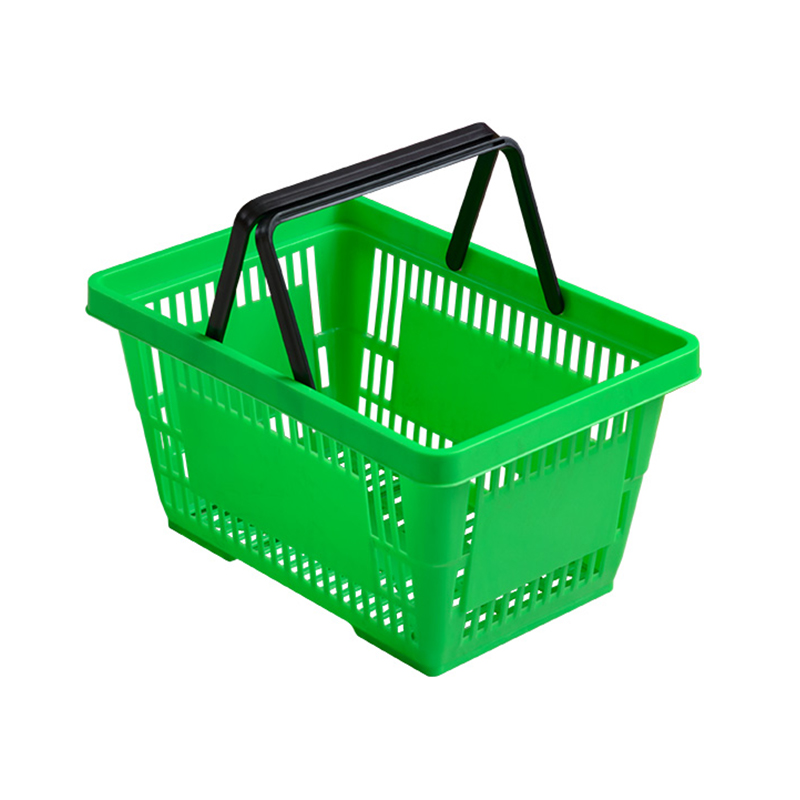
Handle geometry has a direct effect on how comfortably a customer can carry a loaded basket over the course of a shopping trip. A rounded, wider handle profile spreads pressure across a broader area of the palm and fingers, reducing the localized strain that a narrow, thin handle tends to create after just a few minutes of carrying weight. Dual-handle designs, which allow a basket to be carried with one hand or two, give shoppers flexibility depending on how full the basket becomes.
Load distribution is also shaped by the base-to-rim taper of the basket. A Supermarket Shopping Basket with a slightly wider top than base keeps the center of gravity lower when the basket is full, reducing the tendency to tip or swing awkwardly when carried. This detail matters more than it might seem, since an unstable carry experience often discourages customers from adding a few more items before heading to checkout.
Reinforced rim structures around the handle attachment points prevent the most common failure mode in basket use — cracking where the handle meets the body under repeated flexing from thousands of pick-up and set-down cycles over a basket's service life.
Stacking Efficiency and Hygiene Considerations
Nesting and stacking design determines how much storage footprint a stack of baskets occupies at the store entrance. A shallow taper angle between the base and the walls allows baskets to stack closely together, saving valuable entrance-zone floor space, while still leaving enough clearance that baskets don't jam or become difficult to separate during peak shopping hours. This balance is fine-tuned through prototype testing before a design goes into production.
Hygiene has become an increasingly important design consideration since the pandemic reshaped customer expectations around shared retail equipment. Smooth interior surfaces without deep grooves or hard-to-reach corners make baskets easier to wipe down and sanitize between uses, and mesh-style ventilated walls, popular in some regions, help reduce moisture buildup that can otherwise encourage bacterial growth in humid climates.
Because ease of cleaning has become a purchasing criterion in its own right for many retailers, we at Suzhou CERS Commercial Equipment Co., Ltd. treat surface finish and drainage detailing as functional requirements, not just cosmetic choices, when developing new basket molds.
Retail Merchandising Trends Shaping Basket Design
Basket color has quietly become a merchandising tool rather than a purely practical choice. Many retail chains now request custom colors that align with store branding, and some use different basket colors to differentiate shopping zones, such as separating fresh produce carriers from general merchandise baskets within the same store.
Integrated advertising panels molded directly into the basket body, or slots designed to hold printed insert cards, have also grown more common as retailers look for additional low-cost advertising real estate at the point of sale. A Plastic Market Basket designed with this kind of flexibility gives store operators more merchandising options without requiring a separate accessory.
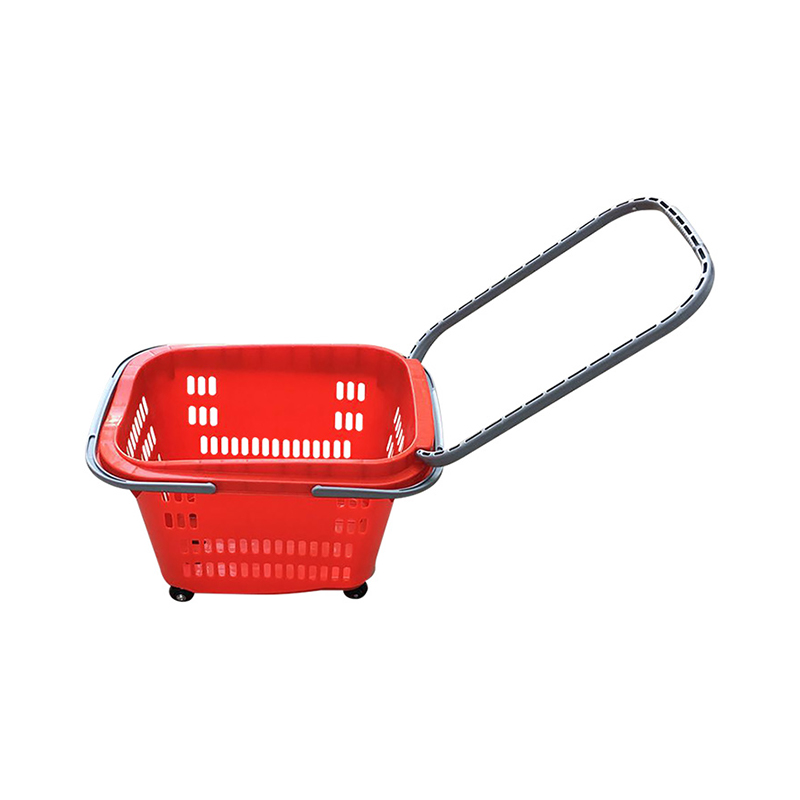
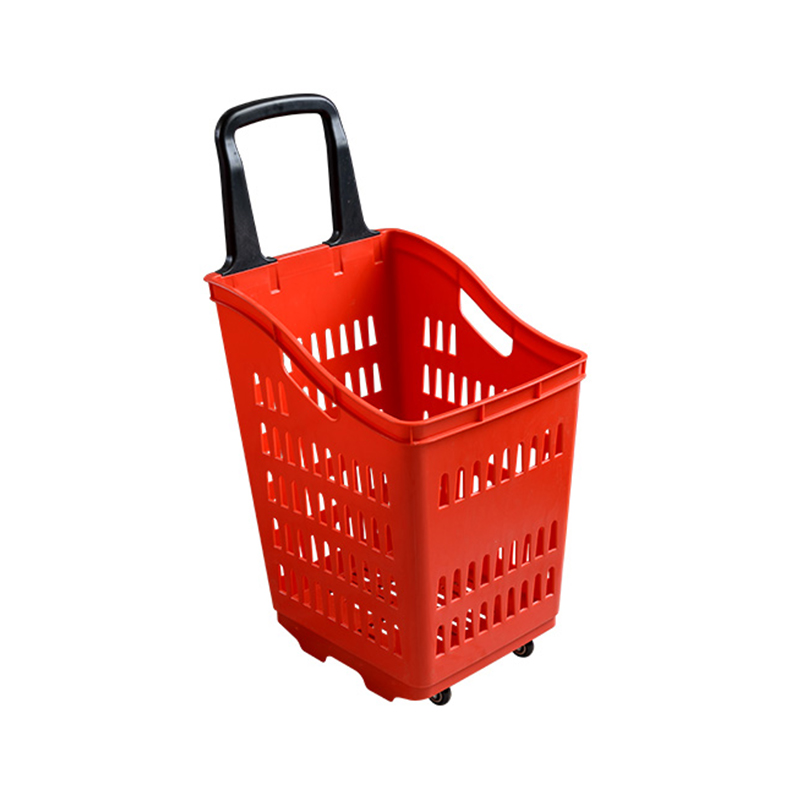
Wheeled basket variants, which bridge the gap between a hand-carried basket and a full shopping cart, have also gained traction in convenience-format stores where floor space is limited but customer basket sizes have grown. This category reflects a broader shift toward more flexible, format-specific retail equipment rather than a single standard basket design applied across every store type.

- Quick Links
- Home
- About Us
- Sustainable
- News
- Contact Us
- Products
- Supermarket shelf
- Storage rack
- Shopping cart
- Shopping basket
- Shelving Accessories
- Display rack
- Contact us
-
-
+86-18852916580

-
[email protected]

-
No. 9 Yongxin Road, Wangzhuang Industrial Park, Shanghu Town, Changshu City, Jiangsu Province, China

-

