- Tel: +86-18852916580
- Suzhou CERS Commercial Equipment Co., Ltd.
- Email: [email protected]
- Tel: +86-18852916580
- Suzhou CERS Commercial Equipment Co., Ltd.
- Email: [email protected]


 Español
  عربى
عربى  Deutsch


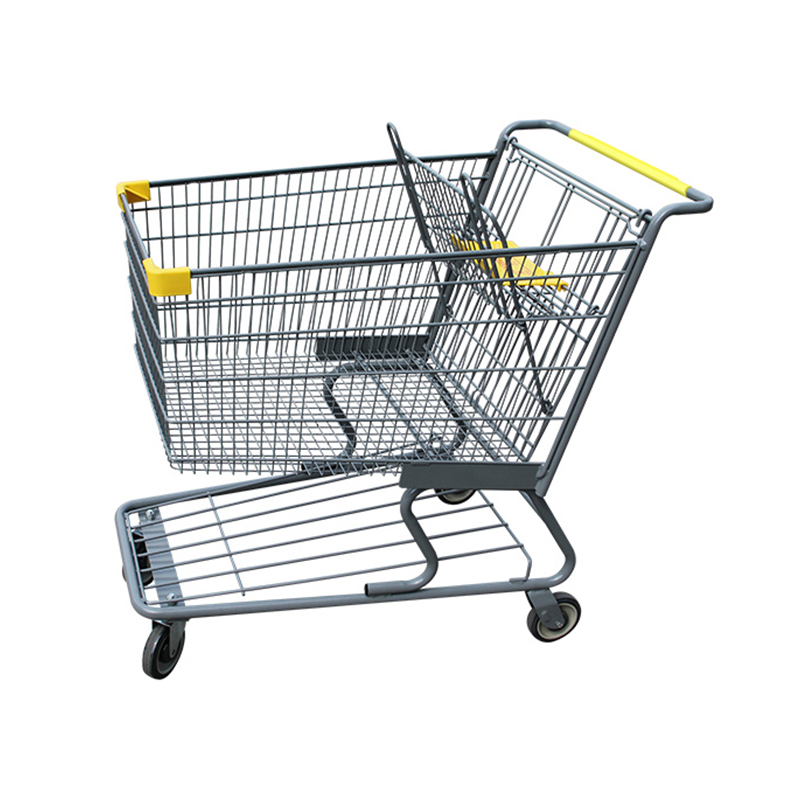
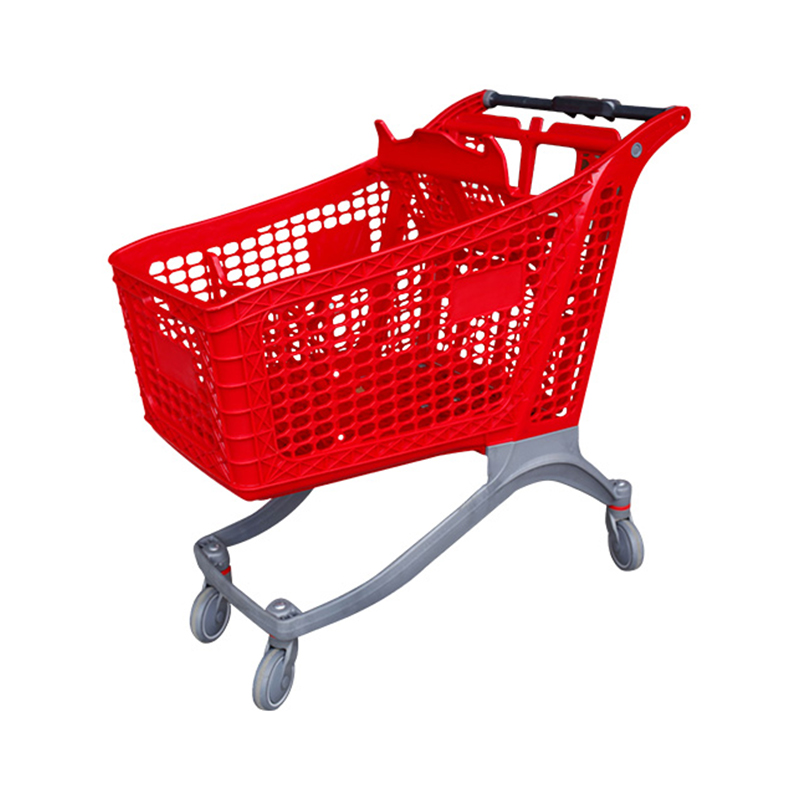
Double-Tier, High-Capacity Supermarket Shopping Cart
The Double-Tier, High-Capacity Supermarket Shopping Cart is engineered for high-traffic retail environments. It features a two-level structure to increase per-cart storage volume. The frame is primarily constructed from metal, with customizable baskets or loading platforms. This design allows shoppers to separate different product categories during the shopping process—such as placing heavy or bulk items on the lower level and fragile or lightweight products on the upper level—reducing cross-compression and re-sorting time. Dimensions and push-handle height can be customised based on store aisle widths and target customer height. Suitable for hypermarkets, warehouse clubs, and large-chain supermarkets.

Custom made
Core Advantages
Volume efficiency per floor area: The double-tier design increases vertical space utilisation, offering approximately 40–60% more storage capacity compared to conventional single-tier models (exact increase depends on custom dimensions).
Product separation: Physical division between two levels enables simultaneous storage of ambient goods, chilled packaged items, and non-food products, minimising repeated searching during shopping.
Structural durability: The frame uses welded metal joints with reinforced connections, supporting a maximum load up to the customised limit (e.g., ≤50kg per cart).
Aisle adaptability: Cart width and turning radius can be parametrically customised to match main aisles and end-cap clearances, reducing traffic congestion.
Product Features
Double-tier structure: Upper level as a separate basket or flat platform; lower level as a deep basket or open flatbed, connected by rigid support posts.
Caster configuration: Four-wheel steering system (front swivel casters + rear fixed direction casters, or all swivel casters optional). Wheel material: TPR or PU, diameter range: 100mm–125mm.
Handle design: Push-handle height adjustable from 850mm to 1050mm, with anti-slip surface or full-coverage plastic sheath.
Accessory interfaces: Side-mounted cup holders, signage card slots, or electronic shelf label brackets (optional).
Nesting & storage: Rear stacking plugs allow carts to nest into each other when not in use, saving storage space.
Application Scenarios
Hypermarkets: Bulk purchasing needs for rice, oil, beverages, and cleaning supplies.
Warehouse clubs: Accommodates larger basket volumes and multi-pack product purchases.
Community fresh supermarkets: Upper level for soft products like vegetables and fruits; lower level for boxed items such as eggs and milk.
Wholesale retail stores: Partitioned display and self-collection of tools, small hardware, or household chemicals.
Common Issues & Solutions
Issue: Difficulty turning narrow aisles with double-tier carts.
Solution: Customise cart width (typically 500mm–650mm) and front caster swivel angle (≤90°) based on actual aisle width (common range: 900mm–1100mm). Conduct passage tests with a prototype.
Issue: Stability concerns when heavy items are placed on the lower level.
Solution: Specify that the lower basket/plate’s centre of gravity must not exceed the mid-beam height, and maintain a wheelbase of at least 600mm. Request static tip-over test reports from the supplier.
Issue: Wear on casters or connectors after prolonged use.
Solution: Use removable caster assemblies (bolt-fixed) and standard-interface connectors. Perform regular inspections (e.g., every 3–6 months) on swivel flexibility and weld integrity.
Issue: Can carts from different batches nest together?
Solution: Define stacking interface dimensions and positioning tolerances during customisation. Stacking compatibility may vary across suppliers or batches – recommend one-time purchase of uniform specifications.
Product Precautions
Load limits: Do not exceed the customised static load per level. Overloading may cause frame deformation or premature wheel wear.
Cleaning method: Avoid spraying acidic or alkaline cleaners directly onto welds and swivel bearings. Use neutral detergents and soft cloths.
Temperature environment: For TPR wheels, avoid prolonged exposure to temperatures above 60°C or contact with grease/oil-based solvents.
Regular inspection points: Every 200 operating hours or quarterly, check handle-to-frame bolts for loosening, and listen for abnormal noises from casters.
Custom made


- Quick Links
- Home
- About Us
- Sustainable
- News
- Contact Us
- Products
- Supermarket shelf
- Storage rack
- Shopping cart
- Shopping basket
- Shelving Accessories
- Display rack
- Contact us
-
-
+86-18852916580

-
[email protected]

-
No. 9 Yongxin Road, Wangzhuang Industrial Park, Shanghu Town, Changshu City, Jiangsu Province, China

-

