- Tel: +86-18852916580
- Suzhou CERS Commercial Equipment Co., Ltd.
- Email: [email protected]
- Tel: +86-18852916580
- Suzhou CERS Commercial Equipment Co., Ltd.
- Email: [email protected]


 Español
 عربى
 Deutsch



Why Anti-Theft Display Hooks & Shelf Dividers Matter for Retail Loss Prevention
Content
- 1 Shrinkage Is a Margin Problem, Not Just a Security Problem
- 2 What Anti-Theft Display Hooks Actually Prevent
- 3 Shelf Dividers Stop the Quiet Loss: Stock Drift and Facing Failure
- 4 Anti-Theft Display Hook Specifications That Determine Resistance
- 5 Calculating the ROI of Anti-Theft Fixtures
- 6 Frequently Asked Questions
Retail shrinkage is not a distant corporate problem; it is a per-store, per-day margin leak. The National Retail Federation's 2024 National Retail Security Survey puts annual U.S. retail losses at $132.8 billion, with external theft responsible for 36 percent of that total and employee theft for another 29 percent. For a supermarket running on 2 percent net margins, every percentage point of shrink directly reduces bottom-line profit. The hardware between the customer and the product, anti-theft display hooks, shelf dividers, and guardrails, determines how much of that loss is preventable, and it is more than most store operators assume.
Shrinkage averages roughly 3 percent of total retail sales in the United States, and the largest single cause is external theft. A store cannot guard every aisle with staff, but it can control the physical effort required to steal.
Shrinkage Is a Margin Problem, Not Just a Security Problem
Shrinkage destroys profit before a single transaction occurs, and the most effective countermeasures are physical. When a product is not on the shelf, it cannot be sold. When it is stolen, the store absorbs the wholesale cost, the labor to reorder, and the margin on a sale that never happened. This definition matters because it clarifies that loss prevention is not only a security function; it is an inventory-accuracy function. A fixture that keeps product in its lane and prevents damage protects the same bottom line as a fixture that blocks a thief. Stores that measure shrink only as theft miss the larger picture: misplaced, damaged, and expired product is a similar dollar drain that dividers and stable hooks directly address.
Most retail theft is opportunistic rather than planned. Quick grabs, swept rows, and torn packages happen in seconds and rarely register on camera in time for intervention. A fixture that makes removal take three seconds longer changes the economics of the attempt, because the opportunistic thief moves to the path of least resistance.
Shrinkage is the difference between recorded inventory and actual inventory, expressed as a percentage of sales, including theft, damage, and administrative error.
What Anti-Theft Display Hooks Actually Prevent
Anti-theft display hooks prevent the three most common theft patterns in retail: sweeping, snatch-and-grab, and package splitting.
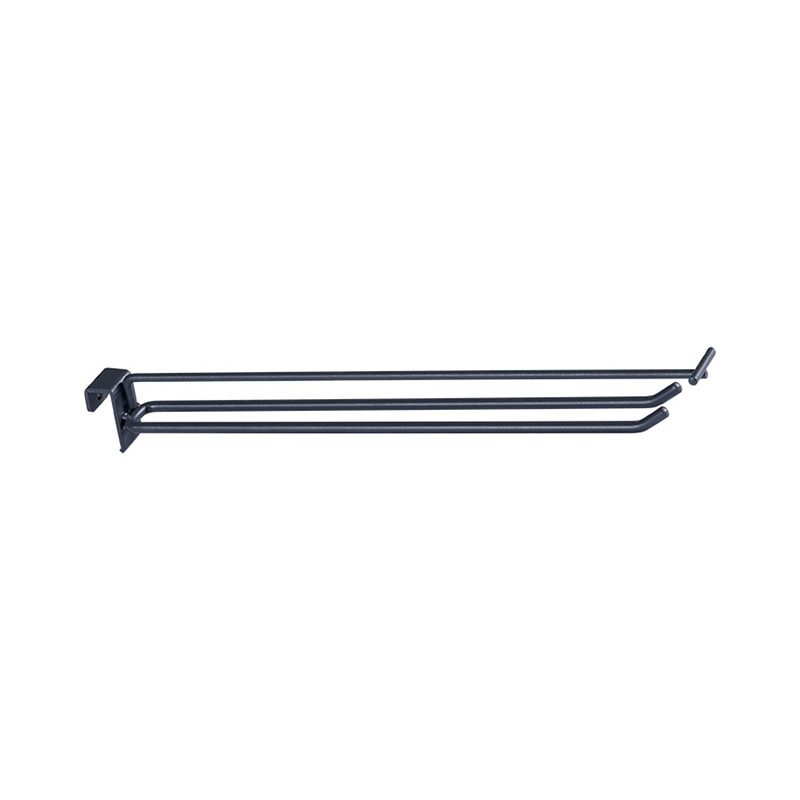
- Sweeping. A thief runs a hand along a row of hooks and pulls every item into a bag in one continuous motion. Standard single-wire hooks make this effortless. A double-wire design forces the thief to lift each item over the second rod or push it off the tip, which breaks the rhythm that keeps the theft unnoticed.
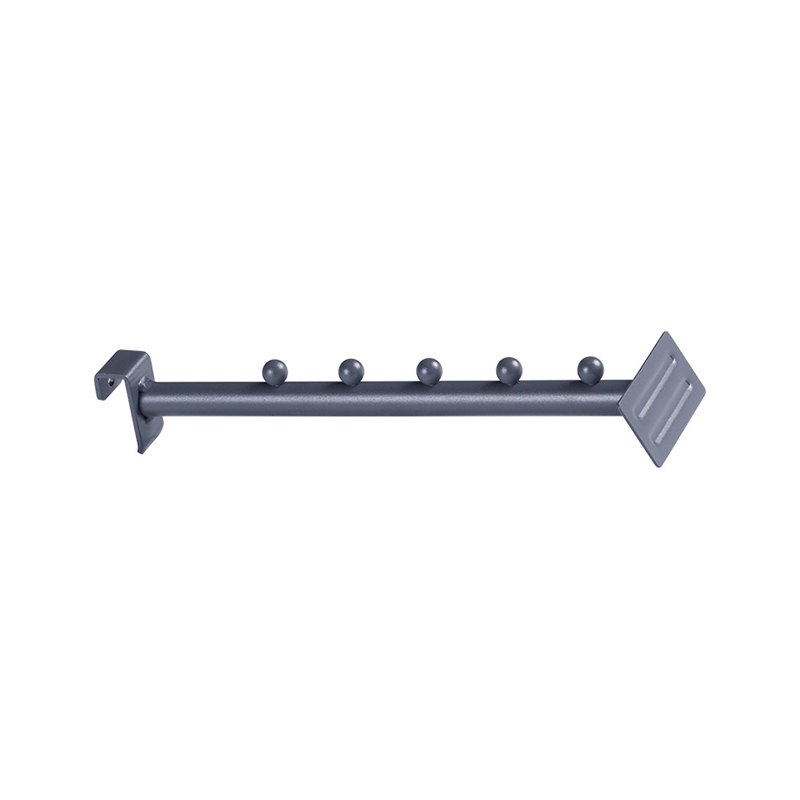
- Snatch-and-grab. An anti-drop hook with a raised ball or multi-bead end blocks direct removal. The item must be lifted deliberately over the bead, turning a one-second grab into a two-step action that staff and cameras can catch.
- Package splitting. A thief tears a multipack open to remove one unit. Rigid hooks that hold packaging securely without flexing remove the leverage needed for the tear.
For heavier packaged goods, the dual-rod configuration also prevents a single violent jerk from bending the hook and dumping an entire facing onto the floor. That loss is damage rather than theft, but it still lands on the store's profit and loss statement.
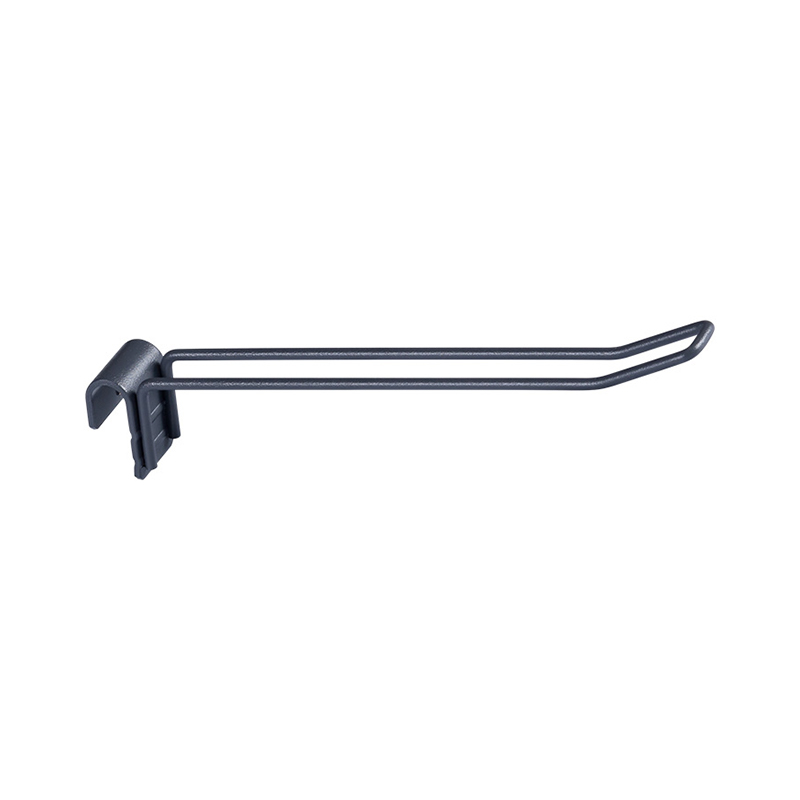 Dual-Wire Heavy-Duty Display Hook for Retail Stores and SupermarketsThis reinforced dual-wire hook offers high load capacity and lateral stability for heavy or dense hanging displays. Its rigid structure resists bending and sway, making it a practical choice for securing bulky products and reducing theft-related losses.View Product →
A hook that adds two seconds of manipulation time reduces opportunistic theft attempts by an estimated 40 to 60 percent in monitored retail test aisles, because the thief simply moves on to an easier target.
The governing principle is inertia: the harder a hook is to defeat in one motion, the less likely the attempt happens at all. Single-wire hooks remain suitable for low-risk, low-value items, but any SKU with a street value above $8 or a high theft velocity deserves a double-wire or anti-drop solution.
Shelf Dividers Stop the Quiet Loss: Stock Drift and Facing Failure
Shelf dividers prevent a slower, less visible form of loss: planogram drift that creates inaccurate inventory, over-ordering, and missed out-of-stock signals.
When products are not separated into fixed lanes, they drift, collapse, and mix. A customer who pulls one item can knock over the entire row behind it. The product that falls behind the shelf, gets crushed at the back, or sits misaligned in the wrong facing is not available for sale, and it will not appear in a clean cycle count. Retail operations teams report that up to 30 percent of out-of-stock scan-outs during an audit are actually misplaced product hiding behind or beside the wrong facing.
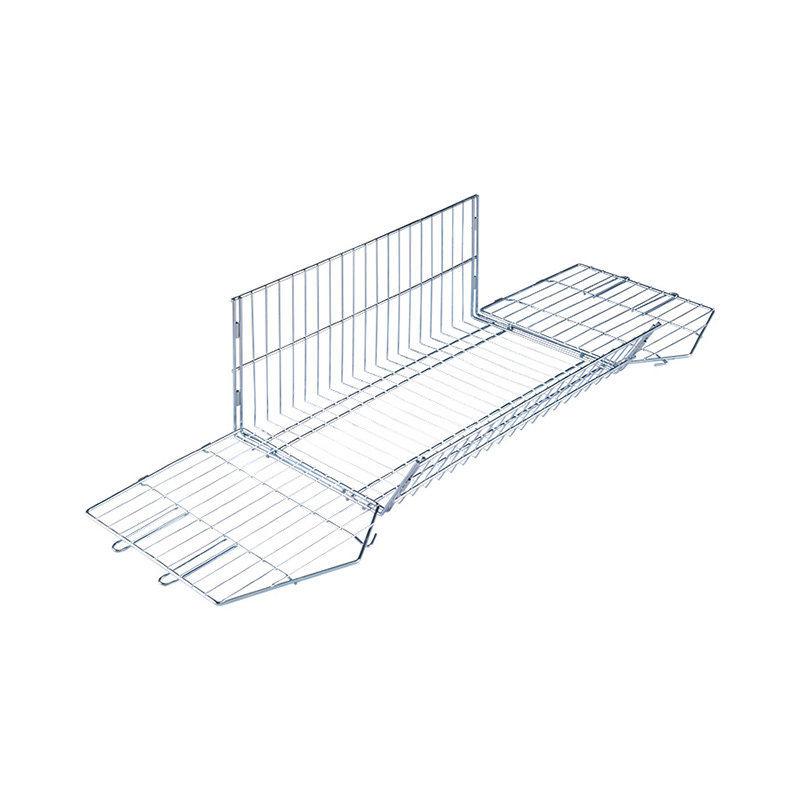
Divider hardware fixes the lane so the gap becomes the signal. An anti-slip wire divider holds products upright, prevents the domino effect between columns, and gives every SKU a defined footprint. When a lane is empty, the empty lane is visible at a glance, and staff can react before the gap turns into a lost sale or a phantom inventory record.
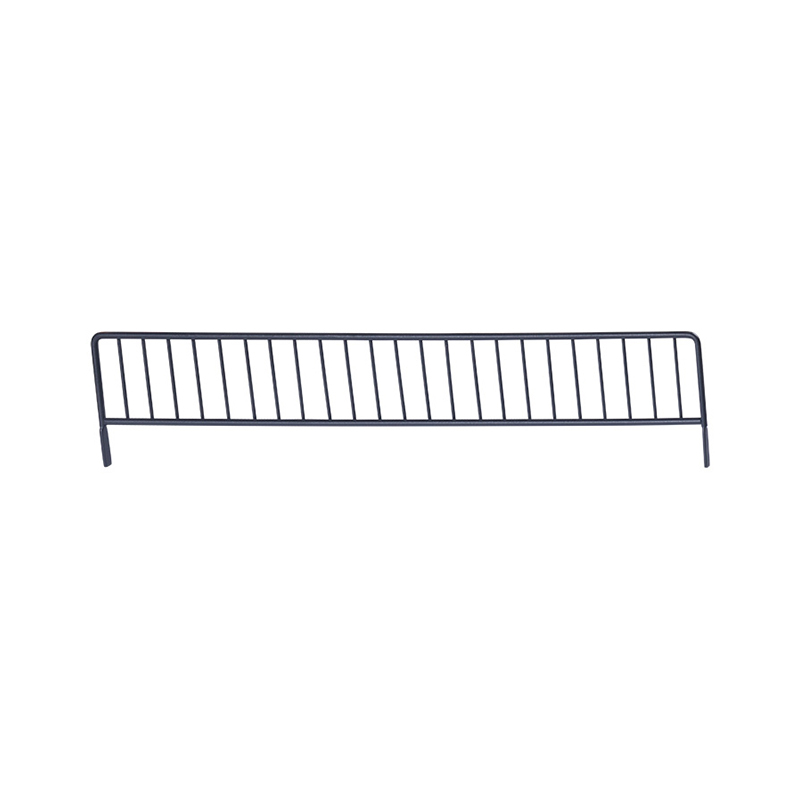 Anti-Slip Wire Shelf Dividers for Product SeparationThese wire dividers keep products upright and separated into clear zones, preventing mixing and revealing empty lanes at a glance. Their anti-slip design maintains stable shelving, supporting accurate inventory and timely restocking in retail environments.View Product →
A divider does not stop a thief, but it makes inventory honest. Honest inventory is the foundation of every loss-prevention program.
With dividers
- Stable lane geometry, no column collapse
- Empty facings visible at a glance
- Cycle counts match shelf reality
- Planogram compliance improves reorder accuracy
Without dividers
- Products drift and mix into neighboring lanes
- Empty spots hide behind leaning packages
- Counts become unreliable by 15 to 25 percent
- Overstocking masks true demand
Anti-Theft Display Hook Specifications That Determine Resistance
Not all display hooks are equal, and the difference is measurable in theft resistance, service life, and customer experience.
Four specifications matter most: wire gauge, end-tip design, mounting type, and surface finish. Wire gauge determines how much force the hook absorbs before it bends, and a bent hook is a broken deterrent. End-tip design sets the removal difficulty. Mounting type affects stability: a hook that rocks in its pegboard hole gives a thief leverage. Surface finish decides whether the hook still functions after years of humidity, cleaning chemicals, and constant loading. Fixtures that rust, peel, or loosen are quickly abandoned by staff, which silently reopens the theft window.
Share of retail shrinkage by cause, based on multi-year industry survey data
A store that standardizes on one mounting system for hooks and dividers simplifies replacement and keeps the loss-prevention configuration consistent across aisles. The choice of pegboard, slatwall, or wire grid panels should be driven by the merchandise plan rather than by hardware availability.
| Hook type | Removal resistance | Best used for | Typical gauge |
| Single-wire pegboard hook | Low | Light, low-risk items | 4-5 mm |
| Double-wire heavy-duty hook | Medium | Heavy packaged goods | 6-8 mm |
| Multi-bead anti-drop hook | High | High-value small items | 5-6 mm |
| Slatwall single-prong hook | Medium | Tagged soft goods | 4-5 mm |
Wire gauge is the first thing a thief tests. A hook that visibly flexes under a yank invites a second attempt; a rigid hook does not.
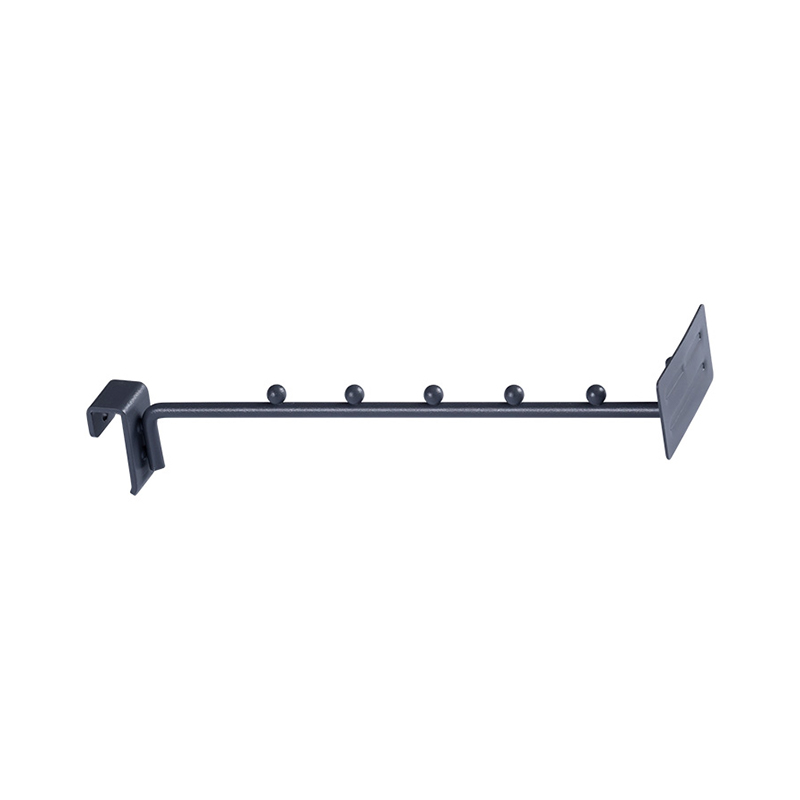 Multi-Bead Anti-Drop Display Hook for Supermarket ApparelThis hook is engineered for lightweight garments like bras, with an anti-drop design and integrated label holder. Its rigid structure discourages tampering while providing secure, organized display, making it a reliable fixture for apparel sections.View Product →
Calculating the ROI of Anti-Theft Fixtures
The return on anti-theft fixture investment is fast enough to justify replacement even on fixtures that are still functional.
The math is straightforward. Take a store with 500 linear meters of gondola shelving. Replacing standard hooks with anti-drop or double-wire variants on the top 20 percent of high-risk SKUs, about 1,000 hooks at a blended cost of $3.50 each, represents a one-time outlay of $3,500. If those SKUs drive $50,000 in monthly sales and the store reduces their shrink from 4 percent to 2 percent, the monthly saving is $1,000. Payback lands at 3.5 months, and every prevented dollar after that is direct margin.
Annual saving = high-risk SKU sales x shrink reduction x 12
Payback months = fixture investment / monthly saving
Retailers that pair fixture upgrades with staff training on facing discipline and cycle counting report a compounding effect: inventory accuracy improves, emergency reorders drop, and safety-stock requirements fall. The integrated store solutions approach treats hooks, dividers, and guardrails as one system rather than isolated accessories, which is why the strongest loss-prevention programs combine fixture selection with operational routines.
Frequently Asked Questions
Do anti-theft display hooks work with existing pegboard or slatwall?
Yes. Most anti-theft hooks are designed to match standard pegboard hole spacing, slatwall channel widths, and wire grid panels. Confirm the hole diameter and panel thickness before ordering; stores that standardize on one mounting system simplify future replacements and keep protection consistent.
Can shelf dividers be retrofitted onto shelves already in service?
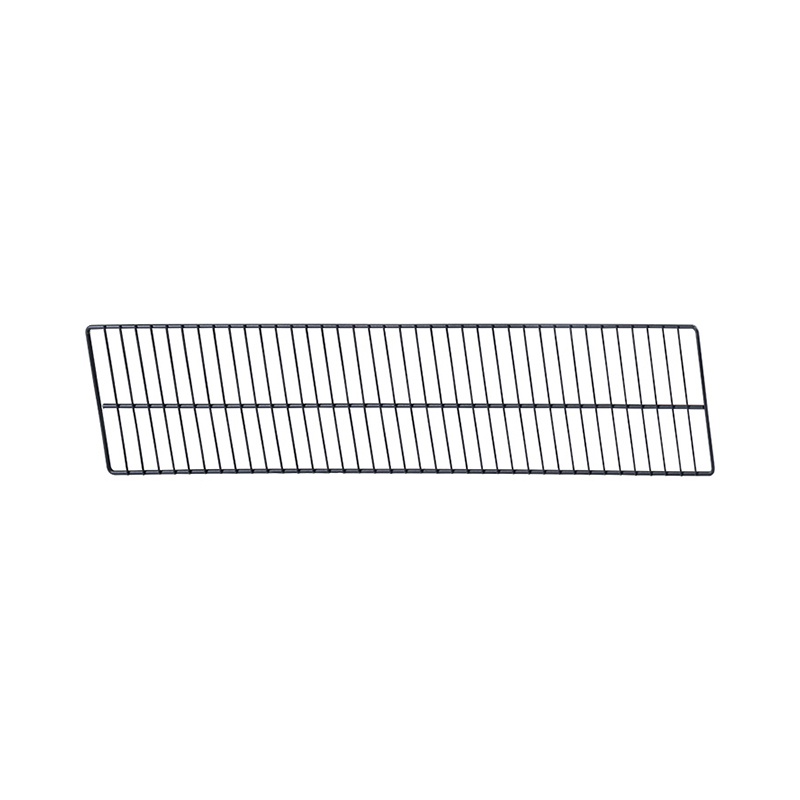
Yes. Wire shelf dividers install without tools on most flat steel or wire-deck shelves. The critical measurement is lane depth: the divider must reach from the front edge to the rear shelf stop so product cannot slip behind it.
Do these fixtures interfere with EAS tag deactivation at checkout?
Metal fixtures do not interfere with RFID or EAS tag deactivation at the checkout pad. Keep divider and hook coatings intact, however, because scratched or rusted surfaces can scatter detection signals in some EAS configurations. A periodic coating inspection is recommended.
What is the realistic payback period for anti-theft hook replacement?
For high-risk SKUs, payback typically lands between three and six months. The exact period depends on the pre-replacement shrink rate, the price point of the protected goods, and whether the store also tightens its counting discipline.
Retailers evaluating fixture upgrades should start with the highest-shrink SKUs in a single aisle, measure the difference over two full inventory cycles, and then scale the proven configuration across the store. A conversation with a commercial equipment supplier such as Suzhou CERS Commercial Equipment Co., Ltd. helps match fixture types to the store's mounting hardware and product mix, which shortens the payback period and closes the gap between the planogram and actual shelf reality.



- Quick Links
- Home
- About Us
- Sustainable
- News
- Contact Us
- Products
- Supermarket shelf
- Storage rack
- Shopping cart
- Shopping basket
- Shelving Accessories
- Display rack
- Contact us
-
-
+86-18852916580

-
[email protected]

-
No. 9 Yongxin Road, Wangzhuang Industrial Park, Shanghu Town, Changshu City, Jiangsu Province, China

-

