- Tel: +86-18852916580
- Suzhou CERS Commercial Equipment Co., Ltd.
- Email: [email protected]
- Tel: +86-18852916580
- Suzhou CERS Commercial Equipment Co., Ltd.
- Email: [email protected]


 Español
  عربى
عربى  Deutsch


Industry News
Home | News | Industry News | Super Market Shelves: A Comprehensive Guide to Types, Components & Configuration
Super Market Shelves: A Comprehensive Guide to Types, Components & Configuration
Written by | Jul 07,2026
Content
- 1 Super Market Shelves — Comprehensive Guide
- 2 1. Introduction
- 3 2. Four Core Functions of Super Market Shelves
- 4 3. Understanding Shelf "Language" by Form
- 5 4. Deconstructing Shelving: Core Components and Functional Logic
- 6 5. Key Design Parameters for Shelving
- 7 6. Shelving Selection and Configuration
Super Market Shelves — Comprehensive Guide
1. Introduction
- Super market shelves are not merely "racks for holding products" — they are the most core sales tools and consumer guidance media in the retail space. They determine what customers see first, which path they take, and what they stop to buy. They serve as the physical interface connecting merchandise with consumers.
- The shelving system determines how products are seen, accessed, and purchased, directly influencing customer traffic flow, dwell time, and average transaction value. The display method of a single set of shelves can create a sales difference of more than 30% for the same product.
- In the new retail era, the role of shelves is shifting from "passive display" to "active guidance." Traditional shelves simply "put products out," while modern shelves comprehensively fulfill the functions of attracting attention, conveying information, and stimulating purchase desire.
2. Four Core Functions of Super Market Shelves
2.1 Display Function — Let Products "Speak for Themselves"
- Shelves are the "stage" for products, determining the visual presentation of merchandise. A good display can make ordinary products look more valuable, while a poor display may cause quality products to go unnoticed.
- Different display methods have significantly different effects on product appeal:
- Flat display: Suitable for regularly packaged goods, allowing customers to view all products at eye level for easy comparison and selection. This is the most basic display method, applicable to most packaged products.
- Hanging display: Suitable for products with hanging holes or suspendable packaging, making full use of vertical space and freeing products from shelf constraints. Common in stationery, hardware, accessories, and similar categories, significantly increasing SKU display density per unit area.
- Stacked display: Suitable for bulk or large items. Stacking large quantities of the same product creates a visual impact of "abundant supply at good value," commonly used for promotional displays and warehouse-style shelving, effectively stimulating impulse purchases.
- Three-dimensional display: Uses tiered shelving to create stepped displays, gradually elevating rear rows so every product is visible and rear items are not blocked. Suitable for categories with rich variety but small individual volumes, such as cosmetics and seasonings.
- The concept of the prime sight zone and product placement strategy: The prime zone is at eye level (approximately 1200–1600mm), where customers can most easily see and reach products. High-margin products, new items, and key recommended products should be placed here, while low-margin traffic drivers can be placed below or above the prime zone.
- The impact of back panel material and color on product visual presentation:
- Dark back panels (dark gray, navy, black) highlight brightly colored packaging, making vivid products "pop" against the dark background. Suitable for categories with rich packaging colors such as snacks, beverages, and children's products.
- Light back panels (white, cream, light gray) create a bright, clean, and airy visual atmosphere, suitable for premium supermarkets and imported goods sections. They make products look more refined and upscale while making the overall store feel more spacious and bright.
- Mirrored back panels reflect light and product images, greatly enhancing product quality perception. Commonly used in cosmetics, jewelry, eyewear, and similar categories requiring refined presentation, but they show fingerprints easily and have higher maintenance costs.
- The role of lighting in enhancing product display:
- Color temperature selection varies by category: warm light (2700–3000K) enhances the color and freshness of fresh produce, baked goods, and deli items; neutral light (around 4000K) provides natural, true-to-life color rendering suitable for most categories including food and daily necessities; cool light (above 5000K) highlights the sleek texture of electronics, jewelry, and glassware.
- Shelf strip lighting should be installed at the front edge of each shelf, angled downward to illuminate products from above, while avoiding direct light into customers' eyes to prevent glare.
- Accent lighting vs. ambient lighting: Key product areas should receive 2–3 times the average store illumination, creating contrast that naturally draws customer attention to high-margin or promotional items.
2.2 Storage Function — The Foundation of Space Efficiency
- Shelves must not only "sell products well" but also "hold enough inventory." The quality of storage functionality directly determines the store's inventory turnover efficiency and restocking frequency.
- Restocking functionality and integrated storage design for high-level shelving: In large stores, the top sections of shelves (above 1600mm) often serve not just for display but as "elevated warehouses." Full-case backstock is stored directly on the top shelves of sales fixtures, allowing restocking staff to replenish mid- and lower-level sales areas from the top, significantly reducing the distance and frequency of transport from the backroom and greatly improving restocking efficiency.
- Matching inventory turnover with shelf capacity: Products with different turnover rates require different shelf capacities. High-turnover items (beverages, snacks, daily necessities) may see significant daily sell-through and therefore need larger shelf capacities and more convenient restocking access. Low-turnover items (appliances, furniture, seasonal goods) require less frequent restocking and can allocate more space to display quality rather than storage quantity.
- The logic of matching shelf depth with product packaging dimensions: If the shelf is too shallow, products may extend beyond the front edge and fall off, posing a safety hazard. If too deep, space is wasted at the back, and products pushed to the rear become difficult for customers to reach. The optimal matching principle is shelf depth approximately equal to the maximum product packaging depth plus a 50–80mm margin, allowing products to align neatly and customers to easily reach the deepest items.
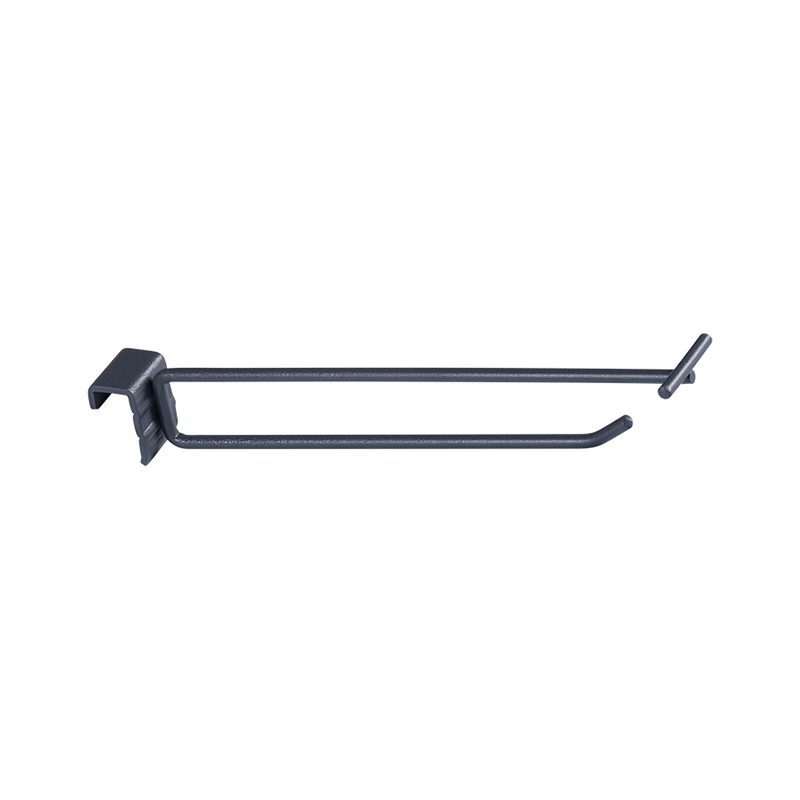
- Back mesh and back panel accessory systems for organizing small, loose items: Not all products are best displayed on flat shelves. For stationery, hardware, accessories, tools, and similar small items, installing hooks, hanging baskets, display boxes, and other accessories on back mesh allows dense vertical hanging display without occupying shelf surface area. This approach significantly increases display density per unit area while keeping products neatly organized and easy for customers to browse and select.
2.3 Guidance Function — Using Shelves to Design Customer Traffic Flow
- Shelf layout is the most powerful "invisible navigation system" in the store. A well-planned arrangement guides customers naturally through the entire store, maximizing exposure to various categories, while poor layout may cause customers to rush through the main aisle and leave, leaving large dead zones.
- Display logic for prime positions such as endcaps, main aisle sides, and front-of-checkout areas: These are locations customers pass through or naturally pause at, with extremely high exposure rates. Endcap displays should be refreshed frequently so customers find something new each visit. Main aisle sides should feature high-frequency daily items to attract customers deeper into the store. Front-of-checkout mini-shelves leverage waiting time to stimulate impulse purchases.
- Creating visual rhythm through varied shelf heights to avoid monotony: If all shelves in the store are the same height, they create a monotonous "corridor" effect. Alternating shelf heights — low at the entrance → rising in the middle → lowering again near the exit — creates a visual rhythm of "peaks and valleys," giving the store more depth and interest, encouraging customers to slow down and browse more.
- The logic of shelf orientation relative to aisle direction:
- Cross-aisle shelving (shelf length perpendicular to aisle direction) guides customers naturally along the main aisle, suitable for main aisle sides.
- Along-aisle shelving (shelf length parallel to aisle direction) allows customers to see through the gaps between shelves to the distance, suitable for express aisles and secondary aisles, helping customers quickly locate target products.
- Height control at the entrance area: The entrance is the customer's first impression of the store. Shelves should not be too high — typically kept below 1350mm — to ensure clear sightlines. Customers entering should be able to see the layout of various categories and the richness of merchandise deep in the store, generating the desire to explore. High shelves at the entrance blocking the view create a sense of oppression and the negative impression of an incomplete selection.
2.4 Marketing Function — Completing Conversion in the Final Meter
- Promotional tables, stack displays, and themed display fixtures are the most direct tools for stimulating impulse purchases. Stack displays create a visual impact of "low-price abundance" by stacking large quantities of the same product, suggesting "so many people are buying this, it must be a great deal," triggering purchase impulse. Themed displays combine related products in a single scene, triggering "scenario association" — when customers see a "BBQ Zone" with grills, charcoal, seasonings, and disposable tableware all together, they naturally imagine hosting their own BBQ party.
- Price channels, POP signage, and digital screens on shelves are the final-meter information delivery channels. POP (Point of Purchase) signage placed at endcaps or shelf front edges uses bold colors and large type to highlight promotional prices and selling points, directly stimulating purchase desire. Digital screens can play product usage videos or countdown timers, capturing attention more effectively than static paper POP.
- Implementation methods for scenario-based displays:
- Traditional supermarkets organize shelves by product category (beverages, snacks, daily chemicals). Scenario-based displays organize products by consumer usage scenarios, gathering everything needed to complete a "mission" in one area.
- For example, a "Hotpot Zone" concentrates hotpot base, various ingredients, dipping sauces, beverages, and disposable tableware. A "Breakfast Zone" showcases cereals, milk, jams, bread, and coffee together.
- This display approach enables customers to complete "one-stop scenario shopping," significantly increasing average transaction value.
- The strong correlation between endcap high-visibility and high-margin products: Endcaps have the highest sales output per unit area in the store — typically 3–5 times that of regular shelf positions. The principle of endcap display is "high margin + high turnover + strong visual impact." All three elements are indispensable. Low-margin products on endcaps waste prime space, and low-turnover products cannot fully leverage the rapid turnover advantage of endcaps.
- The design logic of front-of-checkout mini-shelves for "queue consumption": While customers wait in the checkout line, their eyes naturally scan the mini-shelves in front of the register. At this moment, customers' brains are in a "waiting mode" — price sensitivity drops and resistance to impulse items weakens. Therefore, front-of-checkout shelves should feature small, high-margin, standardized-packaging impulse items — gum, batteries, chocolate, contraceptives, candies, lighters — using this "queue time" to complete high-efficiency conversion in the final meter.
3. Understanding Shelf "Language" by Form
3.1 Classification by Display Surface and Position
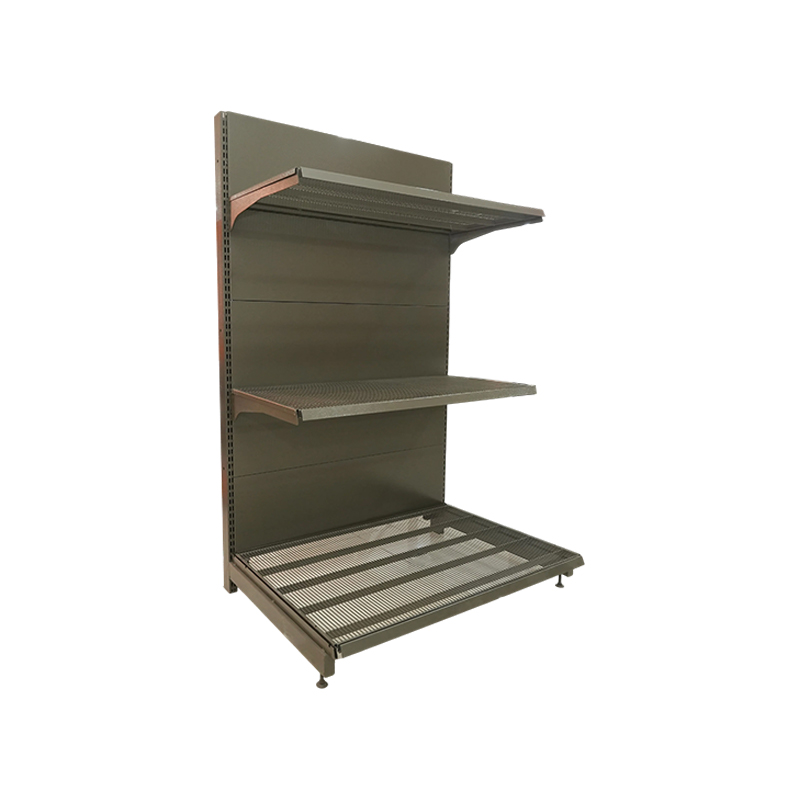
3.1.1 Single-Faced Shelving (Wall Shelving)
- Single-faced shelving is placed against the wall with only one side open to customers. It is the foundational equipment for the store's perimeter traffic system. Because it relies on the wall, its structure is simpler than double-faced shelving, and the back panel can integrate seamlessly with the wall for strong visual unity.
- Suitable for the store's perimeter areas surrounding the entire sales floor, typically used for promotional items, specialty products, brand image products, and planned-purchase items, guiding customers along the perimeter to cover the entire store.
- The upper section (above 1600mm) is primarily used for backstock storage or large-scale brand visual displays — for example, stacking full cases on upper shelves covered with eye-catching brand graphics, conveying product abundance while decorating the wall.
- The mid-to-lower section (below 1600mm) is the core sales area, housing high-frequency and high-margin products within comfortable sightlines and easy reach.
- The back panel of single-faced shelving is an important carrier for brand image integration, allowing brand colors, lightbox advertising, or embedded logos — making wall areas the most brand-intensive positions in the store. In premium supermarkets, single-faced shelving often uses wood back panels and warm strip lighting to create a boutique atmosphere.
- Applicable scenarios: Brand image zones, new product display zones, premium product zones, imported product zones, wall promotional zones.
3.1.2 Double-Faced Shelving (Island Shelving)
- Double-faced shelving allows display on both sides and is the absolute mainstay of the central store area. With dual-side utilization, space efficiency is maximized, making it the most numerous shelving type in stores.
- Double-faced shelving is arranged in rows along both sides of aisles. Customers walking through aisles can see products on both sides simultaneously, achieving high browsing efficiency. Therefore, double-faced shelving along main aisles typically holds high-frequency purchase items, while secondary aisles hold lower-frequency or planned-purchase items.
- The width selection of double-faced shelving directly impacts aisle spatial perception and overall sales per unit area:
- Excessive width (e.g., double-faced units over 600mm) narrows the aisle, compressing the space between shelf rows and creating congestion for customers and shopping carts.
- Insufficient width wastes floor space and reduces sales per unit area.
- The recommended ratio is shelf width to aisle width approximately 1:1.5–2, balancing smooth traffic flow with high space utilization.
- Double-faced shelving requires symmetrical shelf design on both sides to ensure equal display capacity on each side. Back mesh is typically open (rather than closed back panels) to reduce weight and maintain transparency, allowing customers to glimpse products on the other side and enhancing the exploratory shopping experience.
3.1.3 Endcaps
- Endcaps are located at the ends of double-faced shelf aisles and are the natural endpoint of customer sightlines. When customers walk down an aisle, the endcap at the end is the visual "destination," with far higher exposure than shelves along the aisle sides.
- Endcaps are the "prime real estate" of the store, typically generating 3–5 times the sales per unit area of regular shelves. A well-executed endcap display can contribute 20%–30% of the total sales of an entire aisle's shelving during a promotional period.
- Endcap display principles:
- Endcap displays should be refreshed frequently — typically by promotional cycle (weekly or bi-weekly) — maintaining customer freshness and anticipation.
- Endcaps should not feature too many SKUs; generally 2–4 products suffice. Too many categories dilute visual impact.
- Endcap themes should be prominent with eye-catching pricing, using large-format POP posters and bold colors to attract attention from a distance.
- Endcap design considerations: The endcap face should directly face the main aisle, ensuring customers see the endcap content from the aisle entrance, avoiding obstruction by shelf side panels.
3.1.4 Island Displays
- Island displays stand independently in the central store area, open to customers on all four sides. With 360-degree accessibility, customers can approach products from multiple directions, increasing product exposure.
- Island displays are commonly used for key recommended products, specialty items, and brand pavilions. For example, during a new product launch, a four-sided island display can showcase a brand's full product line, creating a brand "island" effect. For seasonal themed displays (Christmas gifts, Mid-Autumn Festival mooncakes, Valentine's Day chocolates), island displays are also the ideal vehicle for creating thematic atmosphere.
- The center of island displays often accommodates three-dimensional brand imagery or lightboxes, making the entire "island" a visual focal point in the store, serving both display and traffic-attraction functions.
- Applicable scenarios: Seasonal themed displays, new brand launches, specialty product showcases, experiential zone product displays.
3.1.5 Promotional Tables and Stack Displays
- Promotional tables and stack displays use pallets, enclosure panels, folding frames, and similar structures placed in aisles or main aisle areas. These are movable, quick-assembly temporary display equipment.
- Stack displays create a strong visual signal of "large quantity at great price" by stacking large quantities of the same product, triggering a herd mentality — "everyone is buying this, I should too." Stack height is typically controlled between 1.2–1.4m — sufficient visual mass without blocking sightlines or aisle traffic.
- Enclosure panels at the base of stack displays can be printed with brand colors, thematic graphics, promotional pricing, and campaign information, upgrading "temporary stacks" into "brand events" that reinforce the promotional atmosphere.
- Promotional tables and stack displays are suitable for: Major promotional events (Double 11, store anniversaries), seasonal merchandise (New Year goods, mooncakes, zongzi), clearance items, and new product trials. New product launches using stack displays for "first appearance" can quickly establish market presence.
- Promotional tables should be easy to move and assemble — bases can be fitted with locking casters, and panels and display props should use quick-connect or snap-fit assembly for fast theme changes across different promotional periods, reducing storage and management costs of promotional fixtures.
3.1.6 Corner Shelving and Curved Shelving
- Corner shelving and curved shelving are used at aisle corners to eliminate blind spots and smooth traffic transitions. At sharp right-angle corners, conventional rectangular shelving creates "dead corners" on the inside of the turn where customer sightlines cannot reach, wasting display space.
- Curved shelving replaces harsh right angles with rounded structures, allowing customers' sightlines to transition smoothly around corners, naturally seeing products on both sides of the turn — avoiding the "completely missed" phenomenon.
- Corner shelving combined with endcaps is particularly effective, creating "double-sided endcaps" at corners — both directions of the turn can feature endcap displays, effectively turning one corner into two prime display positions and improving sales per unit area in dead zones.
3.2 Classification by Product Category
3.2.1 Food Shelving
- Food shelving serves snacks, beverages, condiments, grains and oils, instant foods, and similar daily grocery categories — the largest share of shelving in supermarkets.
- Shelf height and spacing must flexibly adapt to different packaging sizes:
- Small-pack snacks (chips, cookies, candy) require smaller spacing, typically 200–250mm, maximizing display density.
- Beverages with taller bottles need spacing of 300–400mm.
- Large bottles and grain/oil products require even greater spacing or may need shelves removed for full-case stacking.
- Food shelving must meet strict food safety requirements: Shelf surfaces should be smooth and flat with no sharp edges to avoid damaging packaging or customers. Surface coatings must be non-toxic and non-reactive with food packaging. Shelves must be easy to clean to prevent oil and food debris accumulation that breeds bacteria.
- Food shelving should be separated from non-food shelving to prevent cross-contamination from daily chemical odors or chemical vapors, and also to meet customer expectations for a clean, hygienic environment when selecting food products.
3.2.2 Non-Food Shelving
- Non-food shelving serves daily chemicals, household goods, stationery, small appliances, toys, sporting goods, and similar categories. Compared to food shelving, load-bearing requirements are typically higher (daily chemical products are often bottled liquids; a case of laundry detergent can weigh 15–20kg).
- Non-food shelving requires more functional display accessories: trial-size hooks and testers in daily chemical sections; pen slots and notebook flat display racks in stationery sections; hanging display frames for household goods (e.g., mops, brooms with long handles).
- Non-food shelving offers more diverse display methods than food shelving, combining flat, hanging, and stacked displays to adapt to products of all shapes — from small nail polish bottles to large rice cookers — all on the same shelving system with interchangeable accessories.
3.2.3 Fresh and Refrigerated Shelving
- Fresh and refrigerated shelving serves produce, meat, seafood, deli, dairy, frozen foods, and other categories with strict temperature and humidity requirements — the most technically demanding shelving type in the store.
- Materials must be rust-proof and corrosion-resistant. Due to high humidity, low temperatures, and frequent water and salt exposure (seafood section), ordinary steel spray-coated shelving will experience coating peeling and rusting within 1–2 years in fresh environments. Fresh shelving must use stainless steel (SUS304 is common), with brushed finish providing scratch resistance and easy cleaning.
- Lighting is critical for fresh shelving: Warm light (2700–3000K) effectively enhances the freshness and color of produce, making leafy greens appear greener and meats more appealing. Illumination in fresh sections is typically higher than in general areas to emphasize "freshness."
- Sloped shelf design is a distinctive feature of fresh shelving: Shelves tilt downward toward the front at 5°–10°, using gravity to automatically slide rear products forward as customers take front items. This reduces restocking frequency and keeps shelves looking "full," conveying freshness and abundance.
- Drainage design is essential: Shelves should be perforated or slotted to allow wash water and condensation to drain, with drip trays at the bottom to channel water away, preventing pooling that causes rust and product spoilage.
- For produce sections with misting systems, shelves must be waterproof and insulated — misting lines and nozzles should be concealed within or behind the shelf structure to maintain visual appeal.
3.2.4 Daily Chemical and Beauty Shelving
- Daily chemical and beauty products are primarily small items — small in size, numerous in variety, and with exquisite packaging design — requiring far greater precision than other categories.
- Due to small product sizes and numerous SKUs, shelf height adjustment requires finer increments. 25mm hole spacing is the basic requirement for daily chemical and beauty sections, enabling precise fit for different small-bottle heights, avoiding wasted space or items that don't fit.
- Tilted shelves are widely used in daily chemical and beauty sections: Shelves tilt forward 5°–8°, allowing products to slide naturally to the front edge, making them easy for customers to reach without reaching deep into the shelf. Additionally, neatly aligned front edges create a tidy, attractive visual appearance.
- Mirrored or bright-color back panels are frequently used in beauty sections. Mirrored back panels double the visual quantity of products through reflection, creating an impression of "abundant display." Bright back panels (white, pink, champagne gold) brighten product packaging colors, making beauty products more eye-catching.
- Daily chemical and beauty shelving typically requires trial-size display stands or sample hooks, allowing customers to test product texture and fragrance before purchasing — an essential supporting feature for conversion in beauty sections.
3.2.5 Apparel and Textile Shelving
- Apparel and textile shelving uses a combination of hanging and folded displays — both are indispensable.
- Hanging sections are equipped with hanging rods and hangers. Rod heights should be set differently by garment length:
- Short tops: approximately 1200–1400mm.
- Mid-length styles: approximately 1500–1700mm.
- Dresses and long coats: 1800mm or higher to prevent hemlines from touching the floor.
- Folded display shelves are shallower, typically 300–400mm, since folded merchandise is displayed flat and does not require deep shelving. Spacing between folded shelves is generally 250–350mm — enough for customers to see the top surface of folded items without wasting vertical space.
- Apparel shelving should be accompanied by accessory display racks near fitting rooms (scarves, belts, bags, shoes, and other complementary items), leveraging the "accessory purchase impulse" during fitting to drive add-on sales.
- Apparel shelving style must align with brand identity — fast-fashion brands suit clean, bright white steel shelving; premium womenswear brands prefer dark wood shelving for an upscale feel; children's sections require colorful, rounded-edge safety designs.
3.2.6 Electronics and Appliance Shelving
- Electronics and appliances span an enormous size range — from phones and headphones to washing machines and refrigerators — so load-bearing and dimensional requirements vary significantly.
- Electronics accessories (phone cases, chargers, headphones, cables) have low load-bearing requirements but require fine display organization and anti-theft measures. They often need dividers and display hooks on shelves to keep each small item neatly organized and separated.
- Small appliances (rice cookers, induction cookers, ovens, vacuum cleaners) require higher load-bearing capacity — medium-duty shelf levels (150–300kg per shelf) and shelf depth of 500mm or more to accommodate most appliance packaging dimensions.
- Electronics and appliance shelving requires cable management: Display surfaces should have cable access holes for routing power and data cables discreetly to the back or bottom, avoiding messy cables on display surfaces.
- Shelving must also provide power outlets for live product demonstrations (TVs playing content, speakers playing music, small appliances demonstrating operation) — a key functional difference from traditional supermarket shelving.
- Anti-theft devices for high-value products are also essential: Phones, tablets, and similar high-value items require security locks or alarm systems, and shelves must pre-accommodate mounting interfaces and power for these devices.
3.3 Classification by Material and Style
3.3.1 Steel Spray-Coated Shelving
- Steel spray-coated shelving is the absolute mainstream of supermarket shelving, with the highest degree of industrial standardization and market share — found everywhere from hypermarkets to community stores, from food sections to daily chemical sections.
- Core advantages: Sturdy and durable, strong load-bearing capacity, fire resistance, controllable cost, and customizable colors. By changing the powder coating color, shelf colors can be unified with store VI systems, or color-coded by category (warm tones for food, cool tones for daily chemicals, green for fresh sections) for visual zoning.
- Surface treatment is electrostatic spray coating: Under high-voltage static electricity, powder particles adhere uniformly to steel surfaces and fuse into a dense coating after high-temperature curing. Coating thickness must reach 60μm or more for adequate rust protection and scratch resistance. Quality spray-coated shelving has a service life of 8–12 years under normal usage.
- Applicable scenarios: Hypermarkets, standard supermarkets, community stores, warehouse stores — covering virtually all conventional supermarket formats.
3.3.2 Stainless Steel Shelving
- Stainless steel shelving is primarily used in fresh produce, seafood, meat, deli, dairy, and other areas with extremely high hygiene and corrosion-resistance requirements.
- Stainless steel (commonly SUS304) offers superior corrosion resistance against water, salt, cleaning agents, and acidic substances (meat juices, fruit and vegetable liquids), resisting rust and bacterial growth, with easy cleaning and disinfection, meeting strict food safety and hygiene standards.
- Stainless steel shelving costs significantly more than steel spray-coated shelving — typically 2–3 times higher. However, its exceptionally long service life in wet environments (up to 15+ years) provides excellent long-term economic value in high-use fresh sections.
- Surface finish options: Brushed finish has fine linear texture, hides scratches well, suitable for high-frequency cleaning in fresh sections. Mirror finish is bright and reflective, conveying maximum cleanliness for premium fresh displays, but shows fingerprints and scratches more easily, requiring higher maintenance.
3.3.3 Wood and Plywood Shelving
- Wood and plywood shelving is common in premium supermarkets, import stores, upscale retailers, and sections such as bakery, coffee, and wine areas where a warm, natural, high-quality atmosphere is desired.
- Solid wood shelving offers the most prominent texture — natural grain and warm feel — significantly enhancing the store's perceived quality. However, solid wood is costly, prone to warping from moisture, and susceptible to scratches, with high maintenance requirements. It is generally used sparingly in core sections of high-end premium supermarkets.
- Plywood with wood-grain laminate is a more cost-effective alternative: The substrate is multi-layer engineered wood with a high-precision printed wood-grain decorative surface, visually close to solid wood while offering better moisture resistance and durability, at 1/3 to 1/2 the cost of solid wood.
- Moisture protection is critical for wood shelving: Wood shelving near fresh sections should be elevated at the base to avoid direct ground moisture contact. Surfaces require periodic application of protective oil to prevent laminate blistering and substrate swelling.
3.3.4 Acrylic and Glass Display Shelving
- Acrylic (plexiglass) and glass display shelving is primarily used for cosmetics, jewelry, watches, electronics accessories, premium stationery, and other small, high-value items.
- Acrylic displays offer high transparency, light weight, aesthetic appeal, and excellent formability — can be thermoformed into various curved and irregular shapes, offering great design freedom. Acrylic is lightweight and shatter-resistant, making it easy to handle and install. However, surface hardness is lower, prone to scratches from hard objects, requiring periodic polishing.
- Glass displays offer superior transparency and optical quality compared to acrylic, appearing more premium and refined. However, glass is heavy, fragile, and expensive to fabricate, requiring impact-resistant edges and tempered treatment.
- The biggest challenge with acrylic and glass displays is cleaning maintenance: Fingerprints, dust, and water spots are highly visible on transparent surfaces, requiring daily cleaning to maintain display quality — placing higher demands on store cleaning frequency.
3.3.5 Wire Mesh Shelving
- Wire mesh shelving is formed from welded or woven metal wire, offering light weight and high transparency, significantly lighter than steel spray-coated shelving. The open mesh structure allows customers to see through to the back, reducing visual blockage — suitable for areas requiring clear sightlines.
- Wire mesh shelving offers flexible display options: S-hooks for hanging various packaged small items; hanging baskets for loose small items; display boxes for specialty small goods. A single wire mesh unit with dozens of hooks can densely display hundreds of small SKUs, achieving extremely high display density per unit area.
- Wire mesh shelving costs less than steel spray-coated shelving, but load-bearing capacity is limited — not suitable for heavier items. Applicable scenarios: Stationery sections, accessories sections, hardware small-parts sections, promotional hanging displays.
4. Deconstructing Shelving: Core Components and Functional Logic
4.1 Uprights — The "Skeleton" of Shelving
- Uprights are the most critical structural component, bearing the entire weight of the shelving. From the top shelf to the bottom products, all loads are ultimately transferred through shelf brackets to the uprights, then to the floor. Upright strength and stability directly determine shelving safety and service life.
- Common upright cross-section shapes and characteristics:
- C-channel uprights: C-shaped cross-section with rows of holes on the open flanges. Shelf bracket hooks insert directly into these holes. C-channel uprights are the most common type in commercial shelving — easy to install, highly versatile, and cost-effective.
- U-channel uprights: U-shaped cross-section, more rigid than C-channel with better torsional resistance, used for heavy-duty and medium-duty high-capacity shelving.
- Rectangular tube uprights: Square/rectangular cross-section with a clean, modern appearance and no open structure. Visual integration is excellent, used for custom shelving in premium and upscale stores. However, hole systems typically use bolt-fixed rather than hook-in connections, making assembly slower.
- The upright hole system enables infinitely adjustable shelf heights:
- Hole spacing is commonly 50mm (standard) or 25mm (precision). 25mm spacing offers finer adjustment, better accommodating small-item heights — especially suitable for daily chemical and beauty sections. 50mm spacing provides greater structural strength, used for medium and heavy-duty shelving.
- Hole shapes are primarily butterfly holes and square holes. Butterfly holes have a butterfly-like shape — shelf bracket hooks insert directly without tools, making assembly and adjustment fast. This is the dominant hole form in commercial shelving. Square holes require bolts and nuts for fixing, with slower assembly but greater connection stability, used for heavy-duty shelving requiring long-term fixed installation.
- Upright material thickness corresponds to shelving load grade:
- Light-duty: 1.2–1.5mm, suitable for food, daily chemicals, and other lightweight items.
- Medium-duty: 1.5–2.0mm, suitable for beverage cases, grains/oils, and similar medium-weight products.
- Heavy-duty: ≥2.0mm, suitable for large water containers, heavy hardware, warehouse-style bulk packaging, and other heavy-load scenarios.
- Uprights must be equipped with leveling feet at the base, typically with ±30mm adjustment range, for leveling on uneven floors to ensure vertical stability and no wobble. Top caps protect hole ends from dust and enhance appearance. For vertical stacking, upright tops can also accommodate connectors for stacking additional tiers.
4.2 Shelves — The Direct Contact Surface with Products
- Shelves are the horizontal panels that directly support and hold products — also the component customers see and interact with most. Shelf flatness, smoothness, and stability directly affect product presentation and customer access experience.
- Different shelf depths suit different categories — choosing wrong either wastes space or causes product falls:
- 300mm: Small daily chemicals, stationery, accessories, small-pack snacks — maximum 2 rows deep.
- 350mm: Beauty products, supplements, small condiment bottles.
- 400mm: The most common standard depth — most conventional food and daily necessities, 2–3 rows deep.
- 450mm: Beverages, large condiment bottles, household goods with larger volumes.
- 500mm: Small appliances, folded textiles, medium-sized toys.
- 600mm: Large items, full-case displays, warehouse-style stacking.
- Solid shelves vs. perforated shelves:
- Solid shelves: Smooth, flat surface suitable for all categories — products sit stably, easy to clean, and visually clean. The first choice for most areas.
- Perforated shelves: Surface has evenly spaced round or slotted holes for ventilation, suitable for fresh produce and fruit/vegetable sections (reducing moisture accumulation and product spoilage). Holes also accommodate hooks, making shelves and hook accessories interchangeable.
- Tilted shelf design (front lower than back, typically 5°–15° angle) uses gravity to slide rear products forward as customers take front items. Often combined with rollers or tracks, widely used for beverages, condiments, dairy, and other high-turnover products — significantly reducing restocking labor and keeping shelf fronts consistently full.
- Shelf brackets connect shelves to uprights:
- Hook-in brackets are the most common — the bracket rear has hooks that insert directly into butterfly holes, requiring no tools for installation or adjustment. Highly efficient, suitable for light and most medium-duty shelving.
- Bolt-fixed brackets are used with square-hole uprights — bolts secure the bracket to the upright, providing greater load capacity and resistance to wobble. Suitable for heavy-duty and long-term high-load applications, but adjustment requires tools and is slower.
- Reinforcement ribs under shelves are critical: For shelves 900mm wide or wider, the center tends to sag under load, potentially causing permanent deformation over time. Therefore, at least one rib is needed for widths under 900mm, and at least two for 900–1200mm. Ribs keep shelves flat under heavy loads.
- Anti-slip front edges: For tilted shelves and angled displays, rubber strips or metal retaining bars can be added to the front edge to prevent products from sliding off, protecting both products and customer safety.
4.3 Back Panels and Side Panels — Unity of Function and Decoration
- Back panels are panels or mesh installed at the rear of shelving, serving multiple functions beyond mere decoration.
- Specific functions of back panels:
- Structural reinforcement: Closed back panels connect with uprights and shelves to form a box-like structure, significantly improving overall torsional rigidity and overturning resistance.
- Dust and dirt protection: Closed back panels block dust and debris from the rear, keeping products clean — especially important in food sections.
- Visual unity: Back panels conceal rear walls, pipes, and other clutter, presenting shelving as a complete visual unit in the store.
- Fall prevention: Products on shallow shelves can easily be knocked off the back — back panels effectively prevent rear product falls.
- Closed back panels vs. open back mesh:
- Closed back panels use full steel sheets, offering greater stability, dust protection, and the ability to feature brand colors and lightbox advertising. However, they are heavier and slightly more expensive. Suitable for wall-mounted single-faced shelving and premium stores.
- Open back mesh uses metal wire mesh, offering light weight and high transparency — customers can see through to the rear, reducing visual obstruction. Mesh also serves as a hook display surface — S-hooks can attach directly to mesh openings. However, dust protection is weaker and hook load capacity is limited. Suitable for island double-faced shelving, small-item sections, and promotional areas.
- Back panel height matching:
- Full-height back panels: Height matches overall shelving height, typically used for wall-mounted single-faced shelving, creating a complete visual background.
- Half-height back panels: Height is 1/2 to 2/3 of total shelving height, used for island double-faced or open designs, preserving upper transparency and making the store feel more open.
- Side panels and side mesh are installed at both ends of double-faced shelving, primarily to conceal shelf brackets, upright connectors, and product sides — preventing side product falls while improving overall aesthetics. Side panels can also display category identifiers or brand colors, reinforcing visual differentiation of category zones.
4.4 Beams and Connectors
- Beams are horizontal structural members connecting uprights, forming a complete frame and transferring shelf loads to the uprights.
- Common beam cross-section shapes:
- P-beam: P-shaped cross-section, the most common beam type in commercial shelving, compatible with butterfly hole hook-in systems for easy installation. Suitable for light and most medium-duty shelving.
- Rectangular tube: Rectangular cross-section with higher strength than P-beam, used for medium and heavy-duty shelving.
- C-beam: C-shaped cross-section, light and flexible, used for light-duty and display-type shelving.
- Beam-to-upright connection methods:
- Plug-in (hook-in): Beam end connectors insert directly into upright holes without tools — the mainstream method in commercial shelving, offering high installation efficiency.
- Bolt-fixed: Beams and uprights are bolted through, offering superior stability to plug-in connections — suitable for heavy-duty shelving and vibration-prone environments.
- Welded: Beams and uprights are welded into an integral structure — non-adjustable and non-removable, used for custom heavy-duty shelving and fixed warehouse shelving.
- Dividers on beams: Vertical dividers installed along beam direction above shelves, dividing a single shelf into multiple independent sections. This facilitates organization of small items (stationery, daily chemical samples, hardware parts) for neat, orderly display. Divider height is typically 50–100mm, made of plastic or metal, and can be flexibly installed or removed as needed.
4.5 End Caps and Decorative Components
- End caps are protective and decorative fittings covering upright tops and shelf ends. Without end caps, exposed hole edges and bare metal are unsightly and may scratch customers or products.
- End cap material options:
- Plastic or rubber end caps: Low cost, customizable colors, impact-absorbing — protecting customers from injury when bumping shelf ends. The most common choice.
- Metal edge banding: Metal panels matching or contrasting with shelving colors, offering a hard-edged industrial aesthetic. Used in warehouse-style and industrial-design stores.
- Integrated functional features in end caps:
- End panel advertising slots: POP insert slots or brand signage at shelf ends for brand exposure.
- Power interfaces for shelf lighting: Pre-wired power connections inside end caps for easy shelf strip lighting power and wiring.
- Side hooks: Hooks on end cap exteriors add display space on end sides for small complementary items.
- Endcap-specific decorative components: Endcap headers mounted on top with bold promotional messaging; promotional sign frames fixed to endcap fronts or sides for posters and pricing; endcap lightboxes with backlighting ensuring high visibility in any lighting condition.
4.6 Price Channels and Label Systems
- Price channels are linear tracks installed at shelf fronts or beams for holding price labels or product information cards. Though small, they are the "final-meter information" for customer decision-making — poor positioning or design leads customers to abandon purchases due to missing prices.
- Common price channel types and characteristics:
- C-channel strips: C-shaped cross-section, snap-installed into dedicated slots at shelf fronts, continuously covering full shelf edges. Labels insert from the top. Easy to install and low cost — the standard configuration in most supermarkets.
- Magnetic label holders: Attach magnetically to metal shelf surfaces without requiring slots — flexible positioning, suitable for temporary promotional pricing.
- Insert-type label holders: Uniform label sizes and slots — labels insert from the side for quick changes, resulting in neat, organized appearance.
- Electronic shelf labels (ESL): Digital displays that sync price changes from the backend in real-time via wireless communication, eliminating manual label changes and reducing labor costs and pricing errors.
- Price label positioning and sightline alignment: Labels should be positioned directly below or immediately adjacent to the corresponding product, ensuring customers can see both product and price with parallel or slightly downward sightlines. Each independent product should have its own dedicated label to avoid pricing confusion from shared labels.
- ESL installation requirements:
- Typically mounted via clips or magnetic holders at shelf fronts or dedicated tracks — shelving must pre-accommodate ESL mounting tracks or magnetic strips.
- ESLs rely on wireless communication (Bluetooth or ZigBee) — stores must ensure full signal coverage. Metal shelf structures may shield signals, requiring strategic placement of signal repeaters.
- ESL battery life is typically 5–10 years, but shelving must allow access for battery replacement — avoiding designs that block replacement access.
- Price channel uniformity management: Same store should use consistent specifications and colors for visual tidiness. Promotional labels should be visually differentiated from regular labels (red for promotional, white for regular — the most common industry standard). Label font sizes must be legible from 1.5m (body text no smaller than 10pt, prices no smaller than 14pt).
5. Key Design Parameters for Shelving
5.1 Dimensional Specifications
- Standard single-unit widths: 600mm, 750mm, 900mm, 1200mm — with 900mm being the most common and cost-effective. Each unit consists of two uprights and the shelves between them. Greater width increases shelf span, requiring thicker shelves and more reinforcement ribs. Multiple units can be joined end-to-end to create longer shelf runs, with total length equal to the sum of individual widths.
- Standard depths by tier: 300mm, 350mm, 400mm, 450mm, 500mm, 600mm:
- 300–350mm: Shallow (small daily chemicals, stationery).
- 400mm: Most common (food, daily necessities).
- 450–500mm: Deep (beverages, small appliances, folded textiles).
- 600mm+: Extra-deep (large items, full-case displays).
- Deep shelves (≥500mm) require reinforcement ribs to prevent sagging under load.
- Standard heights: 1350mm, 1500mm, 1800mm, 2100mm, 2400mm:
- 1350mm: Low (premium stores, convenience stores, entrance zones).
- 1500mm: Medium-low (community stores).
- 1800mm: Standard (most common, most supermarkets).
- 2100mm: Tall (hypermarkets).
- 2400mm: Extra-tall (warehouse stores).
- Height is constrained by store ceiling height — shelves must clear the ceiling by at least 500mm for sprinkler coverage and air circulation.
- Ergonomic sightline zones (based on 170cm customer height):
- Prime display zone (1200–1600mm): Natural eye-level — no reaching, bending, or stretching. Contributes approximately 60%+ of shelf sales. Place high-margin, key-recommendation, and new products here.
- Waist-level zone (800–1200mm): Requires slight bending — less comfortable than prime zone. Place core regular items and planned-purchase products where customers will bend slightly for familiar items.
- Lower zone (below 800mm): Requires squatting or deep bending — inconvenient access. Place heavy items (large oil containers, large rice bags), bulk packs, and children's products (child eye level ~1000mm).
- Upper zone (above 1600mm): Requires reaching or tools — not suitable for frequent access. Primarily for backstock storage, full-case displays, and large-format brand imagery.
5.2 Load Capacity Grades
- Light-duty: 50–100kg per shelf. Suitable for packaged food, daily necessities, textiles, stationery, and similar lightweight items. Upright thickness 1.2–1.5mm, shelf thickness 0.5–0.7mm.
- Medium-duty: 150–300kg per shelf. Suitable for beverage cases, grains/oils, small appliances, daily chemicals (bottled liquids), and similar medium-weight products. Upright thickness 1.5–2.0mm, shelf thickness 0.8–1.0mm — the mainstream grade in commercial shelving.
- Heavy-duty: 350kg+ per shelf. Suitable for large water containers, heavy hardware, warehouse-style bulk packaging. Upright thickness ≥2.0mm, shelf thickness ≥1.2mm. Used in warehouse stores and heavy-product areas.
- Load selection safety principle: Rated load is measured under uniformly distributed load conditions. Actual use requires a safety factor of 1.5–2x. For example, a shelf rated 100kg should hold no more than 50–67kg. Uneven loads (heavy items concentrated on one side or point) significantly reduce actual capacity — distribute weight evenly across shelf surfaces.
- Multiple factors influence load capacity: Shelf load depends not only on shelf thickness but also on bracket strength, beam span, upright specifications, and connector integrity. A single weak component can compromise the entire load chain.
5.3 Shelf Adjustment Increments
- Standard adjustment increments: 50mm and 25mm:
- 50mm: Most common in commercial shelving — coarser adjustment but greater structural strength, suitable for most food and daily necessity categories.
- 25mm: Precision adjustment — used primarily for daily chemical and beauty sections, allowing fine-tuned fitting of small items to avoid wasted vertical space.
- Greater adjustment flexibility means better adaptability to product height changes: With 25mm hole spacing, when product height changes from 80mm to 105mm (only 25mm difference), shelves can be moved up or down one notch for perfect fit. With 50mm spacing, one notch may be too high, the next too low — resulting in some wasted space.
- Adjustment method depends on hole system: Butterfly hole systems allow bracket reinsertion without tools — a single person can adjust a full shelf in seconds. Square-hole bolt systems require tools — slower but more secure, suitable for infrequent adjustments.
5.4 Aisle Width and Shelving Layout Relationship
- Main aisles are the store's busiest traffic arteries, with recommended width ≥1.5m (up to 2.2–2.5m in hypermarkets). Main aisles must accommodate two-way shopping cart traffic and customer stopping to browse. Products along main aisles should be high-frequency items (beverages, snacks, daily necessities), leveraging traffic flow to drive exposure and sales.
- Secondary aisles connect main aisles to category zones, with recommended width ≥1.0–1.2m — sufficient for basic traffic and in-aisle browsing. Secondary aisles should feature lower-frequency and planned-purchase products (condiments, grains/oils, household cleaners).
- Shelf height to aisle width ratio: Taller shelves require wider aisles, otherwise customers experience oppressive "canyon" effects, reducing shopping comfort. A general guideline is shelf height to aisle width = 1.5–2:1. For example, 2400mm shelves should have at least 2.2m aisles.
- Aisle ends and corners require at least 1.2m turning radius for smooth shopping cart navigation without collisions or obstructions. No uprights or sharp shelf corners should be placed in turning zones to prevent customer injury.
- Fire and safety code constraints on aisle width: Main aisles must meet fire egress requirements — typically at least 1.4m minimum. Shelf-to-ceiling clearance must allow sprinkler coverage (minimum 500mm). Shelving must not obstruct fire extinguishers, fire hose cabinets, or exit signs — these are legal requirements that must be followed during layout planning.
6. Shelving Selection and Configuration
6.1 Configuration Strategies by Store Format
6.1.1 Hypermarkets (5,000+ sqm)
- Hypermarkets have enormous category breadth and SKU count, with core logic of "capacity first, category completeness." Shelving must be diverse — single-faced, double-faced, endcaps, island displays, stack displays, promotional tables — full coverage.
- Shelving height: Primarily 2100–2400mm tall shelving to maximize vertical space. Extensive use of endcaps and stack displays — endcap count often reaches dozens, distributed at aisle ends as primary promotional battlegrounds.
- Main aisles ≥2.2m wide to accommodate high customer flow and simultaneous cart traffic. Category zoning is distinct — food, non-food, fresh, and general merchandise occupy separate areas, each internally organized by subcategory.
- Warehouse-style restocking design is common: Upper shelves (above 1600mm) serve dual purpose as inventory storage, reducing backroom area and restocking travel distance. Restocking staff use ladders to retrieve cases from upper shelves and replenish mid-to-lower sales areas.
6.1.2 Standard Supermarkets (1,000–5,000 sqm)
- Standard supermarket shelving must balance display quality with space utilization. Double-faced shelving (island) is the absolute mainstay, accounting for 60%–70% of total shelving.
- Shelf height: Primarily 1800–2100mm — sufficient vertical display capacity without visual oppression. Endcap count is limited (typically 10–20 units) — prioritize high-margin, high-turnover, and current key promotional products.
- Main aisle width: 1.8–2.0m; secondary aisles: 1.2–1.5m — appropriate for medium customer density. Standard supermarkets require high layout flexibility — because store size is moderate and category adjustments frequent, shelving must allow rapid reconfiguration for seasonal changes, promotions, and category optimization.
6.1.3 Premium and Import Supermarkets
- Premium supermarket shelving prioritizes "quality and atmosphere" above all. Wood shelving, wood-steel hybrid, and custom-shaped fixtures account for a much higher proportion than in hypermarkets or standard supermarkets — shelving itself becomes a key element of store visual identity.
- Shelf height: Typically 1350–1500mm, not exceeding 1800mm. Low shelving keeps sightlines open and lighting bright, creating a relaxed, upscale shopping atmosphere. Customers in premium stores are "browsing slowly" rather than "quickly grabbing," and low shelving extends dwell time.
- Shelf density is lower than in hypermarkets — fewer SKUs per unit, emphasizing "less is more" presentation. Each product has more breathing room. Common practice: 1–2 SKUs per shelf.
- Lighting is more refined — combined shelf strip lighting and spotlights are common, with each product face individually highlighted to emphasize texture and packaging design. Aisles are wider (main aisles ≥2.0m), providing ample space for comfortable browsing.
6.1.4 Community Stores and Convenience Stores (100–500 sqm)
- Community stores and convenience stores have extremely compact spaces — shelving prioritizes "efficiency above all, no wasted space." Shelves are low, typically 1350–1500mm, ensuring customers in tight spaces can still see the entire store without feeling crowded or oppressed.
- Endcaps and front-of-checkout shelving account for a high proportion. In convenience stores, these may contribute 30%+ of total store sales — core output positions. Products here should be refreshed frequently to maintain freshness and surprise.
- Wall shelving is the primary type in community stores and convenience stores, installed along the entire perimeter, leaving central areas for customer activity. Central areas feature low shelving or promotional tables to maintain sightlines — customers can see checkout counters and all category zones upon entry.
- Rear-stocking shelving (restocking from the back, selling from the front) is common in convenience and community stores. Restocking staff access from backroom or rear entrance, completely avoiding customer-facing areas, reducing disruption and improving operational efficiency.
6.1.5 Warehouse Stores (Membership Clubs)
- Warehouse store shelving prioritizes "function above all, rugged and practical." Tall shelving (2400mm+) with forklift restocking — shelving itself serves as storage equipment: lower levels for customer sales, upper levels for full-case inventory.
- Heavy-duty shelves are standard, displaying bulk-pack products — each product is large-format, requiring much higher load capacity and structural strength than conventional supermarket shelving. Aisle width ≥2.5m for forklift and large cart traffic.
- Shelf structure is rugged with industrial aesthetics — surface treatment is typically galvanized or simple spray coating, focusing on load capacity, durability, and restocking efficiency rather than refined appearance. Shelf spacing is generous due to bulk-case display rather than individual small items, requiring less fine tiering.
6.2 Mapping Product Structure to Shelving Types
- Relationship between SKU count and shelving units required: More SKUs require more shelving units and greater total shelf length. One 900mm-wide, 5-shelf unit can typically accommodate 60–100 SKUs (depending on product size and display method). Before procurement, stores should inventory SKUs by category to estimate total shelving requirements and distribution ratios.
- Product packaging dimensions directly determine shelf size parameters:
- Small, lightweight items (snacks, daily chemicals, stationery) — shallow shelves (300–400mm) with many tiers (5–7), maximizing SKU capacity per meter.
- Medium-packaged items (condiments, beverages, canned goods) — medium-depth shelves (400–450mm) with moderate tiers (4–5), balancing capacity and product visibility.
- Large, heavy items (large oil containers, full-case water, appliances) — deep shelves (500–600mm) with fewer tiers (3–4), each with high load capacity and generous spacing for bulk products.
- Product turnover rate affects shelf structure choice:
- High-turnover items (beverages, snacks, daily necessities) — require strong load-bearing, convenient restocking access, and ideally gravity-feed tracks for automatic facing. Shelf capacity should be large to reduce restocking frequency.
- Low-turnover items (appliances, furniture, premium gifts, seasonal items) — prioritize display quality over capacity. Shelf spacing can be more flexible, with fewer items per shelf but more refined presentation.
6.3 Coordinating Store Traffic Flow with Shelving Layout
- Main aisle sides: Place high-frequency items (beverages, instant foods, daily groceries) — using high-traffic products to pull customers along the main aisle. Avoid interrupting main aisle shelving too frequently — maintain continuity and flow.
- Secondary aisles and wall areas: Place planned-purchase items (grains/oils, household cleaners, stationery, textiles) — customers will actively venture into secondary aisles and wall areas for these "known needs," distributing traffic throughout the store and minimizing dead zones.
- Entrance area: Use low shelving (below 1350mm) or image displays — no tall shelving blocking sightlines — ensuring customers see deep into the store upon entry, generating exploration desire.
- Checkout/exit area: Place small shelving and promotional stacks, using waiting time for final impulse conversion.
- Endcap distribution: Endcaps should be naturally distributed along traffic flow — one endcap every 2–3 aisles — keeping promotional content continuously visible throughout the shopping trip. Endcaps should not be placed in dead zones, wasting their prime exposure value.
- Category adjacency logic: Arrange shelves by consumption scenario rather than category name. For example: beverages → snacks → instant foods creates a "young adult snack shopping sequence." Produce → meat → seafood → condiments creates a "home cooking purchase sequence." Scenario-based adjacency reduces product search time and improves shopping efficiency and satisfaction.
- Circulation path design to improve sales per unit area: Layout creates "loops" or "spirals" that naturally guide customers past more shelf units, increasing product exposure and purchase probability. Implementation: tall shelving on the perimeter, low shelving in the center forming "boxes within boxes," with endcaps as directional markers guiding customers through turns rather than back-tracking.
6.4 Special Area Shelving Configuration Details
6.4.1 Fresh Section Shelving
- Fresh section shelving must use stainless steel (SUS304 grade) to resist long-term corrosion from high-humidity environments and salt (seafood sections). Ordinary steel spray-coated shelving will experience coating peeling and rust within 1–2 years in fresh sections, while stainless steel shelving can last 10+ years in the same environment.
- Lighting is integral to fresh shelving: Warm light (2700–3000K) on produce and meat makes leafy greens greener, tomatoes redder, and meat more appealing. Fresh section illumination is typically higher than general areas (800–1200 lux vs. 500–800 lux) to emphasize freshness.
- Fresh shelves should be perforated or slotted to allow wash water and condensation to drain, with drip trays at the bottom to channel water away, preventing bottom-layer product spoilage and bacterial growth.
- Sloped shelves (front lower than back, 5°–10° angle) are widely used in fresh sections, using gravity to automatically slide products forward and reduce restocking frequency. Particularly effective in produce and refrigerated dairy sections.
- If misting systems are used in produce sections, shelves must be waterproof and insulated — misting lines and nozzles should be concealed within or behind the shelf structure. Mist coverage must be precisely directed to product areas, avoiding aisle spray and slip hazards.
6.4.2 Checkout Zone Shelving
- Checkout zone shelving is compact — width typically ≤600mm, height ≤1200mm — positioned adjacent to or in front of registers, without encroaching on cashier workspace.
- Displayed products have distinct characteristics: standardized packaging, high margin, small size, impulse purchase. Typical items include gum, mints, chocolate, batteries, contraceptives, candy, lighters, travel-size daily chemicals.
- Front-of-checkout shelving logic: Customers waiting in line are at seated or standing eye level — they can scan and reach shelf products without bending or stretching. At this moment, customers' brains are in "waiting mode" — price sensitivity drops, impulse resistance weakens — making it the perfect "final-meter conversion" opportunity.
- Checkout shelving should be tightly arranged around registers, using every inch of queue space. Each register can have 2–3 mini-shelving units and 1 endcap, creating a "shop while queuing" experience loop.
6.4.3 Promotional Zone Shelving
- Promotional zones require flexible combination of temporary shelving (stack displays, promotional tables) and permanent shelving. Place promotional zones at main aisles or high-traffic intersections for maximum exposure, ensuring the largest possible customer audience passes through.
- Promotional tables and stacks should be easy to move and assemble — bases with locking casters, panels and display props using plug-in or snap-fit connections for rapid setup — adapting to different promotional cycles (weekly, bi-weekly, monthly). A standardized promotional table system can support dozens of campaigns annually, significantly reducing storage and management costs of promotional fixtures.
- Promotional tables and stacks are typically 1.2–1.4m high — sufficient visual mass for long-distance attention without blocking sightlines or aisle traffic. Enclosure panels at the base can be printed with brand colors, theme graphics, promotional pricing, and campaign details, turning temporary stacks into "brand events" and making promotional zones themselves visually compelling destination points.
Recommended Products
Keep Connected

More Than a Supplier — Your Trusted Partner. CERS — Making Every Store Stand the Test of the Market.
- Quick Links
- Home
- About Us
- Sustainable
- News
- Contact Us
- Products
- Supermarket shelf
- Storage rack
- Shopping cart
- Shopping basket
- Shelving Accessories
- Display rack
- Contact us
-
-
+86-18852916580

-
[email protected]

-
No. 9 Yongxin Road, Wangzhuang Industrial Park, Shanghu Town, Changshu City, Jiangsu Province, China

-
Copyright © Suzhou CERS Commercial Equipment Co., Ltd. Rights Reserved.

