- Tel: +86-18852916580
- Suzhou CERS Commercial Equipment Co., Ltd.
- Email: [email protected]
- Tel: +86-18852916580
- Suzhou CERS Commercial Equipment Co., Ltd.
- Email: [email protected]


 Español
  عربى
عربى  Deutsch


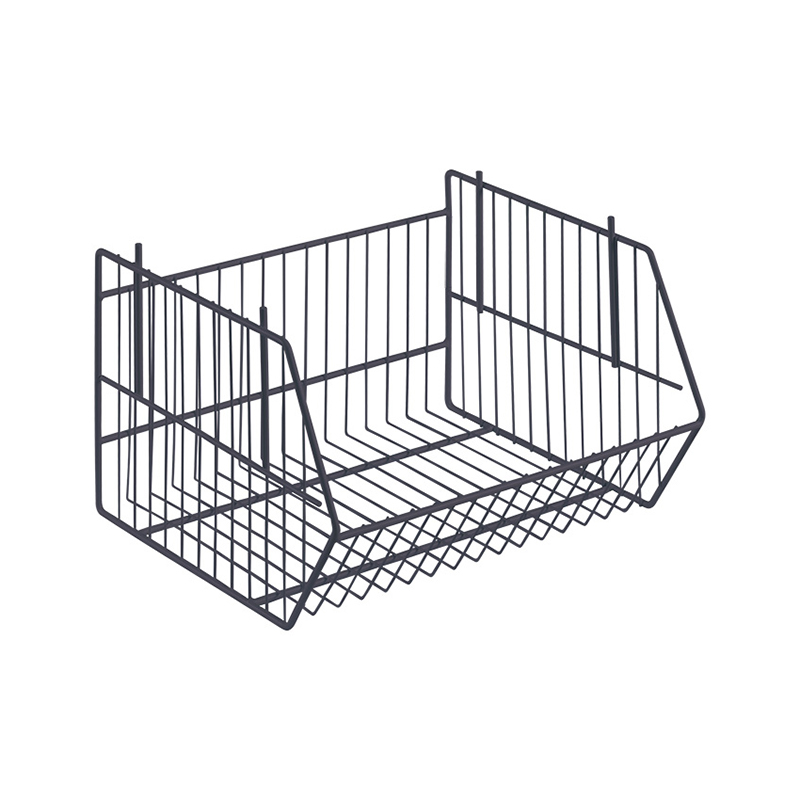
Fixed Stackable Cages: Layered Storage for Space-Saving Efficiency
The fixed stackable cage is designed for tiered display applications in supermarkets and retail stores. The product is welded from metal mesh and square tube frames, forming an open cage structure with access openings on the front or top. Multiple cages can be stacked vertically, secured by positioning cups and stacking feet without additional connectors. The primary function is to increase product display capacity per unit floor area by enabling multi-layer merchandise presentation within limited ground or base shelf space. Standard length options: 900mm, 1000mm, and 1200mm. Depth and height can be customized based on specific requirements.

L: 900/1000/1200mm
Core Advantages
Vertical stackable structure: Positioning cups at the four top corners and stacking feet at the four bottom corners. Empty cages can be stacked for storage. Loaded cages can be stacked 2–3 tiers high for stepped or vertical displays.
Open access design: Front or side mesh openings at least 1.5× the maximum product height allow direct customer access without opening gates or doors.
Standardized length series: Three length options (900/1000/1200mm) compatible with standard supermarket endcaps, promotional platforms, and main aisle display areas.
Metal mesh construction: Mesh openings of 50×50mm or 75×75mm balance product visibility and structural strength while preventing small items from falling through.
Product Features
Frame material: Main frame from square steel tubes (20×20mm or 25×25mm cross-section, 1.2–1.5mm wall thickness). Mesh from carbon steel wire (4–5mm diameter), welded inside or outside the frame.
Surface finish: Electro-galvanizing, hot-dip galvanizing, or black electrophoretic coating. For wet or fresh produce areas, specify hot-dip galvanizing (≥45μm coating thickness).
Stacking interface: Top positioning cup inner diameter 2–3mm larger than bottom stacking foot outer diameter, resulting in ≤5mm horizontal offset after stacking. Foot height: 20–30mm.
Access opening: Front mesh opening width 80–100% of cage width. Lower edge height from the cage bottom: 100–150mm to prevent bottom products from rolling out.
Load capacity: Reference load per cage: 50–80kg (evenly distributed). Bottom-tier cages in a stack must support the weight of upper cages plus their contents.
Bottom structure: Options include a solid flat plate bottom or a mesh bottom. Solid plate suits small loose items; mesh bottom suits large items and facilitates cleaning.
Application Scenarios
Supermarket promotional floor displays: Stack 2–3 tiers of display cages in main aisles for promotional items, holiday gift packs, full-case beverages.
Fresh produce sections: Single-tier or double-tier stacking for bagged fruit, onions, potatoes—pressure-tolerant produce requiring ventilation.
Warehouse clubs: Supplementary display areas for high-turnover bulk-pack items. Stacked cages allow pallet jack or forklift relocation.
Temporary seasonal displays: During peak seasons (Chinese New Year, Christmas), deploy stacked cages in perimeter checkout areas or vacant zones to quickly expand display space.
Common Issues & Solutions
Issue: Will the bottom cage deform when stacked fully loaded?
Solution: Lower-tier cages must use square tube frames with a wall thickness ≥1.5mm. Do not exceed the supplier’s recommended safe stacking tier limit (standard: ≤3 tiers). Verify floor flatness (≤5mm/m level deviation) before stacking.
Issue: How to prevent stacked cages from tipping over?
Solution: The height-to-depth ratio of a single stack should not exceed 2:1. For higher stacks (e.g., 4 tiers), secure cages to rear shelving or walls using tie-down straps, or add anti-slip rubber pads under bottom cages.
Issue: Can small products fall through mesh openings?
Solution: For products with a diameter or minimum dimension smaller than mesh opening size, line the cage interior with finer mesh liners (≤25mm openings) or use solid bottom plates. Specify additional horizontal retaining bars below the access opening at the time of ordering.
Issue: How to save space when storing or transporting empty cages?
Solution: Some models support nested stacking of empty cages. Confirm smooth insertion and removal of stacking feet into positioning cups. For non-nesting models, stack empty cages separately with a maximum stack height of 10 cages.
Product Precautions
Stacking orientation: Cages have fixed top and bottom. Inverted stacking is prohibited—positioning cups and stacking feet will not align, and access openings will be mispositioned.
Floor condition requirements: When stacking, the floor must be level, dry, and free of oil stains. Uneven floors may cause a stack (shifting) or a single-corner (hovering).
Product arrangement principle: Place heavier products in bottom-tier cages and lightweight products in upper tiers. Do not store individual packages exceeding 20kg in upper-tier cages.
Cleaning & maintenance: Mesh cages can be pressure-washed (≤5MPa). Allow to air dry after washing. If rust appears at weld points, grind and recoat with zinc-rich paint.
Regular inspection interval: Inspect all weld points, as well as wear on stacking feet and positioning cups, every 3 months. Replace cages when wear exceeds 15% of the original dimension.
L: 900/1000/1200mm

- Quick Links
- Home
- About Us
- Sustainable
- News
- Contact Us
- Products
- Supermarket shelf
- Storage rack
- Shopping cart
- Shopping basket
- Shelving Accessories
- Display rack
- Contact us
-
-
+86-18852916580

-
[email protected]

-
No. 9 Yongxin Road, Wangzhuang Industrial Park, Shanghu Town, Changshu City, Jiangsu Province, China

-

