- Tel: +86-18852916580
- Suzhou CERS Commercial Equipment Co., Ltd.
- Email: [email protected]
- Tel: +86-18852916580
- Suzhou CERS Commercial Equipment Co., Ltd.
- Email: [email protected]


 Español
 عربى
 Deutsch



How to Audit a Supermarket Shelving Company China Factory Before Ordering
Content
- 1 Evaluating a Supermarket Shelving Company: China Factory Criteria That Matter
- 2 Supermarket Shelving Company or Trading House? Questions That Reveal the Difference
- 3 Steel, Coating, and Load Ratings: Three Numbers That Decide Shelf Lifespan
- 4 One Factory for the Whole Store: Shelving, Hooks, Baskets, and Carts
- 5 Automation and Quality Control Inside a Chinese Shelving Factory
- 6 Lead Times, Incoterms, and Payment Structure for Imported Shelving
- 7 Supermarket Shelving Company China Factory: FAQ for First-Time Importers
Customs trade data shows that between 2020 and 2025, retail fixture exports from Chinese factories grew at a compound rate above 10 percent per year, yet the recurring complaint from procurement teams is not price; it is consistency. When buyers search for a supermarket shelving company China factory, the first comparison is usually price, but the real differentiator is whether the supplier owns the production line behind the quote.
This guide focuses on the checks, the numbers, and the questions that separate a genuine manufacturer from a reseller before you pay a deposit. We use Suzhou CERS Commercial Equipment Co., Ltd. as a working reference because the company publishes auditable details about its plant, equipment, and quality system.
CERS operates the plant with automatic shelf production lines, high-precision tube bending machines, laser cutters for tube and sheet metal, and robotic welding systems. Equipment like this is the difference between shelves that match print-ready specifications and shelves that arrive slightly off.
Verification rule: a factory that controls the steel, the coating, and the weld is the only supplier that can guarantee all three.
Evaluating a Supermarket Shelving Company: China Factory Criteria That Matter
The first decision is not which shelf to buy; it is whether the company quoting you is a manufacturer, a trading company, or a hybrid sales office.
Only a genuine manufacturer controls the variables that determine shelf life: the steel coil it buys, the coating line it runs, and the welds that hold the frame together. A trading company can promise the same specification, but it will source from whichever factory offers the best margin on that order, which makes consistency a matter of luck.
Supermarket Shelving Company or Trading House? Questions That Reveal the Difference
The fastest proof is a live video walkthrough: a real factory can show you its welding line within minutes, while a reseller can only forward photos from different plants.
Ask about incoming steel coil suppliers, powder coating pre-treatment stages, and whether welds are robot or manual. A manufacturer answers with numbers and model descriptions; an intermediary answers with another quote. The signals below separate the two quickly.
| Parameter | Trading company | Direct factory |
| Steel specification | Repeats the buyer's wording | States gauge, grade, and supplier standard |
| Custom sizes | Limited to stock models | Enters production planning directly |
| Load testing | No written records | Samples tested before mass production |
| Minimum order | High, to consolidate demand | Can align with a store rollout plan |
| Inspection | Third-party at shipment only | In-process checks plus pre-shipment inspection |
One-week verification plan: the fastest way to lose money in imported shelving is to pay a 30 percent deposit to a seller that cannot produce a live video of its own production line.
Steel, Coating, and Load Ratings: Three Numbers That Decide Shelf Lifespan
Specify 1.2 mm uprights, a 60 to 80 micron powder coating, and a written load test before you compare prices between factories.
Steel thickness is the largest cost driver in a shelving quote; moving from 0.8 mm to 1.2 mm uprights changes flexural stiffness by roughly three times. Back panels matter too: thickened perforated or mesh panels add lateral rigidity and stop the whole run from racking when merchandise is loaded unevenly.
Coating quality is the second longevity variable. A proper line runs degreasing, rinsing, and pre-treatment before powder coating reaches 60 to 80 microns. Below 50 microns, shelving in humid store environments starts to corrode within 18 months. Ask for a coating thickness report, not a color chart.
| Parameter | Budget import grade | Factory export grade |
| Upright steel | 0.8 mm | 1.2 mm |
| Back panel | Thin sheet, flexes under load | Thickened perforated or mesh panel |
| Powder coating | 40 to 60 microns | 60 to 80 microns with pre-treatment |
| Shelf load rating | 60 to 80 kg per level | 120 to 150 kg per level |
| Hardware | Zinc-plated screws | Reinforced brackets, captive fasteners |
If the load rating is not written on the spec sheet, treat the product as unrated. A sagging shelf deck is a restocking problem; a collapsed one is a safety problem.
One Factory for the Whole Store: Shelving, Hooks, Baskets, and Carts
A supplier that manufactures the complete retail fixture set, including shelves, hooks, guardrails, baskets, and carts, cuts freight cost, simplifies tolerance matching, and reduces the number of vendors you manage.
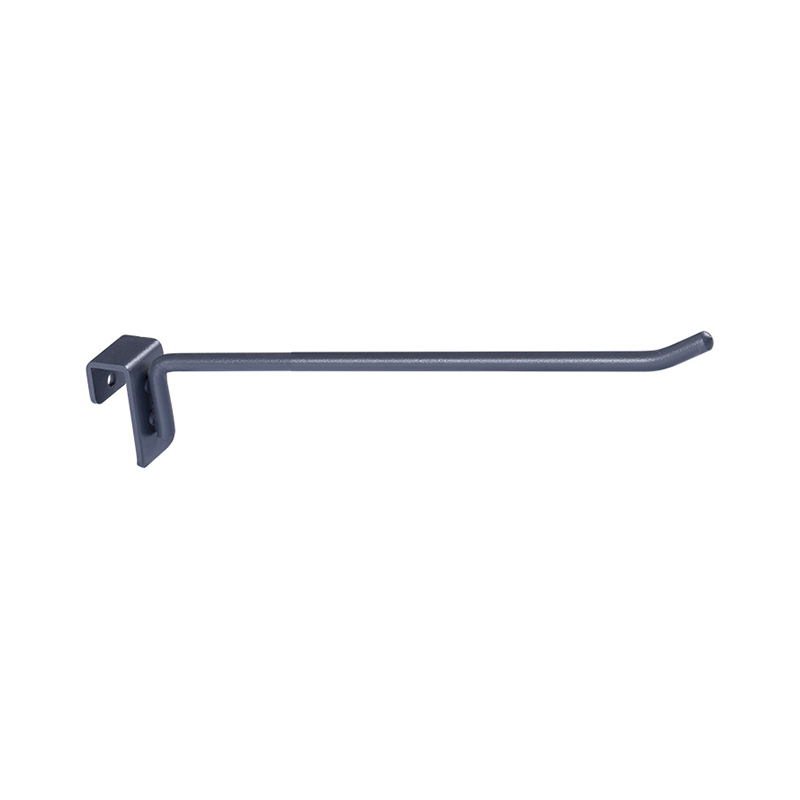
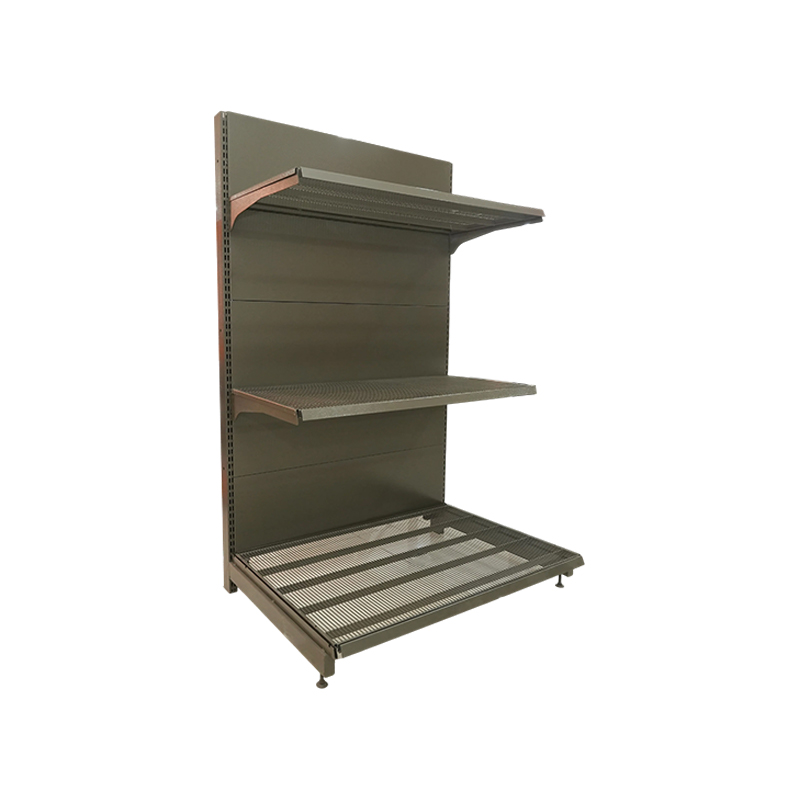
When a store refresh includes 30 meters of gondola shelving, 400 display hooks, 60 guardrail sections, and 40 shopping carts, coordinating separate suppliers multiplies risk. CERS groups these products under one program: supermarket shelves with wood-grain or perforated back panels, wire shelving, display racks, single- and dual-wire hooks, anti-drop guardrails and dividers, shopping baskets, and stackable carts. For the standard convenience-store gondola run, the double-sided shelf with thickened perforated back panels provides the rigidity that keeps merchandising precise from the first shelf level to the top.
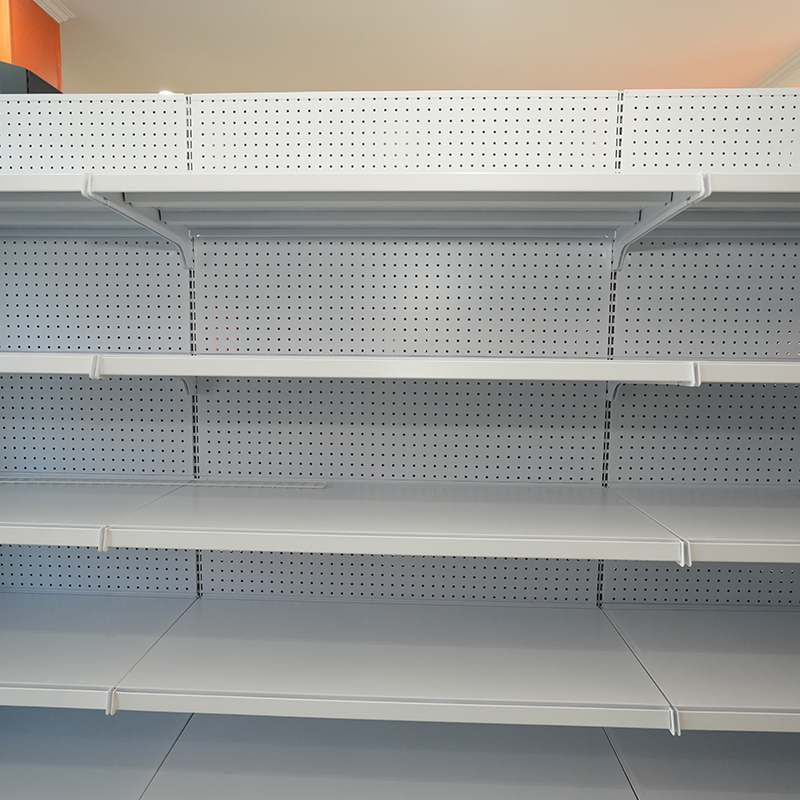 Double-Sided Supermarket Shelving with Perforated Back PanelsThis 2900mm double-sided shelf unit uses thickened perforated steel back panels for rigidity, making it a central piece in coordinated store refresh projects, supporting precise merchandising across multiple tiers.View Product →
At the front end, a stackable double-tier shopping cart increases the volume a shopper can carry per trip without expanding the store footprint, which directly supports basket size in high-traffic stores.
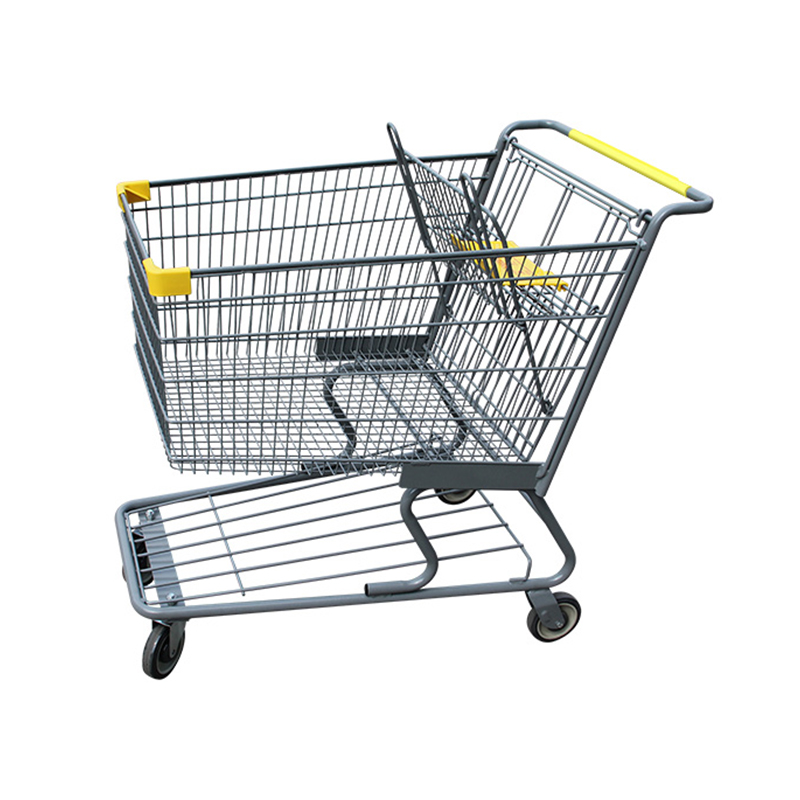 Stackable Double-Tier High-Capacity Shopping CartWith a two-level design that adds 40–60% more storage capacity over single-tier carts, this model helps high-traffic stores increase basket size without widening aisles, while separating heavy and fragile items.View Product →
Automation and Quality Control Inside a Chinese Shelving Factory
Automation is the best proxy for repeatability: a laser-cut component fits the same way on unit one and unit one thousand.
CERS's floor combines automatic shelf production lines, high-precision tube bending machines, laser cutters for tube and sheet metal, and robotic welding systems. Each of these processes removes the variability that appears in small workshops, where frames are jigged by hand and coating quality depends on the day's humidity.
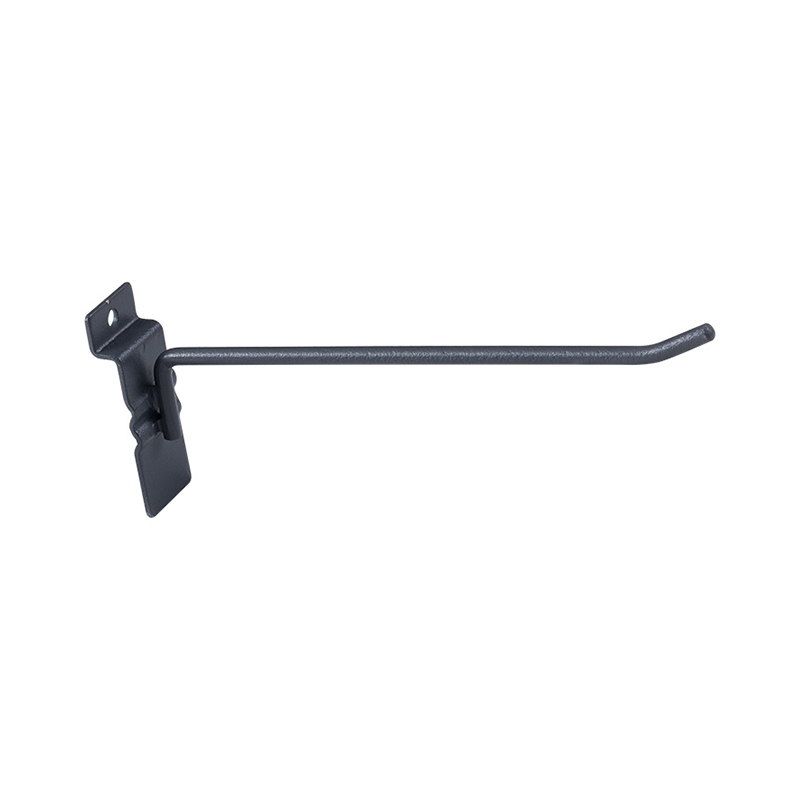
The company holds ISO 9001:2008 certification and is recognized as a National High-Tech Enterprise. Its quality control sequence starts at incoming raw material inspection and continues through welding checks, coating thickness measurement, and pre-shipment assembly tests. Accessories receive the same discipline. A dual-wire display hook for pegboard or grid panels must hold its rated load without bending forward, especially when merchandisers load it near the outer tip.
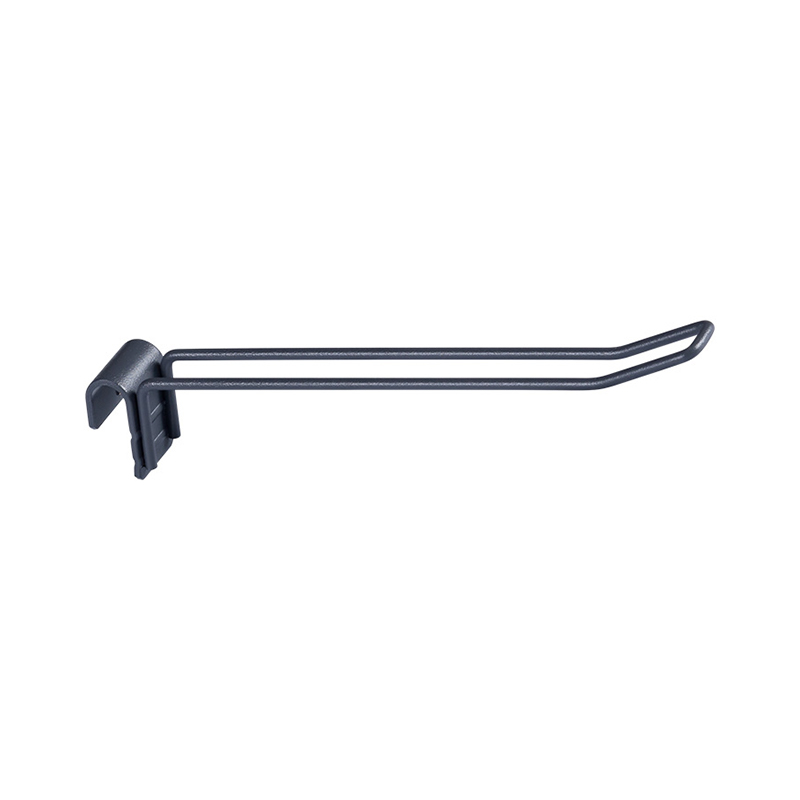 Dual-Wire Heavy-Duty Display Hook for Retail ShelvingBuilt with two parallel wires and cross ribs, this hook offers 1.8–2.2 times the load capacity of single-wire versions, ensuring straight, stable hanging of heavy bags or multi-pack items on perforated panels.View Product →
Lead Times, Incoterms, and Payment Structure for Imported Shelving
Count on 20 to 45 days of production after sample approval, two to five days for container loading, and 25 to 40 days of sea freight to the U.S. West Coast. A reliable supermarket shelving company in China will put these dates in writing before you sign.
Frequency matters as much as price. Factories near the Shanghai port cluster, with CERS roughly 100 km away, can load full containers on shorter trucking windows. That flexibility protects you when the store opening date is already printed.
- Is the quote FOB or CIF, and from which port?
- What is the deposit and balance structure, typically 30/70?
- When is the inspection window before shipment?
- What packing standard protects the goods for export containers?
- How are transit damage claims handled?
If the factory cannot state production dates, inspection dates, and port dates in the same document, the timing risk belongs to you.
Supermarket Shelving Company China Factory: FAQ for First-Time Importers
How do I verify a supermarket shelving company in China is a genuine factory?
Start with the business license and export records, then schedule a live video walkthrough. Ask for the equipment list and check load-test reports. For larger orders, book a third-party pre-shipment inspection; this works even when you cannot travel.
What steel thickness should I specify for supermarket shelves?
For supermarket gondolas, specify 1.2 mm uprights and at least 0.8 mm shelf decking. Heavy-duty mesh or perforated back panels add lateral stiffness. Light-duty display racks can run thinner, but the upright specification should not drop below 1.0 mm when a shelf level carries 80 kg or more.
Can a Chinese factory handle custom sizes and store branding?
Yes, when the factory has in-house cutting and bending. Ask for a CAD drawing approval step and a pre-production sample if the quantity justifies it. Custom powder coating colors are standard at container volume, usually without a price difference.
How long does a supermarket shelving order from China take?
For standard configurations, allow 20 to 45 days of production after deposit and drawing approval, plus one to two weeks for sea freight to major Western ports. Factories within 150 km of Shanghai reduce inland trucking time, which is useful for mixed orders combining shelves, hooks, and carts.
The importers that succeed with Chinese factory sourcing treat verification as part of the product specification, not as an optional extra.

- Quick Links
- Home
- About Us
- Sustainable
- News
- Contact Us
- Products
- Supermarket shelf
- Storage rack
- Shopping cart
- Shopping basket
- Shelving Accessories
- Display rack
- Contact us
-
-
+86-18852916580

-
[email protected]

-
No. 9 Yongxin Road, Wangzhuang Industrial Park, Shanghu Town, Changshu City, Jiangsu Province, China

-

