- Tel: +86-18852916580
- Suzhou CERS Commercial Equipment Co., Ltd.
- Email: [email protected]
- Tel: +86-18852916580
- Suzhou CERS Commercial Equipment Co., Ltd.
- Email: [email protected]


 Español
  عربى
عربى  Deutsch


The Complete Guide to Metal Shelving Accessories: From Shelf Clips to Drawer Nests
Content
- 1 The Foundation: Understanding Core Accessory Categories
- 2 Structural Accessories: The Backbone of Stability
- 3 Organizational Accessories: Enhancing Efficiency and Order
- 4 Mobility and Flexibility Accessories
- 5 Side-by-Side: Essential Accessories for Different Applications
- 6 Making the Right Choice: Key Considerations
- 7 Final Verdict: When to Choose Which Accessory
- 8 Maintenance and Compliance: Protecting Your Investment
- 9 Frequently Asked Questions
In the world of industrial and commercial storage, shelving is often seen as a simple, one-dimensional solution. However, the true potential of a shelving system is unlocked through the strategic use of accessories. Metal shelving accessories transform basic storage racks into highly efficient, organized, and adaptable systems that meet the specific demands of warehouses, retail spaces, and manufacturing facilities. For retailers, warehouse managers, and facility operators, understanding the range of available accessories is key to maximizing storage density, improving workflow, and protecting inventory. This guide explores the essential components that can turn a standard shelving unit into a customized storage powerhouse, helping you make informed decisions for your operational needs.
The Foundation: Understanding Core Accessory Categories
Metal shelving accessories can be broadly categorized by their function. These include components for structural integrity, organizational efficiency, mobility, and safety. The most common and critical category is hardware for assembly and stability, which includes shelf clips, braces, and brackets. These parts form the backbone of any shelving system, ensuring it can bear the intended load safely and remain stable over years of use.
Another vital category includes items for organization, such as dividers, bin fronts, and label holders. These accessories help maintain order, prevent product mix-ups, and enable quick visual identification of stock. For instance, shelf dividers can separate different product types on the same shelf, while label holders ensure that pricing and product information are clearly visible. A third functional category addresses mobility and flexibility. By adding casters or push handles, a stationary shelving unit can become a mobile cart, offering significant advantages in dynamic environments where layouts need to change frequently.
These figures highlight the varying priorities across different industries. While structural integrity is universally important, the emphasis on organizational versus mobility accessories shifts based on the application. For example, a high-volume warehouse might prioritize dividers and label holders, while a workshop might focus on structural braces and safety components.
Structural Accessories: The Backbone of Stability
Structural accessories are the unsung heroes of any shelving system. Components like **shelf clips** are essential for securely attaching shelves to upright posts. These clips, typically made from durable steel or zinc-alloy, insert into the slots on the posts and provide a stable platform for the shelf. A single shelf clip supports a significant portion of the load; using high-quality clips ensures safety and prevents shelf sagging or collapse. For critical applications, it is crucial to source components from the same manufacturer to ensure proper fit and load ratings.
**Braces** are another vital structural accessory used to stabilize shelving units and prevent swaying. Cross braces are installed diagonally on the rear of an open shelving unit, providing lateral stability. Side braces connect the front and rear posts to prevent sideways movement. These components are especially important for tall or heavily loaded units where stability is a primary concern. **U-braces** are also used to support and stabilize posts, particularly on units with upper shelves but no lower shelves.
Adding braces significantly increases structural stability, allowing for higher load capacities and safer storage.
The graph above illustrates the relationship between the number of braces used and the overall load capacity of a shelving unit. As braces are added, stability increases, which in turn supports a higher load capacity. This is why investing in a full set of structural accessories is non-negotiable for high-density or tall shelving applications.
Organizational Accessories: Enhancing Efficiency and Order
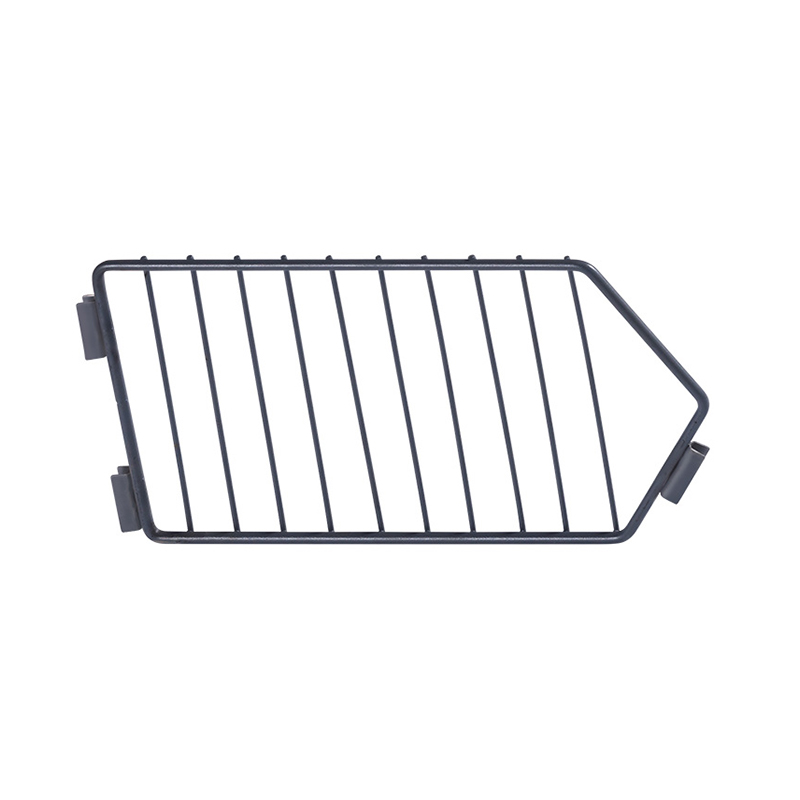
Organizational accessories turn a simple shelf into a system that promotes efficiency and reduces clutter. **Shelf dividers** are among the most useful accessories for keeping products separated and tidy. Available in full-height or part-height options, they prevent items from shifting and mixing, which is crucial in both retail and warehouse settings. **Drawer nests** are another powerful tool for small item storage. These build-up nests with multiple drawers can be inserted into a shelf compartment, providing a secure place to store and organize small parts or supplies.
**Label holders** and sign holders are essential for clear identification and orientation within a storage system. They allow for quick visual identification of products, reducing picking errors and improving overall workflow. In a retail environment, clear labels enhance the customer experience by making it easier to find products and prices. **Bin fronts** and tray systems also play a key role in keeping shelves organized. For example, a simple bin front can prevent small items from falling off the edge of a shelf, while a pull-out tray can make it easier to access items stored in deeper shelving compartments.
Adding organizational accessories like dividers and drawer nests can reduce picking time by up to 30%.
The bar chart above demonstrates the direct impact of organizational accessories on picking efficiency. Starting from a base shelf with 100% picking time, the addition of dividers reduces time by 15%, and the addition of drawer nests further reduces it by an additional 15%, resulting in a total 30% improvement. These small investments can lead to significant operational gains.
Mobility and Flexibility Accessories
Modern storage solutions demand flexibility, and mobility accessories provide just that. **Casters** are one of the most practical additions to any shelving unit. They transform a stationary shelf into a mobile unit, allowing for easy cleaning underneath and around the shelf. This is a significant advantage in environments where cleanliness is a concern, such as food storage areas or workshops. Casters also enable the repurposing of shelving units by allowing them to be moved to different locations as needs change, providing flexibility without the need for new equipment.
**Push handles** are a complementary accessory that makes moving loaded shelving units significantly easier. A single push handle, attached to one side of a unit, acts as a steering wheel for mobile racks, allowing a single worker to maneuver heavy loads with less effort. For larger or heavier units, handles can be added to both sides for easier control. This not only improves safety but also reduces the physical strain on workers. For a comprehensive range of these essential components, manufacturers like Suzhou CERS offer a wide selection of metal shelving accessories designed to meet the needs of diverse industrial and commercial applications.
Evaluate the specific requirements of your storage environment. Identify if the shelving needs to be stationary or mobile. Determine the types of items to be stored and the necessary organization.
Choose the appropriate accessories based on your assessment. This may include casters for mobility, handles for maneuverability, or a combination of both for a flexible and efficient storage solution.
Install the selected accessories securely. For casters, ensure they are properly mounted and locked when in a stationary position. For handles, verify they are securely attached for safe use.
The process of enhancing a shelving system with mobility and flexibility accessories is straightforward. First, assess the needs—determine whether the unit needs to be mobile and how it will be used. Then, select the right components, such as casters and handles. Finally, install them securely. This simple addition can dramatically increase the utility of any shelving unit.
Side-by-Side: Essential Accessories for Different Applications
| Accessory Type | Warehouse | Retail | Workshop |
|---|---|---|---|
| Structural Braces | High Priority | Medium Priority | High Priority |
| Shelf Clips | High Priority | High Priority | High Priority |
| Shelf Dividers | Medium Priority | High Priority | Medium Priority |
| Drawer Nests | High Priority | Medium Priority | High Priority |
| Label Holders | Medium Priority | High Priority | Medium Priority |
| Casters | Medium Priority | Low Priority | High Priority |
| Push Handles | Medium Priority | Low Priority | High Priority |
This table provides a quick reference guide for selecting accessories based on the primary application. Warehouses often prioritize structural components and drawer nests for high-density storage. Retail environments focus on dividers and label holders for customer-facing organization. Workshops may need a mix of structural, organizational, and mobility accessories to handle dynamic and heavy-duty tasks.
Making the Right Choice: Key Considerations
Choosing the right metal shelving accessories requires careful consideration of several factors. First, always ensure compatibility with your shelving system. Accessories from different manufacturers may not fit properly, compromising safety and stability. Second, evaluate the load capacity of the accessory and ensure it aligns with the weight of the items you intend to store. Using a lower-rated accessory can lead to failure and potential injury.
Third, consider the environment. For example, in a food storage area, accessories that are easy to clean, like stainless steel or polymer options, are preferred. Fourth, think about the long-term needs of your operation. An investment in high-quality accessories can extend the life of your shelving system and improve efficiency for years to come. For global distributors and retailers, sourcing accessories from a supplier that offers a wide range of options and customization services can be a significant advantage.
Final Verdict: When to Choose Which Accessory
- You are assembling a new shelving unit from scratch.
- Your shelving unit is tall or carries heavy loads.
- You need to prevent swaying and ensure long-term stability.
- Safety is a primary concern in your storage environment.
- You are expanding an existing unit with add-on parts.
- You have a high-volume inventory that needs clear separation.
- You want to improve picking accuracy and reduce errors.
- You need to store small items or components.
- Customer-facing displays require clear labeling and tidiness.
- You want to maximize the usable space on each shelf.
In practice, the best approach often involves combining both structural and organizational accessories to create a comprehensive storage system. The key is to analyze your specific needs and choose components that address those needs directly. A well-thought-out accessory plan can transform a basic shelving system into a highly functional, organized, and efficient storage solution.
Maintenance and Compliance: Protecting Your Investment
Regular maintenance of your shelving accessories is crucial for ensuring safety and longevity. Periodic inspections of structural components like shelf clips and braces can identify wear or damage before it leads to failure. For mobile units, inspecting caster wheels and ensuring they are free of debris will maintain smooth operation and prevent floor damage.
Compliance with relevant safety standards is also important. While specific regulations for shelving accessories vary by region, ensuring that components meet basic safety and load requirements is essential. For example, in the United States, many components are designed to meet ANSI or ASTM standards, while European suppliers may reference EN standards. Always verify that your accessories come with clear specifications and load ratings.
Frequently Asked Questions
- Constructor-GMH. "Shelving Accessories."
- Grainger. "Braces, Brackets & Hardware for Standard Metal Shelving."
- MHI Blog. "4 Functional Shelving Accessories."
- Art Metal Products, Inc. "Hi-Tech™ Industrial Shelving."
- Constructor-GMH. "Drawer nest | Shelving Accessory."
- KaTom Restaurant Supply. "Shelf Accessories & Parts."
- Plantmetal. "Industrial Shelf Clip Solution | Metal Shelving OEM Parts."
- ODG Electronics. "Rack, Shelving, Stand Accessories."
- JF Fixtures & Design. "Store Shelf Accessories: Must-Haves for Sleek, Organized Retail Displays."
- RestaurantSupply.com. "Shelving Accessories."

- Quick Links
- Home
- About Us
- Sustainable
- News
- Contact Us
- Products
- Supermarket shelf
- Storage rack
- Shopping cart
- Shopping basket
- Shelving Accessories
- Display rack
- Contact us
-
-
+86-18852916580

-
[email protected]

-
No. 9 Yongxin Road, Wangzhuang Industrial Park, Shanghu Town, Changshu City, Jiangsu Province, China

-

