- Tel: +86-18852916580
- Suzhou CERS Commercial Equipment Co., Ltd.
- Email: [email protected]
- Tel: +86-18852916580
- Suzhou CERS Commercial Equipment Co., Ltd.
- Email: [email protected]


 Español
 عربى
 Deutsch



Boltless Shelving vs Heavy-Duty Pallet Racking: Key Differences Explained
Content
- 1 What Boltless Shelving and Heavy-Duty Pallet Racking Actually Are
- 2 Load Ratings: Where Boltless Shelving and Pallet Racking Differ
- 3 Structure and Assembly: How Boltless Shelving Differs from Pallet Racking
- 4 Matching the Right System for Your Warehouse
- 5 Cost, Lifespan, and Reconfiguration Value
- 6 Frequently Asked Questions
A regional grocery distributor recently faced a USD 180,000 storage decision. The facility needed 2,400 pallet positions for slow-moving inventory and 400 linear meters of shelf space for fast-pick cartons. After shortlisting boltless shelving and heavy-duty pallet racking, the procurement team discovered that the two systems share almost no engineering DNA. Choosing the wrong one means either shelves that buckle under real loads or capital spent on capacity the operation can never use. The practical difference comes down to load engineering, connection design, and the unit load each system is built to carry.
What Boltless Shelving and Heavy-Duty Pallet Racking Actually Are
Both systems are steel storage structures, but they are engineered for different load units, connection methods, and warehouse roles. Those three variables decide which system belongs in your facility.
Boltless Shelving Defined
Boltless shelving, also called rivet shelving or slotted-angle shelving, uses roll-formed upright frames with punched keyhole slots. Shelf panels lock into the slots through rivet lugs, so no bolts, nuts, or tools are required for assembly. Standard commercial units carry 175 kg to 350 kg per shelf level, and extra-thick frame models reach about 500 kg. The system is designed for hand-loaded cartons, bins, and cases, with shelves repositionable in roughly 50 mm increments.
Heavy-Duty Pallet Racking Defined
Heavy-duty pallet racking is a structural system built for palletized loads. Welded upright frames and pair-mounted beams lock together through integral beam connectors secured by safety clips. One beam level is typically rated from 1,000 kg to 5,000 kg, and engineered configurations can exceed that. The system is designed for forklift loading, which introduces dynamic lateral and impact forces that boltless shelving is not engineered to absorb.
Load Ratings: Where Boltless Shelving and Pallet Racking Differ
Load rating is the clearest separation point: one pallet racking beam level typically carries ten to fifteen times the rated weight of one boltless shelf level. Adding more shelves does not close that gap, because the difference is engineered into steel gauge, connection geometry, and dynamic load assumptions.
Boltless frames use 1.5-2.0 mm steel and rivet lugs that resist shear but offer limited resistance to sway forces. Pallet racking uprights use 2.5-3.5 mm steel, and beam connectors are designed to lock tighter under impact rather than loosen. Racking is analyzed for dynamic forklift loading; boltless shelving assumes controlled, manual placement.
| Parameter | Boltless Shelving | Heavy-Duty Pallet Racking |
| Typical load per level | 175-350 kg, up to 500 kg with extra-thick frames | 1,000-5,000+ kg per beam pair |
| Primary load unit | Cartons, bins, cases | Pallets and palletized goods |
| Frame steel thickness | 1.5-2.0 mm roll-formed | 2.5-3.5 mm structural steel |
| Connection type | Rivet lugs in keyhole slots | Beam connectors with safety clips |
| Forklift interaction | Not designed for impact | Designed for daily forklift contact |
| Typical installed height | 1.8-3.0 m | 3.0-12.0+ m |
Structure and Assembly: How Boltless Shelving Differs from Pallet Racking
Connection design dictates assembly speed, adjustment range, reconfiguration cost, and the ceiling on structural rigidity. The two systems sit at opposite ends of that spectrum.
The Boltless Assembly Logic
- Tool-free assembly; one worker can build a three-level unit in 10 to 15 minutes
- Shelves reposition in 50 mm increments without dismantling the frame
- Units disassemble quickly for relocation or complete reconfiguration
- Floor anchoring optional below 2.5 m; wall ties recommended in busy aisles
The Pallet Racking Assembly Logic
- Installation requires beam connectors, safety clips, plumb alignment, and concrete floor anchors
- Beam heights adjust in 50 to 100 mm increments, but loaded rack changes need careful sequencing
- Upright frames need column guards and row spacers in forklift aisles
- Reconfiguration is possible but slow, and usually takes contract labor
Matching the Right System for Your Warehouse
Choose by load unit, not by product category. Cartons and hand-loaded goods belong on boltless shelving; pallets and forklift traffic belong on heavy-duty pallet racking. Mixed operations should combine both rather than forcing one system to do everything.
- Load unit: individual cartons under 50 kg each point to boltless; full pallets at 400 to 1,200 kg require racking
- Handling equipment: manual picking carts and ladders suit boltless; forklifts or powered pallet jacks require racking
- Building height: ceilings under 3 m favor boltless; vertical storage from 4 m to 12 m demands pallet racking
- Rotation pattern: full-pallet retrieval with high SKU turnover suits racking; case picking suits boltless with pick bins
- Budget profile: lowest first cost favors boltless; lowest cost per pallet position at scale favors racking
Facilities with mid-weight SKUs, such as heavy cases, long packs, or oversize cartons, do not have to choose between the two extremes. Suzhou CERS Commercial Equipment Co., Ltd. offers warehouse shelving lines that use heavier uprights than standard boltless units while retaining tool-free assembly, which holds a practical middle ground. For a complete layout matched to your SKU mix and handling equipment, review the configuration with a solutions specialist.
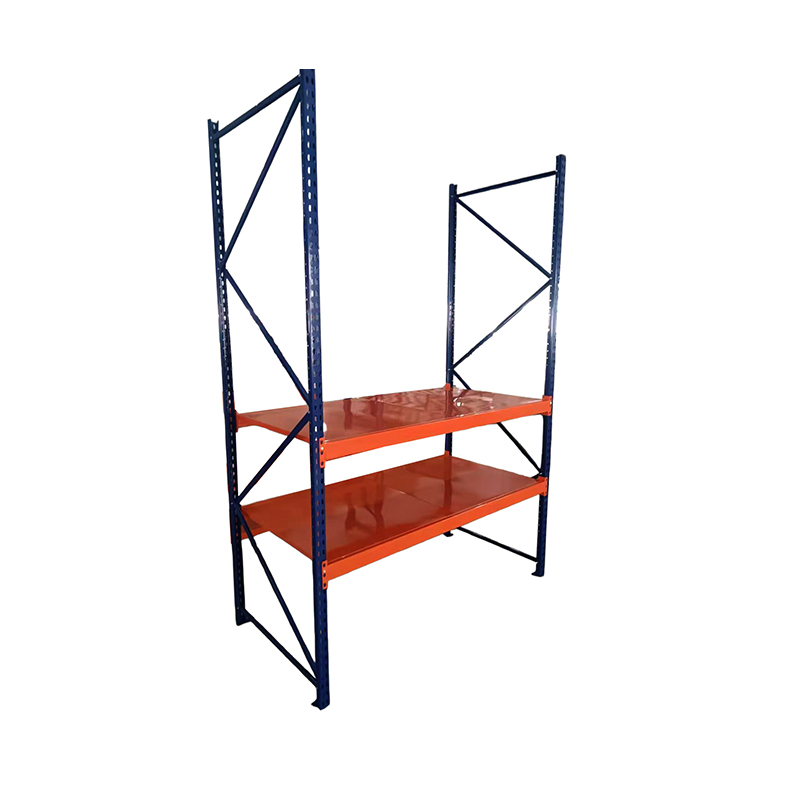
 Extra-Thick Steel Multi-Tier Warehouse Shelving for Heavy Industrial GoodsThis rack uses 1.8–2.5 mm uprights and beam tiers rated up to 2500 kg, suiting pallets, coils, and bagged items. Its adjustable height and forklift access bridge mid-weight storage needs without full pallet racking cost.View Product →
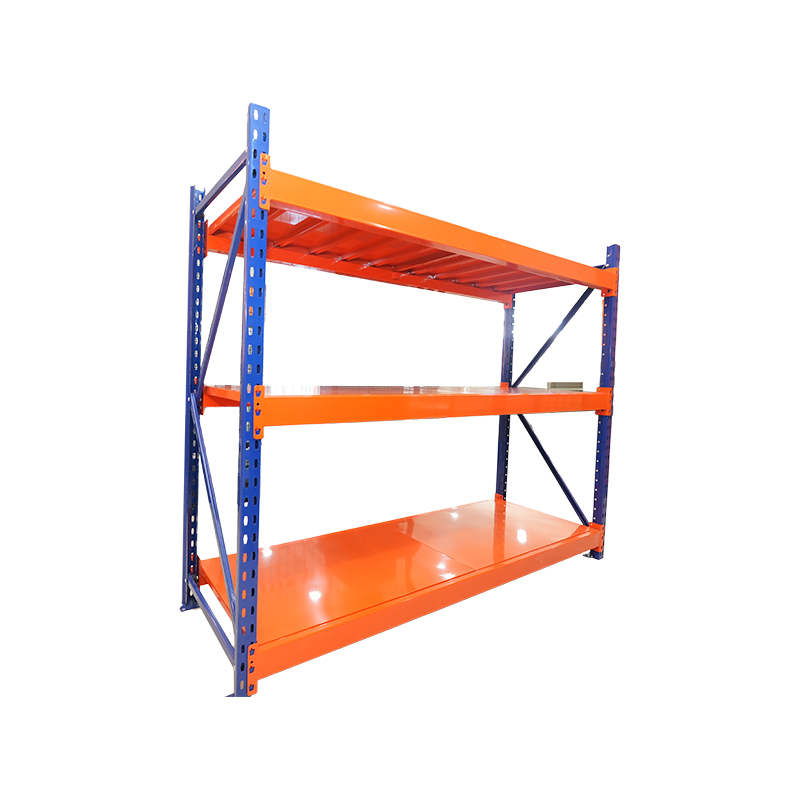
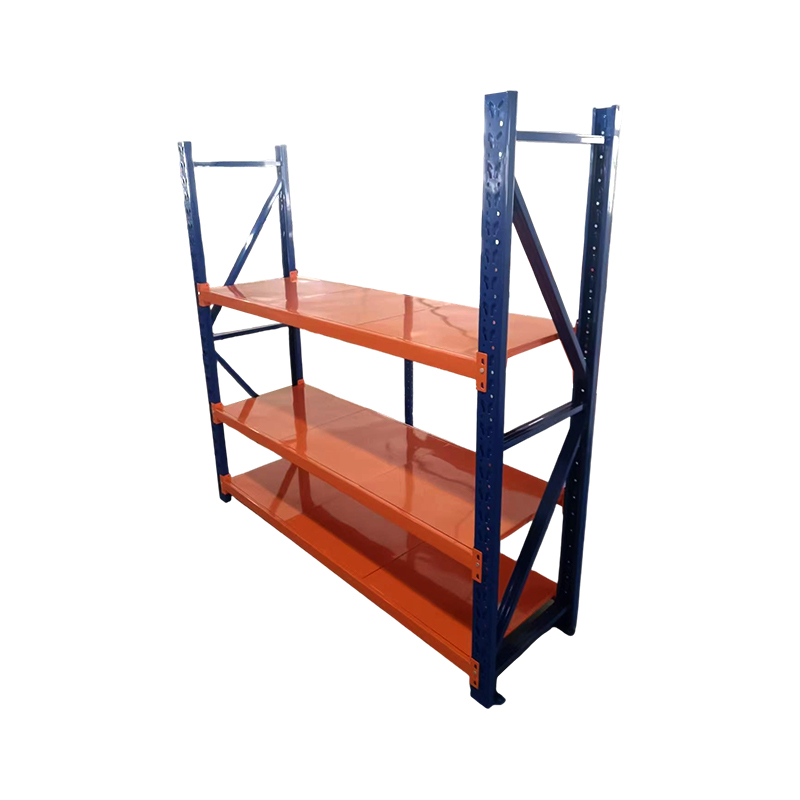
 Heavy-Duty Boltless Shelving with Extra-Thick Uprights and High Tier LoadsFeaturing uprights from 1.5–2.5 mm steel and per-tier loads up to 2000 kg, this modular rack offers shear-friendly claw locks and anchor bases. A practical middle ground for heavy cartons or raw pallets in tight layouts.View Product →
Cost, Lifespan, and Reconfiguration Value
Pallet racking costs three to five times more per beam level than boltless shelving, yet its cost per kilogram of rated capacity can be roughly half when each system operates near its design load. The decision is about buying capacity or buying flexibility.
Boltless Shelving Economics
- USD 30 to 80 per shelf level at commercial grade
- Service life of 10 to 15 years in dry indoor conditions
- Light freight weight and compact knock-down shipping
- Reconfiguration and relocation costs near zero
Pallet Racking Economics
- USD 150 to 400 per beam level, equal to two pallet positions
- Service life of 20 to 25 years with routine maintenance
- Higher freight and installation cost plus anchoring hardware
- Reconfiguration costs are real, but resale value is retained
Per-level averages hide important variables, including your SKU dimensions, aisle count, and forklift fleet. For a specification-matched comparison on your actual layout, request a quote from the manufacturer rather than estimating from industry averages.
Frequently Asked Questions
The questions below are the ones warehouse managers ask most often when comparing these two systems.
Can boltless shelving hold standard pallets?
Not as a primary system. A loaded 1,200 x 1,000 mm pallet typically weighs 500 to 1,000 kg, which exceeds the 175 to 500 kg per-level rating of even the heaviest boltless units, and the open frame face is not engineered for safe forklift entry. Pallet loads belong on heavy-duty pallet racking or comparable structural framing.
Does heavy-duty pallet racking require floor anchoring?
Yes, in nearly all commercial installations. OSHA guidance, IBC seismic provisions, and most local codes require uprights to be anchored to concrete floors, with row spacers or back rails where specified. Boltless shelving below 2.5 m generally needs only optional wall ties.
What is the cost difference per pallet position?
Boltless shelving used for hand-loaded cartons runs roughly USD 35 to 80 per shelf level. Pallet racking runs USD 60 to 150 per pallet position, with each beam pair carrying two positions. The premium buys heavier steel, engineered connectors, safety clips, and anchoring hardware.
Which system is faster to assemble?
Boltless shelving. Two workers can assemble and level a three-level unit in under 15 minutes without tools. Pallet racking requires lift assistance for uprights, torque-specified anchor bolts, precise floor marking, and a pre-use load test; a 30-bay rack row can take a professional crew several days.

- Quick Links
- Home
- About Us
- Sustainable
- News
- Contact Us
- Products
- Supermarket shelf
- Storage rack
- Shopping cart
- Shopping basket
- Shelving Accessories
- Display rack
- Contact us
-
-
+86-18852916580

-
[email protected]

-
No. 9 Yongxin Road, Wangzhuang Industrial Park, Shanghu Town, Changshu City, Jiangsu Province, China

-

