- Tel: +86-18852916580
- Suzhou CERS Commercial Equipment Co., Ltd.
- Email: [email protected]
- Tel: +86-18852916580
- Suzhou CERS Commercial Equipment Co., Ltd.
- Email: [email protected]


 Español
 عربى
 Deutsch



Plastic vs Metal Shopping Cart: Durability & Customer Experience Compared
Content
For most supermarket operators, the answer to "plastic or metal" is not one universal winner — it depends on what breaks down first in your store. If your main problems are rust, noise, and scratched floors, an all-plastic cart will outperform steel. If your main problems are overloaded baskets and damaged frames, steel will last longer. This guide walks through the facts behind that conclusion, so you can choose the cart that brings the lowest total cost of ownership for your specific conditions.
Material Differences That Predict Durability
A shopping cart is not a single-material object. It is a frame, a basket, and a wheel system working as one unit. The material decision changes the behavior of every one of those three components.
All-Plastic Carts
All-plastic shopping carts are molded from high-density polyethylene or similar impact-resistant polymers. The basket and handle form one continuous piece, which removes weld points and crevices where corrosion begins. Since the body is plastic, there is no paint to chip and no steel layer underneath to expose.
- No rust, even in high-humidity or coastal environments
- Quiet rolling, especially on hard flooring
- Lighter empty weight for easier pushing
- Sanitation-friendly, non-porous surface
The practical result is a cart that handles wet conditions well and needs no coating inspection. The tradeoff comes in repair. A single-piece body that suffers a puncture or a cracked base cannot be welded, so you swap it out for a new unit. Modern plastic formulations are tough, but a cart routinely loaded with 150 kilograms of bulk beverages will fatigue faster than a comparable steel frame.
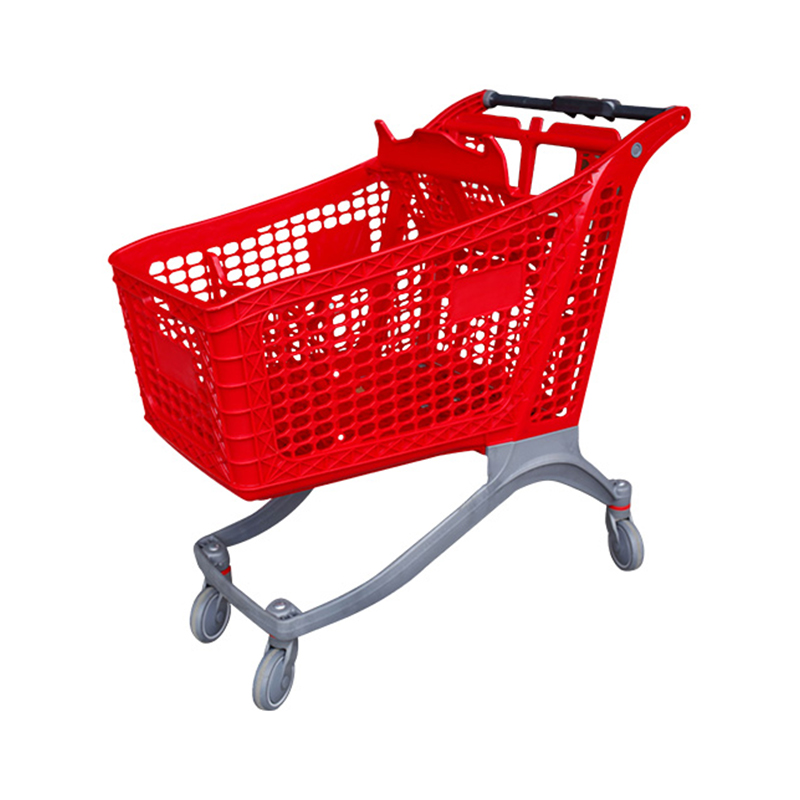 All-Plastic Shopping Cart with Silent Swivel Wheels for High-Humidity SettingsThis cart features a one-piece injection-molded plastic body, providing corrosion resistance and lightweight handling. It includes silent swivel casters and a nesting design, making it suitable for supermarkets and fresh markets where moisture and mild chemicals are common.View Product →
Metal and Hybrid Carts
Traditional metal carts are built from welded steel tube and wire mesh. That structure absorbs heavy point loads and keeps performing even when the basket is overfilled. Most commercial-grade steel carts are rated for 100 to 150 kilograms of product, and some heavy-duty models go higher.
- Higher rated load capacity for heavy goods
- Field repair possible through welding and parts replacement
- Longer predictable life in high-abuse settings
- Rigid frame keeps the basket shape under stress
Steel also creates a viable repair path. A broken weld can be re-welded. A dented panel can often be straightened. A rusted hinge or caster can be replaced without scrapping the whole cart. That is the core value: a well-maintained metal cart can serve you for many more years than a plastic cart that suffers one major impact.
Steel's disadvantages are just as real. Powder coating can scratch, and once the coating is compromised, rust spreads quickly. The exposed tube framework provides more surface area for moisture to settle. Metal carts are heavier, which increases the effort needed both to push a full load and for shoppers to maneuver in crowded aisles.
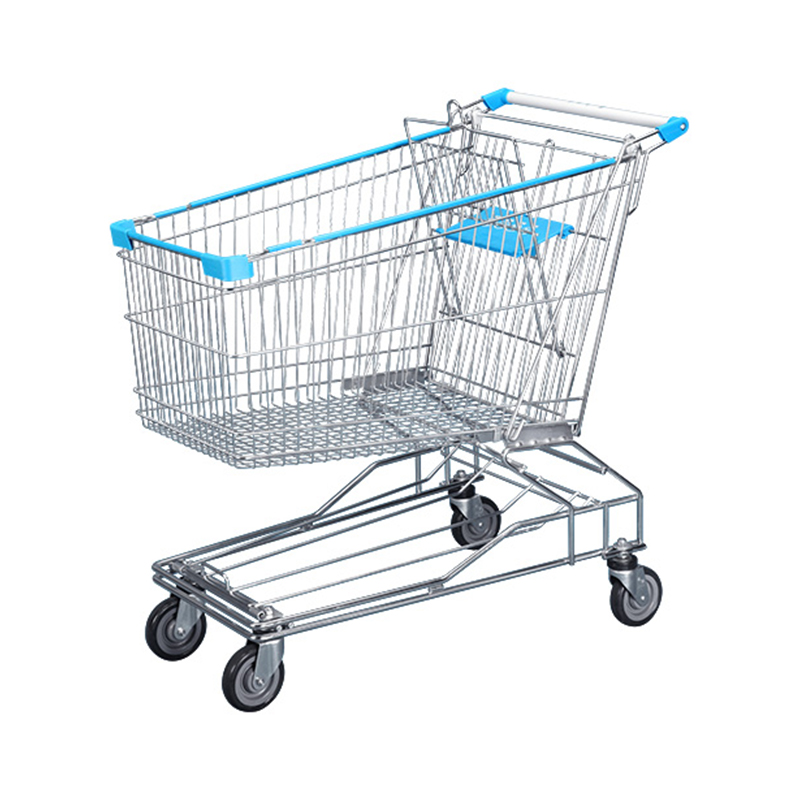
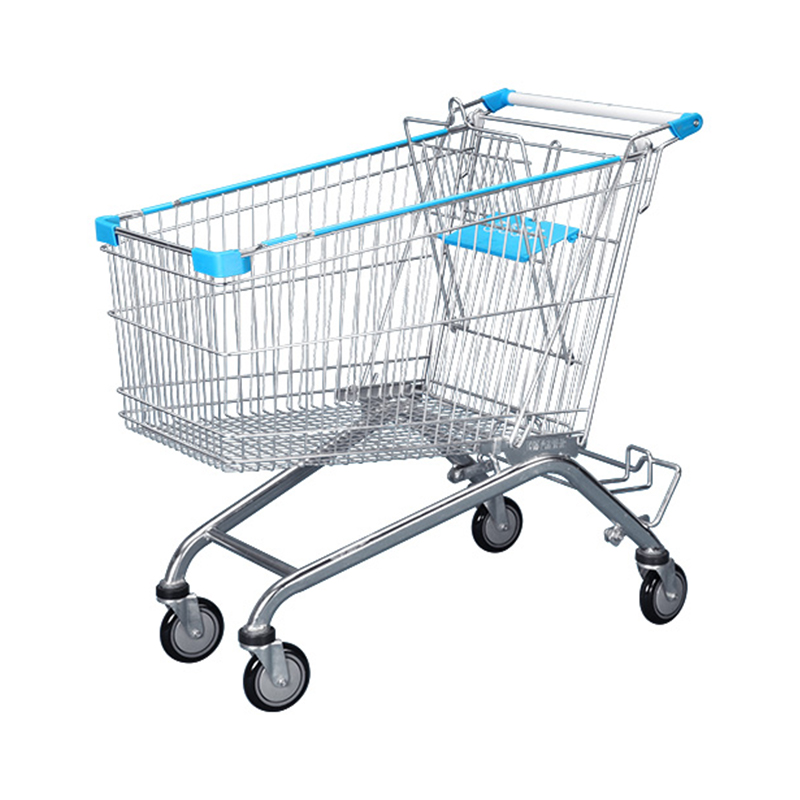 High-Capacity Commercial Shopping Cart with Silent Casters and Nesting DesignThis steel cart offers a 100-180 liter basket with silent double ball bearing casters and a nesting mechanism for compact storage. Its welded frame and powder-coated finish support heavy loads, while steering control ensures smooth maneuvering in large retail spaces.View Product →
How Material Affects the Customer Experience
Customer experience is not a soft factor. It has a direct effect on basket size and dwell time. A cart that is noisy, awkward, or hard to push creates friction that shoppers feel from the first few steps.
All-plastic carts deliver a smoother, quieter ride. The material absorbs vibrations that steel would transmit directly to the handle. This is especially noticeable on uneven floors or tile grout lines. Plastic carts are also lighter when empty, so elderly shoppers and those with mobility limitations find them easier to start moving and to stop.
Metal carts offer a different kind of comfort. Because the frame is rigid, there is no flex or sway when you round corners. The basket holds its shape even under uneven loading. Some shoppers prefer the traditional sturdiness of steel and the visual cue of strength.
Wheel selection matters more than the basket material. A premium cart with silent swivel casters will feel good regardless of whether the body is plastic or metal. Polyurethane tires track well on smooth tile, while pneumatic tires are the better choice for uneven outdoor areas. When you evaluate any cart, pay close attention to the caster bearing quality and wheel diameter — these parts take most of the direct load.
Maintenance, Cleaning, and Total Cost of Ownership
Durability is not just how long the cart lasts. It is what you spend to keep it working.
Daily Cleaning
Plastic carts are simpler to sanitize. The smooth, non-porous surface accepts standard cleaning chemicals without any risk of damaging a finish. There is no trapped soil at weld points or inside hollow tube frames. This is a genuine advantage for grocery outlets with strict hygiene protocols.
Metal carts demand more care. Acidic or abrasive cleaners can weaken powder coating until it lifts. Even with gentle cleaning, moisture settling near frame joints calls for periodic inspection. Many metal-cart operators schedule an annual touch-up for chipped coating, and that is a real line item in the maintenance budget.
Repair vs. Replacement
In a high-traffic supermarket, a commercial shopping cart typically serves 5 to 7 years before it needs replacement. That estimate shifts with the store's climate and load profile.
A damaged plastic cart takes the simple path: discard the cart and buy a new one. There is no spare-parts inventory, no welding equipment, and no labor skill required. A damaged metal cart is different. Caster and handle replacements are inexpensive and quick. Re-welding a cracked frame joint can extend its life by several more years. If your team already has a basic maintenance bench and some welding experience, the total cost of ownership for steel can drop meaningfully. The flip side is that you must stock spare parts and allocate labor time.
| Criteria | All-Plastic Carts | Metal and Hybrid Carts |
|---|---|---|
| Structural load capacity | Typically 80-120 kg | Typically 100-150 kg |
| Rust resistance | Excellent; no corrosion | Coating-dependent; risk after scratches |
| Noise level | Quiet | Louder, especially on hard flooring |
| Repair path | Limited; replacement required | Welding and parts replacement possible |
| Cleaning ease | Smooth, non-porous surface | Joints and mesh need attention |
| Empty weight | Lighter; easier to push | Heavier; more effort to maneuver |
| Best-fit scenario | Small-format, humid, hygiene-focused stores | Large-format, heavy-load, high-abuse stores |
Selecting the Right Cart for Your Store
The best approach is not to standardize every location on one material. It is to map each store's stress points to the cart's strengths.
- Start with the average basket weight. If your mix includes heavy goods — water, bulk beverages, pet food, large packs of paper goods — a metal or reinforced hybrid cart rated at 150 kilograms is the safer choice. If your assortment is mostly packaged food, produce, and light general merchandise, a plastic cart gives you the quiet, rust-free performance you want.
- Consider the physical setting. Coastal or high-humidity locations should lean toward plastic for outdoor or semi-outdoor areas. Stores with long push distances and a high share of elderly shoppers will appreciate plastic's lower empty weight.
- Look at the whole store before you decide. Nesting, caster size, and handle height need to work with your checkout lanes and display fixtures. That is exactly where a supplier that covers the entire sales area — from shelving to carts — can save you a lot of trouble.
If you want a specific recommendation for your store, a commercial equipment supplier with real-world deployments can help you match material to the load profile and environment. Speak with a commercial equipment specialist to get a store-specific proposal.
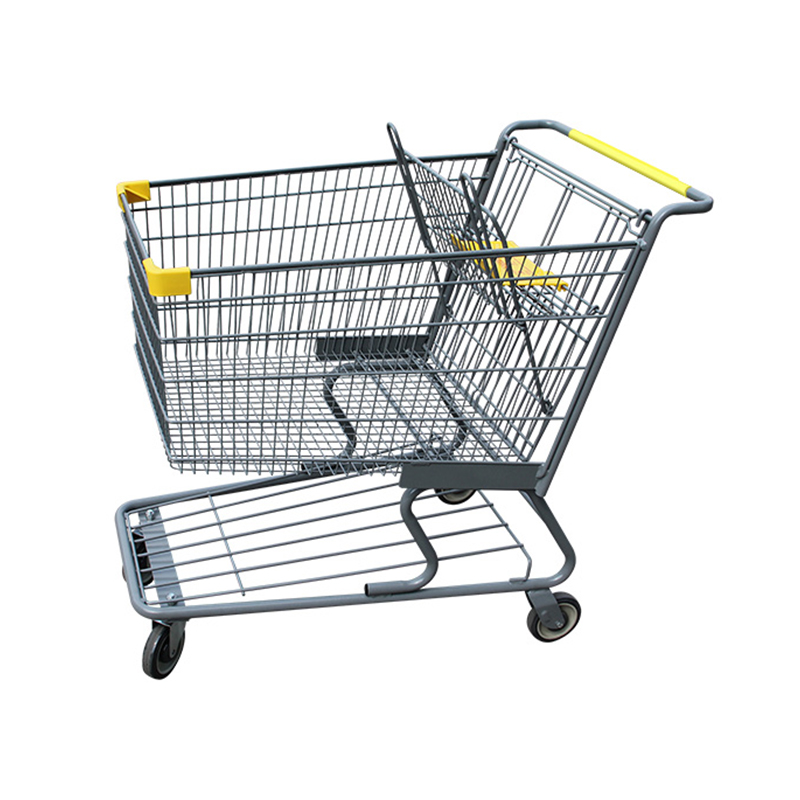 Double-Tier High-Capacity Shopping Cart for Hypermarkets and Warehouse StoresWith a two-level design, this metal cart increases vertical storage and allows separation of products. It features welded frame construction for durability, customizable dimensions for aisle fit, and four-wheel steering with TPR or PU casters.View Product →
The Bottom Line
No single material wins every durability test. All-plastic carts offer the strongest protection against rust, faster and easier cleaning, and a quieter shopping trip. Steel carts offer a higher load ceiling, a viable repair path, and a longer life in abusive environments. For stores that want the best of both options, the practical move is to work with a supplier that offers both lines and a full-store store-wide solution from shelving to carts.

- Quick Links
- Home
- About Us
- Sustainable
- News
- Contact Us
- Products
- Supermarket shelf
- Storage rack
- Shopping cart
- Shopping basket
- Shelving Accessories
- Display rack
- Contact us
-
-
+86-18852916580

-
[email protected]

-
No. 9 Yongxin Road, Wangzhuang Industrial Park, Shanghu Town, Changshu City, Jiangsu Province, China

-

