- Tel: +86-18852916580
- Suzhou CERS Commercial Equipment Co., Ltd.
- Email: [email protected]
- Tel: +86-18852916580
- Suzhou CERS Commercial Equipment Co., Ltd.
- Email: [email protected]


 Español
 عربى
 Deutsch



What Is a One-Stop Shop Fit-Out Solution and: Practical Applications, Selection
Content
- 1 What Is a One-Stop Shop Fit-Out Solution?
- 2 Why Retailers Are Moving to One-Stop Shop Fit-Out Solutions
- 3 Multi-Vendor Procurement vs One-Stop Fit-Out: Side-by-Side Comparison
- 4 What a Complete Fit-Out Package Should Cover
- 5 The Cost and Timeline Reality of a One-Stop Shop Fit-Out
- 6 How to Evaluate a One-Stop Fit-Out Partner Before You Commit
- 7 Frequently Asked Questions
Scheduling equipment for a 2,000-square-meter supermarket usually means juggling four or five separate purchase orders: gondola shelving from one manufacturer, wall racks from a second, shopping carts from a third, and hooks, fences, and dividers from a fourth. Each supplier ships on its own timeline and answers only for its own defects. In a 2025 fixture procurement benchmark covering 40 store openings, projects managed through a single fit-out partner finished 5.2 weeks earlier on average than projects coordinated across independent vendors. That gap explains why the one-stop shop fit-out solution has become a commercial necessity for retail chains.
What Is a One-Stop Shop Fit-Out Solution?
A one-stop shop fit-out solution is a procurement and delivery model in which a single manufacturer supplies the complete equipment package for a retail store under one contract, one specification, one delivery schedule, and one point of responsibility. Retail fixture buying is fragmented by default, and the retailer pays that fragmentation in delays and mismatches.
Instead of sourcing each category separately, the retailer hands the entire scope to one producer that designs, manufactures, and ships everything together. Suzhou CERS Commercial Equipment Co., Ltd. (CERS) builds the package in a 12,000-square-meter plant near Shanghai, so every shelf, cart, and hook shares the same steel specification, coating process, and inspection protocol. Buyers can review the full product and solution scope on the solutions page before requesting a quotation.
Why Retailers Are Moving to One-Stop Shop Fit-Out Solutions
Retailers switch to a one-stop model for one measurable reason: it creates a shorter, more predictable path from an empty shell to a trading store.
- A single finish standard across every fixture, eliminating visible mismatches between shelf uprights, back panels, and display frames
- One consolidated delivery window, so installation crews never pause while waiting for straggler shipments
- Unified quality control, with one manufacturer owning every defect claim instead of three vendors pointing at each other
- Lower purchasing overhead, from one quotation and invoice to a single freight booking and customs file
When a chain consolidates four fixture vendors into one fit-out partner, coordination touchpoints, including purchase orders, progress calls, delivery checks, and defect negotiations, drop by roughly 75 percent. In projects CERS has supported across Europe, the Middle East, and North America, the most common cause of delayed openings is vendors waiting on one another. A one-stop contract removes that failure mode by design.
Multi-Vendor Procurement vs One-Stop Fit-Out: Side-by-Side Comparison
Buyers evaluating the two models need a direct comparison on the factors that actually move project cost and schedule. The table below summarizes the differences for a typical 2,000-square-meter supermarket project.
| Comparison factor | Multi-vendor procurement | One-stop fit-out |
| Fixture lead time | 14-20 weeks across vendors | 8-12 weeks coordinated |
| Finish consistency | Varies by factory and batch | Controlled in one plant |
| Coordination burden | 4 or more contact points | One account manager |
| Defect resolution | Cross-vendor warranty disputes | Single warranty owner |
| Freight logistics | Multiple partial loads | One consolidated shipment |
| After-sales support | Divided among suppliers | Unified service agreement |
What a Complete Fit-Out Package Should Cover
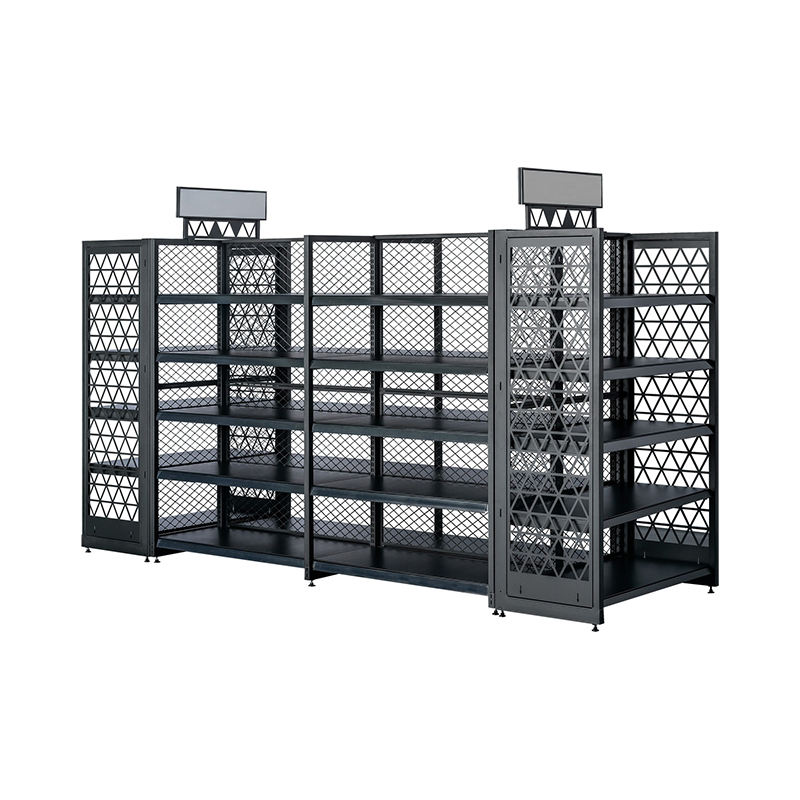 Heavy-duty mesh backboard supermarket shelving unit for high-load retailThis cold-rolled steel shelving system offers multi-tier adjustable display with a mesh back, reinforcing vertical storage for heavy groceries like oil and beverages, and supports common retail accessories.View Product →
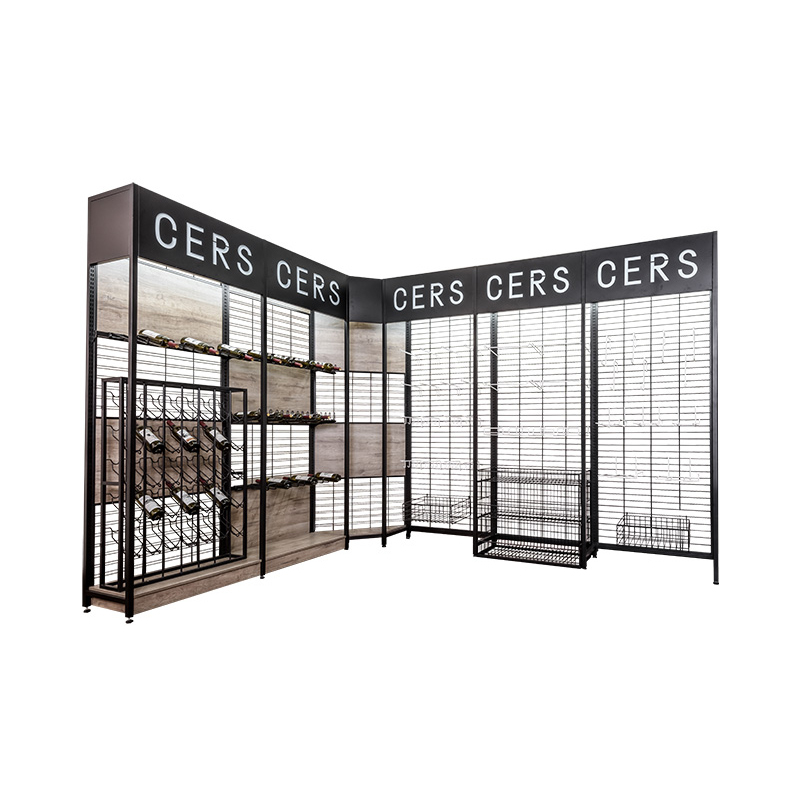 Premium L-shaped adjustable corner display rack for retail spacesAn L-shaped steel rack with adjustable shelf heights and snap-fit assembly, designed to maximize corner usage in supermarkets while supporting 80–120 kg per tier for dense product presentation.View Product →
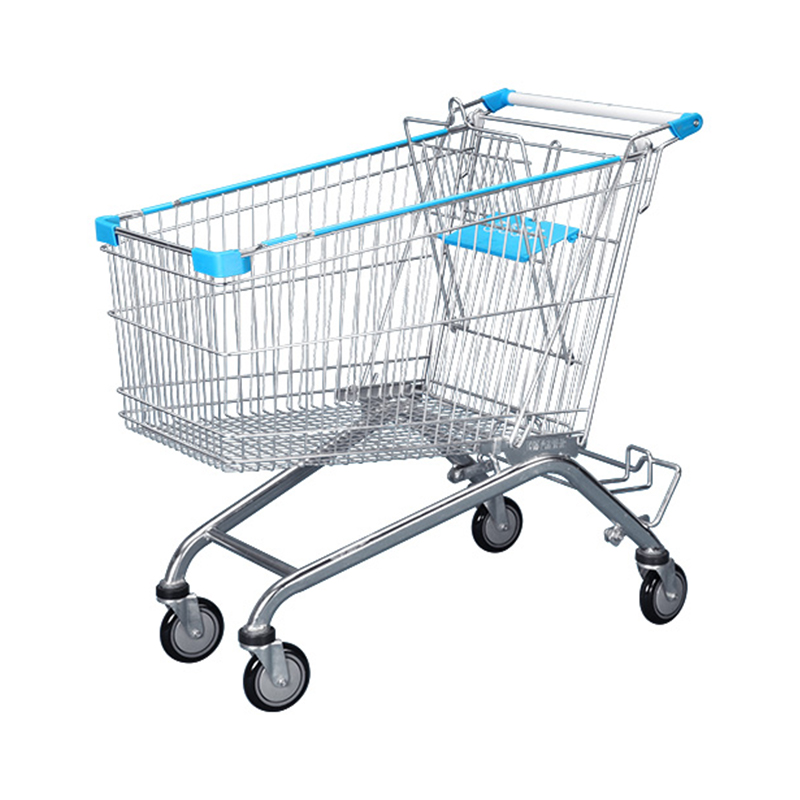 High-capacity stackable silent commercial shopping cart for retailThis cart features a 100–180 liter basket, silent dual ball-bearing casters, and a nesting mechanism for space-saving storage, making it suitable for large-format supermarkets and warehouse stores.View Product →
A complete fit-out package is not a shelf order with accessories attached; it is a coordinated equipment system in which every component is engineered to work with the others.
- Supermarket shelving: gondola runs, wall-mounted units, and back-panel variants matched to each department
- Display racks: freestanding and L-shaped units for end caps, promotions, and seasonal zones
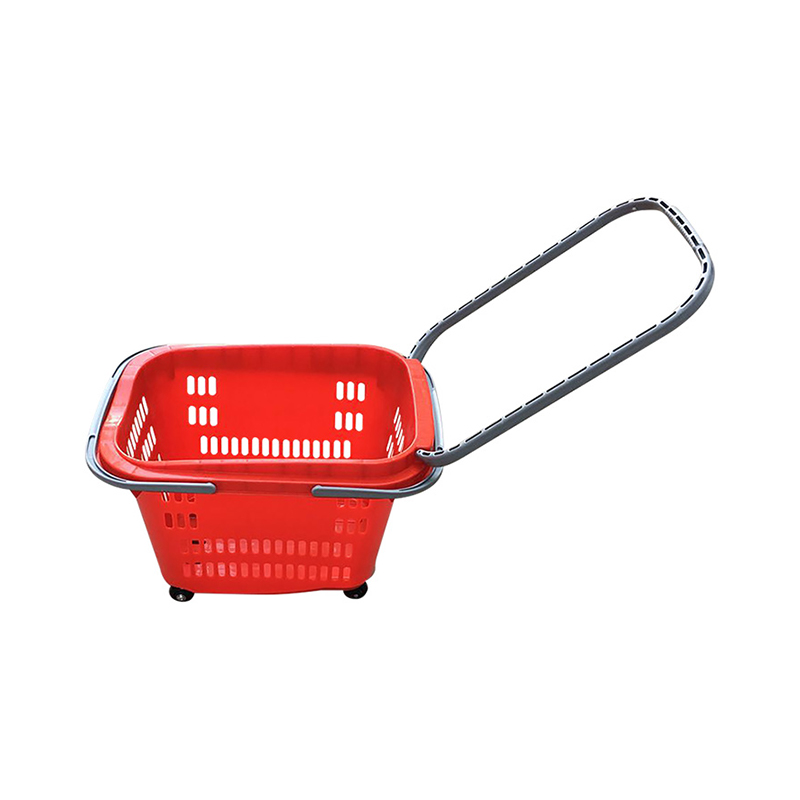
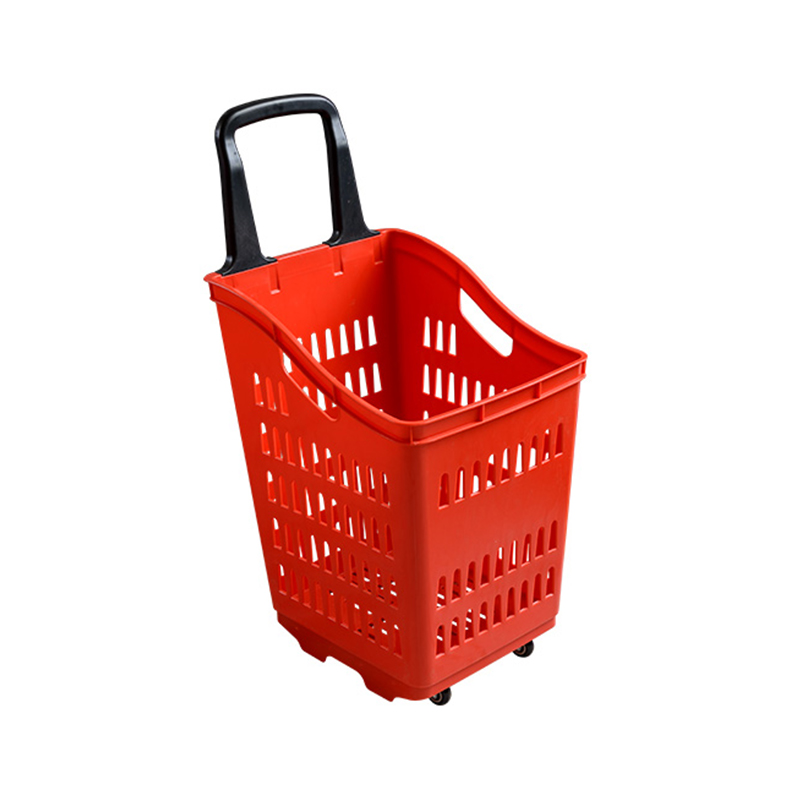
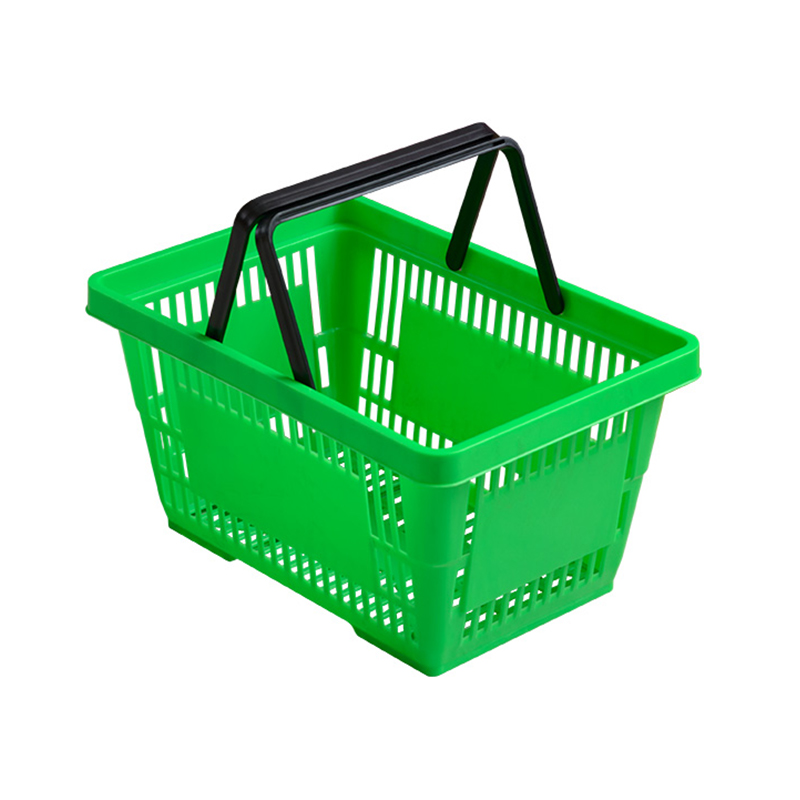
- Shopping carts and baskets: capacity-matched to store format, with stacking or nesting for storage
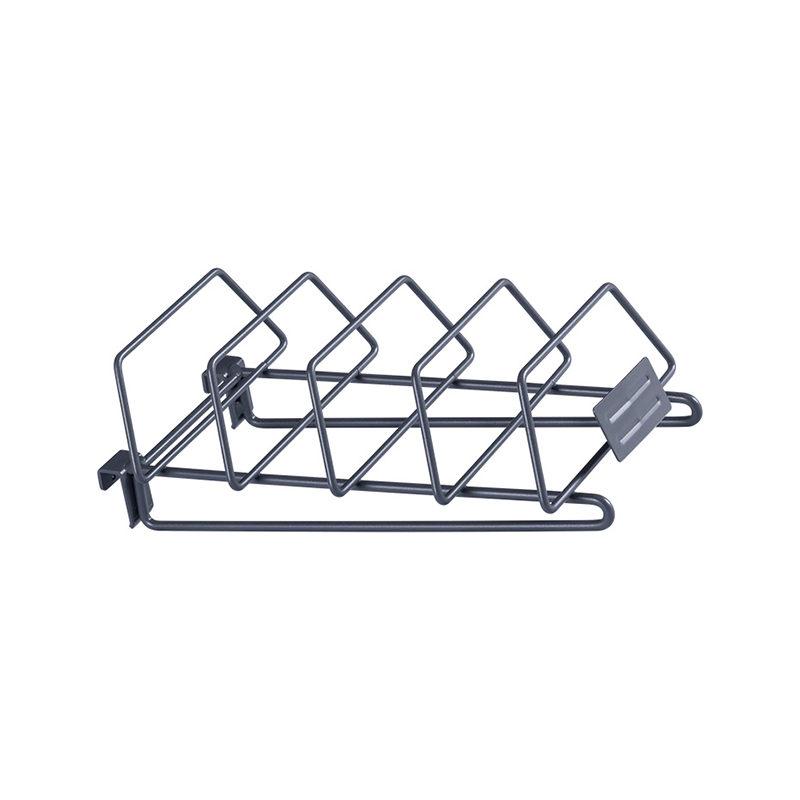
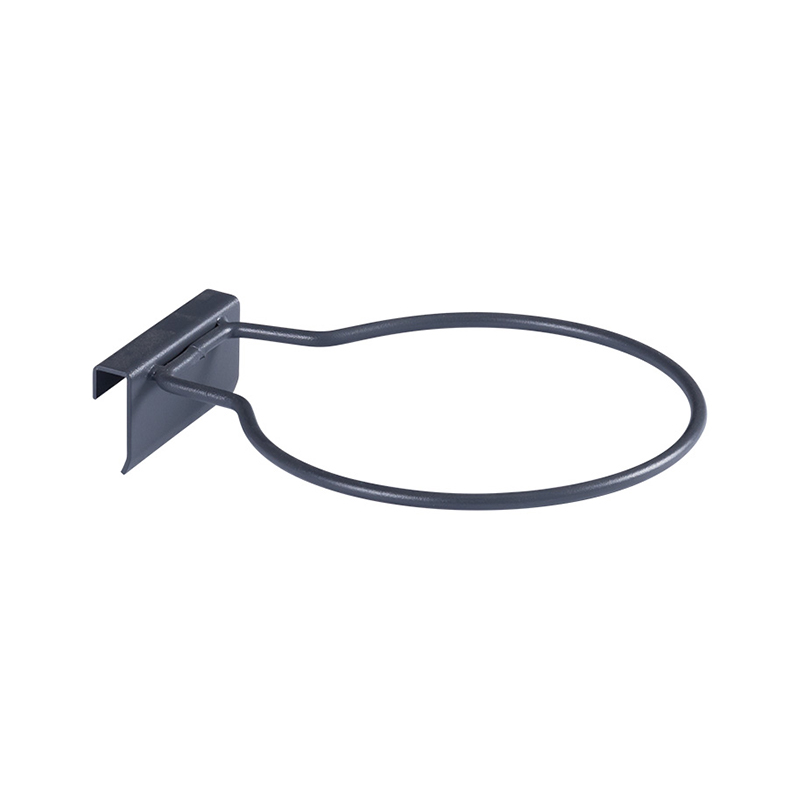
- Display hooks: single- and double-wire hooks for pegboard, slatwall, grid panels, and beams
- Shelf fences and dividers: fall-prevention rails and anti-slip separators that protect margin
- Wire display and storage: cages, hanging baskets, and decking that add capacity without new footprints
In a typical CERS-supported store, heavy-duty mesh backboard shelving anchors the gondola runs, L-shaped display racks handle end-cap promotions, and stackable silent shopping carts complete the customer-facing fleet. Sourcing these categories from one factory means coating color, steel gauge, and accessory-mounting patterns match across the entire store.
The Cost and Timeline Reality of a One-Stop Shop Fit-Out
Ordering from one supplier does not automatically mean paying a premium; in most projects it lowers total landed cost because freight, installation idle time, and rework all shrink.
Typical fixture procurement and delivery timeline by category, multi-vendor versus one-stop fit-out.
The fixture budget rarely changes dramatically between the two models. Savings come from fewer partial freight loads, zero installation idle time, and a warranty that does not bounce between vendors. For a chain opening ten stores a year, a 6 to 8-week compression in equipment lead time can shift an entire opening wave earlier in the fiscal calendar.
How to Evaluate a One-Stop Fit-Out Partner Before You Commit
Evaluate a fit-out partner on manufacturing evidence, not catalog breadth. A supplier that cannot show the plant, equipment, and quality process behind its catalog is not offering a one-stop solution; it is offering order forwarding.
- Verify in-house production capacity: check the factory floor, equipment list, and plant size rather than accepting a trading company's claims
- Inspect coating and welding quality across multiple product categories, because consistency across ranges is the actual deliverable
- Confirm the full category list in writing before quoting, so the promised scope cannot shrink after the contract is signed
- Request a consolidated delivery plan with one freight booking and a single customs file for cross-border projects
- Run a defect scenario: send one sample order with a deliberate tolerance issue and measure how fast the supplier responds
Manufacturers with genuine one-stop capability publish that evidence openly. CERS documents its 12,000-square-meter factory and quality control process, including automated rack lines, laser cutting, and robotic welding, so buyers can verify capacity before the first quotation.
Frequently Asked Questions
Is a one-stop shop fit-out more expensive than buying from separate suppliers?
Not in total landed cost. Unit prices from a volume manufacturer are usually comparable to specialist vendors, and the one-stop model removes duplicate freight, customs handling, installation waiting time, and cross-vendor rework. Most multi-store operators report a lower overall project cost despite paying similar per-fixture prices.
How long does a full supermarket fit-out take with one supplier?
For a typical 2,000-square-meter store, a coordinated one-stop package, including shelving, display racks, carts, baskets, hooks, fences, and dividers, is delivered in 8 to 12 weeks from confirmed order, compared with 14 to 20 weeks when sourcing categories separately. The factory production queue and the destination shipping route are the main variables.
Can one manufacturer genuinely produce every fixture category in-house?
Only when it operates a real production base with integrated lines. CERS manufactures in a 12,000-square-meter facility with automated rack lines, laser cutting, and robotic welding, covering shelving, display racks, shopping carts and baskets, hooks, wire displays, and shelf accessories under one roof. Buyers should verify plant ownership and equipment before treating a supplier as a true one-stop partner.
What documentation should a one-stop fit-out quotation include?
A complete quotation should list every fixture category with its steel gauge, finish color, load capacity, and packaging details; name the producing plant; state the lead time per category; and confirm a single consolidated delivery schedule. Batch-consistency commitments and load-bearing test data should be included in the document, not supplied verbally.

- Quick Links
- Home
- About Us
- Sustainable
- News
- Contact Us
- Products
- Supermarket shelf
- Storage rack
- Shopping cart
- Shopping basket
- Shelving Accessories
- Display rack
- Contact us
-
-
+86-18852916580

-
[email protected]

-
No. 9 Yongxin Road, Wangzhuang Industrial Park, Shanghu Town, Changshu City, Jiangsu Province, China

-

