- Tel: +86-18852916580
- Suzhou CERS Commercial Equipment Co., Ltd.
- Email: [email protected]
- Tel: +86-18852916580
- Suzhou CERS Commercial Equipment Co., Ltd.
- Email: [email protected]


 Español
 عربى
 Deutsch



How to Choose Custom Steel Storage Rack Manufacturers: A Practical Guide
Content
- 1 What "Custom" Means in Custom Steel Storage Rack Manufacturing
- 2 Load Ratings and Steel Gauge: What a Custom Steel Storage Rack Manufacturer Must Prove
- 3 Welding, Coating, and Inspection in Custom Steel Storage Rack Manufacturing
- 4 Production Capabilities and Lead Times to Evaluate
- 5 Why Working Directly with the Manufacturer Reduces Procurement Risk
- 6 How to Structure a Custom Steel Storage Rack Inquiry
- 7 Frequently Asked Questions
When a standard 2.4 m pallet rack meets a warehouse bay with a sprinkler main crossing at 2.1 m, off-the-shelf storage stops being an option. The uprights do not clear the pipe, the beam span does not match the column grid, and the load plan still calls for 650 kg per level. This is the moment buyers start researching custom steel storage rack manufacturers, and the difference between a metal fabricator and an engineering partner becomes very visible.
Custom steel storage rack manufacturers do more than cut beams to length. They translate a floor plan, an inventory profile, and a handling process into a rack system with verified load ratings, correct steel gauges, and an accessory layout that keeps picking efficient. For retail chains, wholesale distributors, and industrial warehouses, the selection of the right manufacturer determines whether the racking lasts ten years or fails within the first maintenance cycle.
What "Custom" Means in Custom Steel Storage Rack Manufacturing
A custom steel storage rack manufacturer adjusts upright heights, beam lengths, shelf levels, steel thickness, and surface treatment to match a specific building and load plan, rather than forcing the warehouse to accept a catalog product.
That definition matters because "custom" is used loosely in the industry. Some factories only adjust the height of a standard frame. A genuine custom manufacturer recalculates the structural configuration when the input parameters change. The practical differences show up in:
- Upright heights that respect ceiling obstructions, sprinkler clearance, and mezzanine levels
- Beam lengths that align with existing column spacing instead of forcing the layout to be adjusted
- Shelf levels calculated from the actual height of pallets, cartons, or hanging garments
- Steel thickness selected from a load calculation, not from a default product table
- Coating and finish matched to humidity, food contact, or outdoor conditions
A custom steel storage rack is a fabricated rack configuration with dimensions, load capacity, and accessories engineered around one specific facility and storage process.
Load Ratings and Steel Gauge: What a Custom Steel Storage Rack Manufacturer Must Prove
Load rating is the first specification to verify with a custom steel storage rack manufacturer, because it drives steel gauge, upright profile, beam design, and final price.
Per-shelf load capacity is not a single number. Sit the same beam on a 2.4 m span versus a 3.0 m span, and the safe uniformly distributed load drops noticeably. Ask for the load table that corresponds exactly to your beam length. A factory that cannot provide a span-specific table is not engineering the rack; it is copying a drawing.
| Steel thickness (mm) | Typical upright application | Load per shelf level (kg) | Best-suited environments |
| 1.0 | Light retail display and carton storage | 100-150 | Convenience stores, backrooms |
| 1.2 | General warehouse carton picking | 200-300 | Distribution centers |
| 1.5 | Medium industrial storage | 350-450 | Wholesale warehouses |
| 2.0 | Heavy industrial racking | 500-650 | Manufacturing storage areas |
| 2.5 or above | Very heavy load bays | 700-900 | Bulk pallet storage |
These are practical reference ranges, not engineering guarantees. The safe value depends on beam length, number of fixing points, and load distribution across the shelf.
Typical per-shelf load capacity by steel thickness
Welding, Coating, and Inspection in Custom Steel Storage Rack Manufacturing
Welding quality and coating determine how many years a custom rack survives in a real warehouse, so verify both before committing to a batch order.
Look at the weld seams on load-bearing corners. Continuous welds with clean bead formation and no spatter indicate controlled parameters and trained operators. Spot welds on critical joints should be rejected for heavy loads. Surface treatment also matters: a phosphate wash followed by powder coating in the 60-80 micron range gives far better corrosion resistance than a single thin paint layer.
Quality control checkpoints a manufacturer should have
- Incoming steel coil inspection with thickness and coating verification
- Inline dimensional checks after cutting, punching, and forming
- Torque testing on all bolted connection points before packing
- Random load testing on finished uprights and beams
- Packing standards that prevent transit damage on export orders
A document issued by the manufacturer stating that the sampled rack configuration was loaded to a defined percentage of the rated capacity and showed no permanent deformation or connection failure.
Production Capabilities and Lead Times to Evaluate
A manufacturer with in-house cutting, bending, welding, and coating lines can hold tighter tolerances and shorter lead times than one that outsources critical process steps.
The equipment mix tells you what kind of manufacturer you are dealing with. Automated rack production lines, high-precision tube bending, laser cutting for sheet and tube, and robotic welding systems are typical of factories that handle custom steel storage rack orders consistently. Ask which steps are performed in-house and which are subcontracted.
For a custom run, the timeline often breaks down as follows:
- Design confirmation with drawings and load calculations: 3-7 working days
- Sample production and approval: 7-15 working days
- Mass production with in-line inspection: 15-30 working days depending on batch size
- Packing and export documentation: 3-5 working days
A factory like Suzhou CERS Commercial Equipment Co., Ltd. operates its 12,000 sq m facility near Shanghai with automated rack production lines and robotic welding, which shortens the gap between design approval and shipment. When the manufacturer controls the process from steel coil to finished rack, delivery dates become far more predictable.
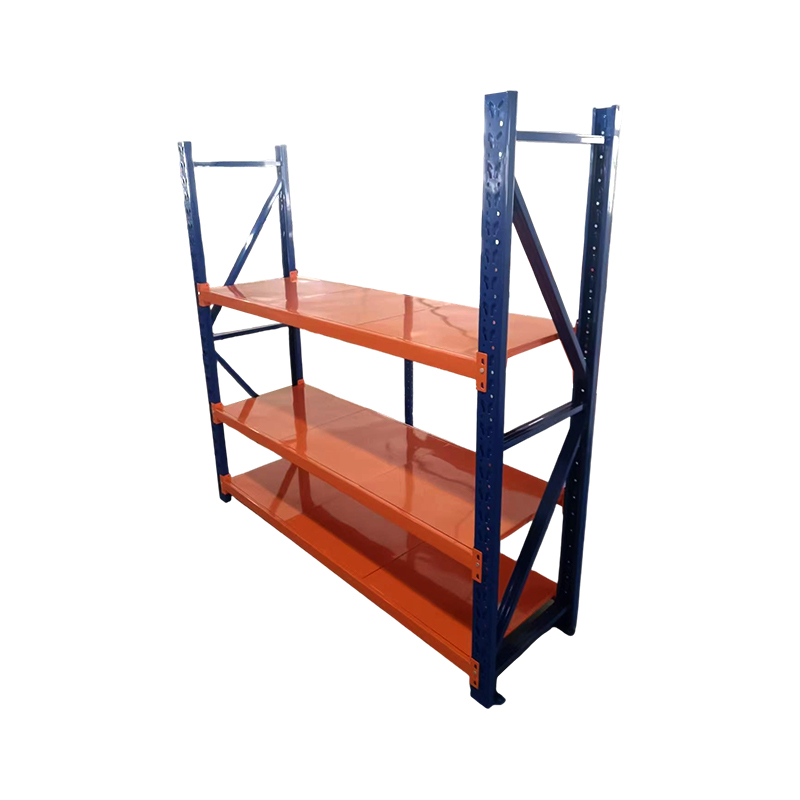
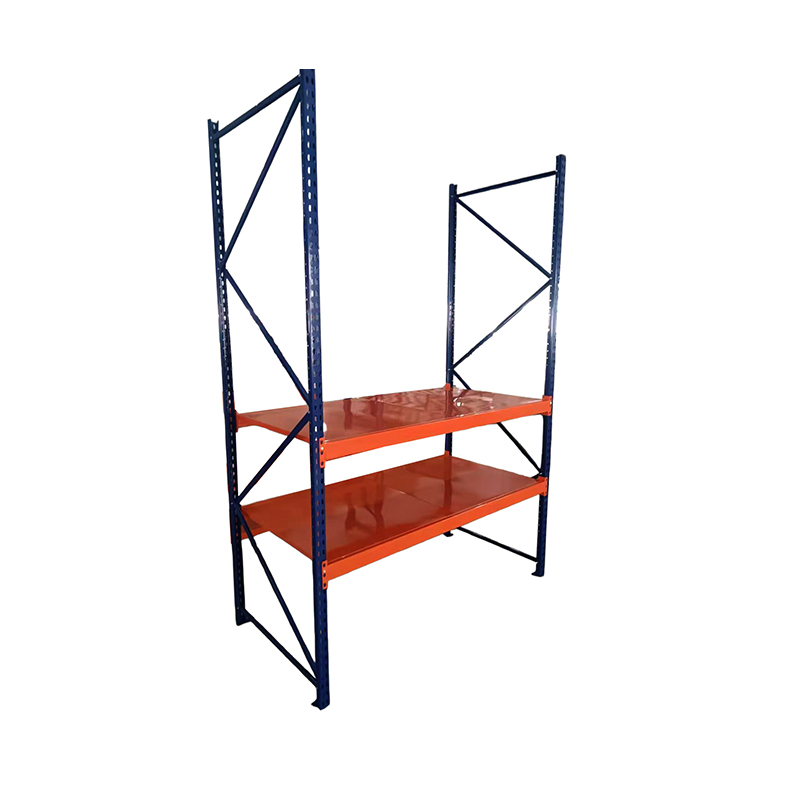 Heavy-Duty Multi-Tier Warehouse Shelving with Extra-Thick UprightsThis bolted rack system from a direct factory near Shanghai offers predictable delivery and load capacity up to 4000 kg per upright. Ideal for heavy components and pallets, with modular assembly that simplifies high-density warehouse storage.View Product →
Why Working Directly with the Manufacturer Reduces Procurement Risk
Direct manufacturer partnerships remove the margin stacking, communication delays, and quality ambiguity that come from buying custom racks through an intermediary or a trading desk.
When you work directly with the factory, engineering feedback reaches the people who actually cut and weld the steel. That shortens the revision loop and prevents errors from being translated across multiple parties. The commercial benefit is equally direct: factory pricing on custom configurations is usually 15-30% below distributor quotes for the same specification, because no intermediate margin sits between the production line and your purchase order.
Buying through an intermediary
- Engineering questions must pass through a sales layer
- Lead time depends on the intermediary's order queue
- Defect handling involves multiple parties
- Custom changes trigger renegotiation at each stage
Working with the factory directly
- Direct access to the engineering and production team
- Lead time tied to actual factory capacity
- Single point of accountability for defects
- Design changes handled in one conversation
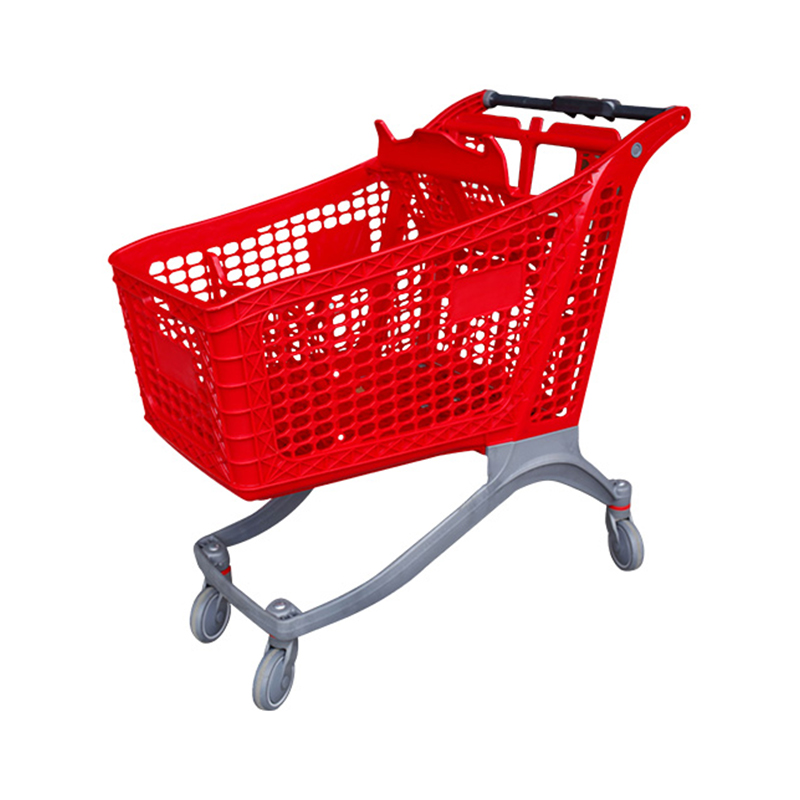
For retail and warehouse projects, this direct relationship also makes it easier to evolve the rack system. A custom retail and storage solution can combine heavy steel shelving, display hooks, shelf dividers, and shopping carts in one coordinated specification, simplifying procurement across an entire store opening or retrofitting program.
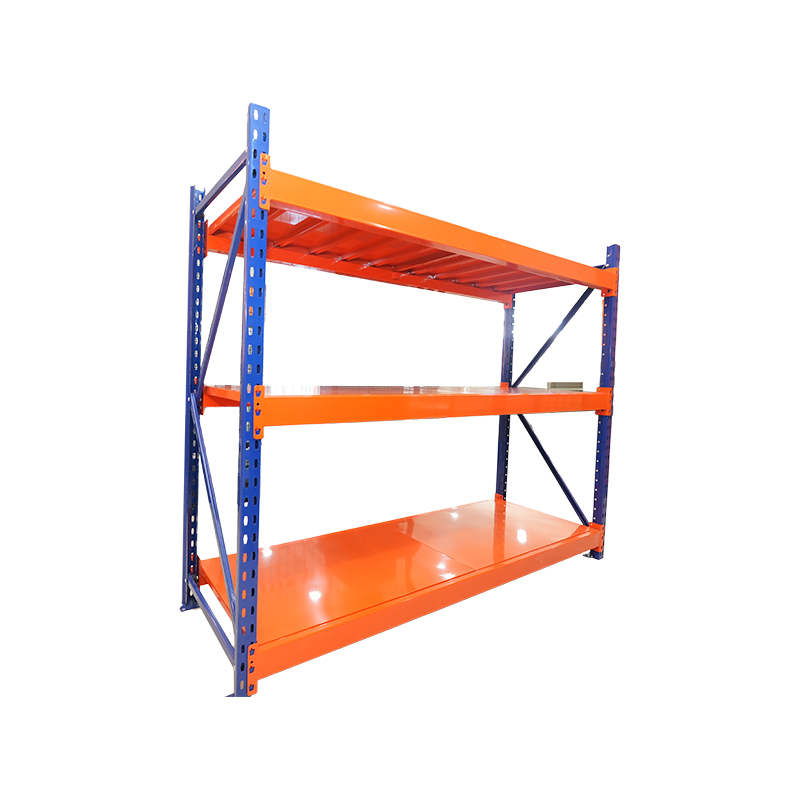
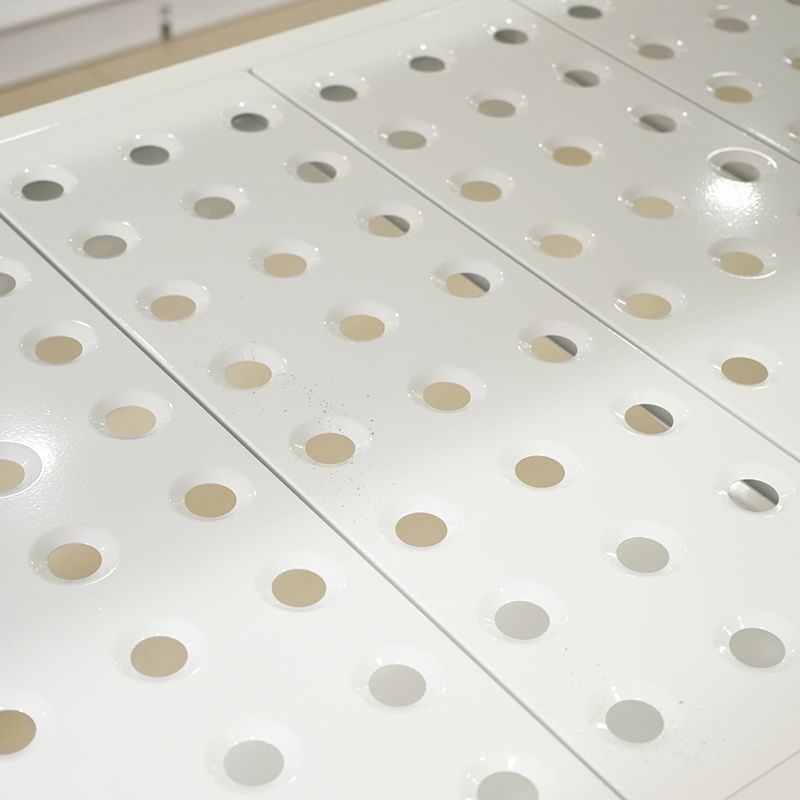 Industrial-Grade Steel Warehouse Rack with Customizable Multi-Tier HeightA versatile, bolt-assembled shelving unit for pallets and oversized items, supporting 800–2500 kg per tier. Its customizable height and FIFO/LIFO flow options make it practical for coordinated retail and warehouse projects.View Product →
How to Structure a Custom Steel Storage Rack Inquiry
A complete inquiry produces an accurate quote on the first round, while an incomplete one triggers weeks of clarifying emails.
Include the following information when contacting a custom steel storage rack manufacturer:
- Floor layout with column positions and dimensions
- Ceiling height and location of sprinkler lines, lights, and ducts
- Pallet or carton size and maximum weight per storage unit
- Required number of shelf levels and aisle widths
- Forklift or pallet jack turning radius
- Coating color and any food, humidity, or outdoor requirements
For a heavy-duty warehouse environment, verify the manufacturer can provide a span-specific load table and, where required, a load test certificate. On the commercial side, clarify the MOQ, packaging standard, and whether the price includes design documentation and inspection reports.
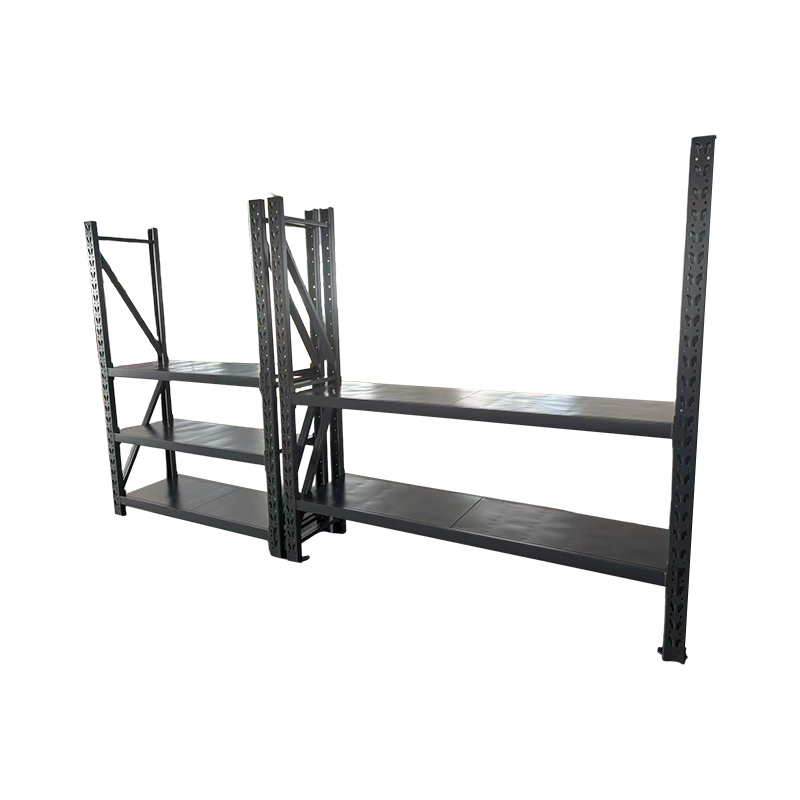 Thickened Steel Multi-Tier Industrial Warehouse Shelving SystemThis heavy-duty beam rack suits vertical storage of pallets, coils, and bagged goods. With 4–6 tiers, forklift-compatible clear heights, and weld-free claw locks, it's a reliable option when verifying load tables and MOQ terms.View Product →
Frequently Asked Questions
What is the minimum order quantity for custom steel storage racks?
Many custom steel storage rack manufacturers set the MOQ between 50 and 100 rack units for a bespoke configuration, though some factories accept smaller batches for sample validation. Confirm the MOQ before the design stage, because a low-volume custom run has a different cost structure than a standard catalog order.
How long does a custom steel storage rack order take?
A typical timeline is 4-8 weeks from drawing approval to shipment, covering sample production, mass production, inspection, and packing. Factories with in-house laser cutting, robotic welding, and powder coating lines can compress this timeline, while configurations that require outsourced coating or special materials will take longer.
Can a custom manufacturer match my existing rack system?
Yes, provided the manufacturer receives the beam profile, upright dimensions, and connection hole pattern of the existing system. Matching an existing rack system avoids replacing entire rows and keeps the warehouse operational during the expansion.
What load capacity should I specify for a custom rack?
Specify the heaviest load that will be placed on a single shelf level, multiplied by a safety factor of at least 1.5. For pallet storage, include the pallet weight, the goods weight, and the dynamic impact from forklift placement.


- Quick Links
- Home
- About Us
- Sustainable
- News
- Contact Us
- Products
- Supermarket shelf
- Storage rack
- Shopping cart
- Shopping basket
- Shelving Accessories
- Display rack
- Contact us
-
-
+86-18852916580

-
[email protected]

-
No. 9 Yongxin Road, Wangzhuang Industrial Park, Shanghu Town, Changshu City, Jiangsu Province, China

-

