- Tel: +86-18852916580
- Suzhou CERS Commercial Equipment Co., Ltd.
- Email: [email protected]
- Tel: +86-18852916580
- Suzhou CERS Commercial Equipment Co., Ltd.
- Email: [email protected]


 Español
  عربى
عربى  Deutsch


Steel Shopping Cart vs. Modern Shopping Cart: Which Design Fits Your Retail Environment?
Content
- 1 Material Foundation: Steel Strength vs. Modern Material Innovation
- 2 Motion Control: Caster Geometry and Wheel Engineering
- 3 Nesting Geometry and Its Impact on Store Layout Efficiency
- 4 Ergonomics, Accessibility, and Structural Safety Standards
- 5 Side-by-Side: Steel Shopping Cart vs. Modern Shopping Cart
- 6 Making the Right Choice: Application-Driven Decision Points
- 7 Beyond the Purchase: Lifecycle Cost and Reliability
- 8 Control Ecosystem: Standalone vs. Networked Operation
- 9 Final Verdict: When to Choose Which
- 10 Maintenance and Compliance: Protecting Your Investment
- 11 Frequently Asked Questions
In the competitive landscape of modern retail, the shopping cart is far more than a simple utility—it is the first physical touchpoint a customer encounters and a critical enabler of the shopping journey. For retailers, choosing between a traditional steel shopping cart and a modern shopping cart involves balancing durability, cost, maneuverability, and evolving consumer expectations. While steel has long been the material of choice for its strength and longevity, innovations in materials, ergonomics, and smart technology are reshaping what a shopping cart can be. This guide examines the engineering, safety, and operational considerations that distinguish these two approaches, helping you specify the right equipment for your store layout, customer base, and long-term goals.
Material Foundation: Steel Strength vs. Modern Material Innovation
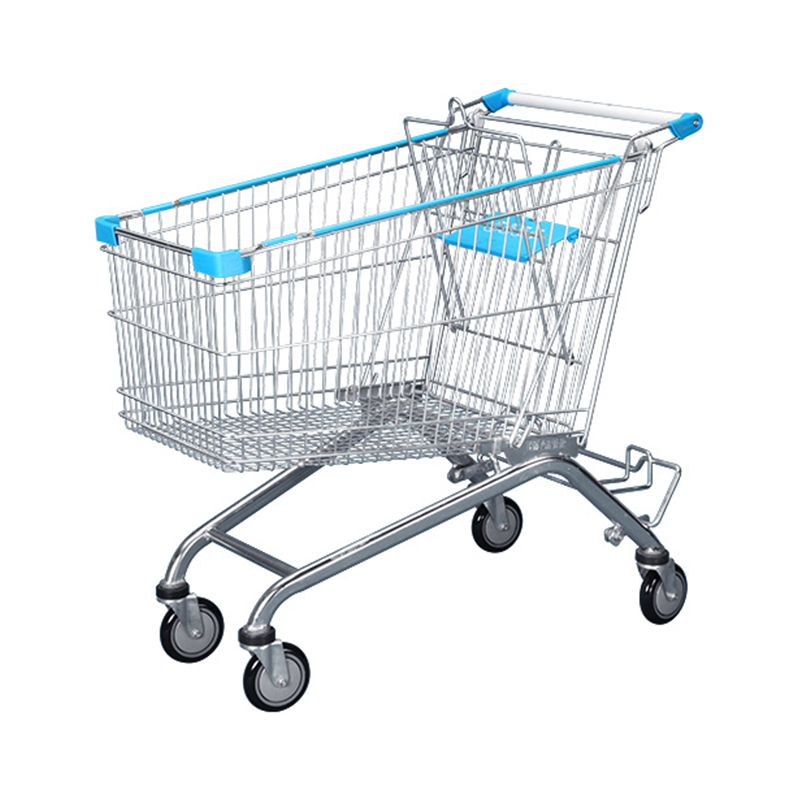
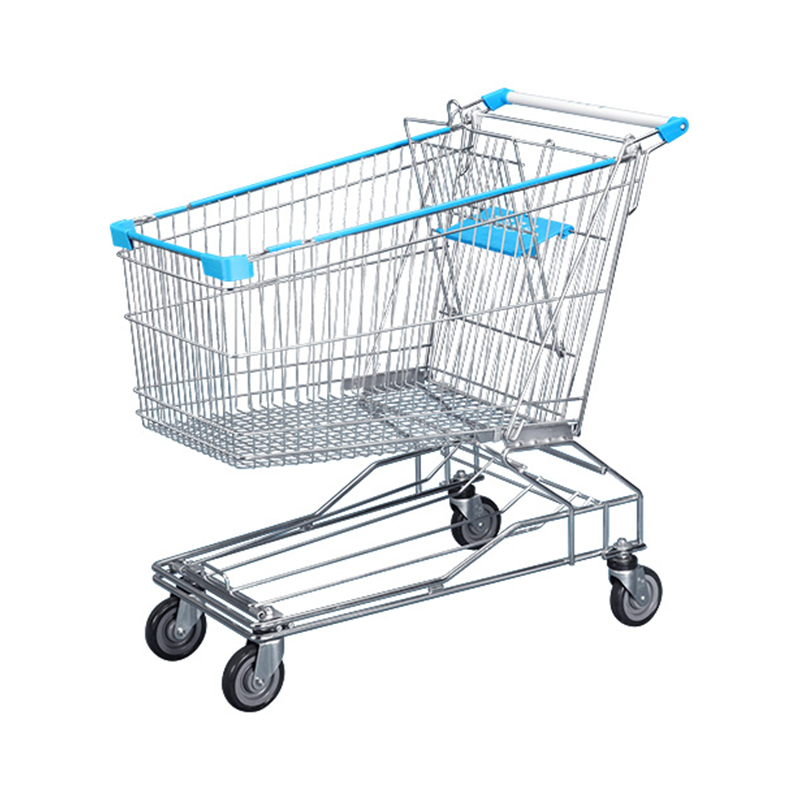
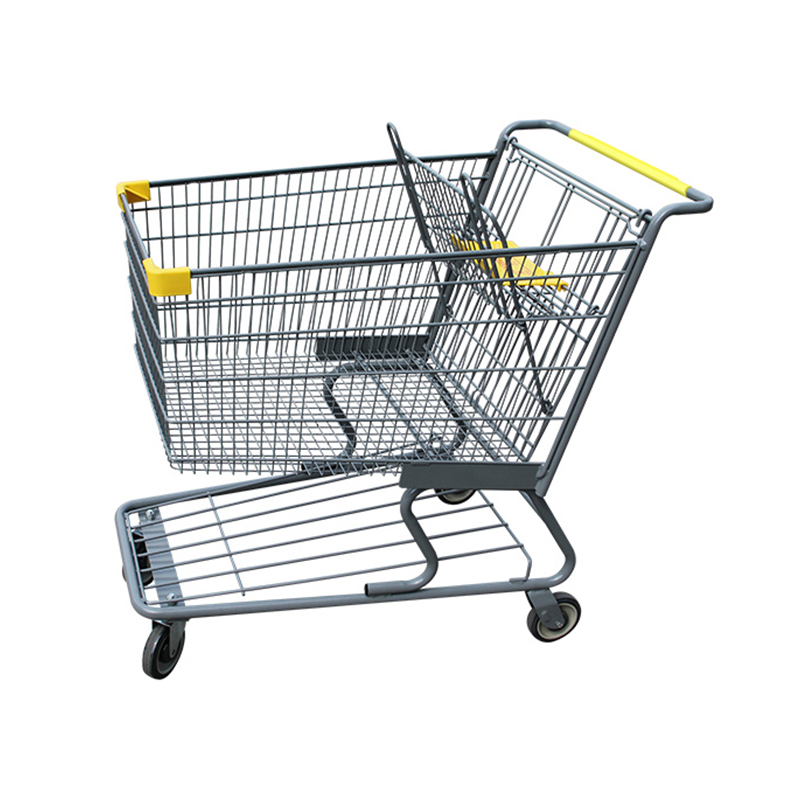
A steel shopping cart is built around a welded steel wire and tube frame, typically using high-strength carbon steel sourced from mills like Baosteel or Shagang. This construction delivers exceptional structural integrity, with reinforced wire and tube structures capable of supporting loads of 90 to 150 kilograms or more, depending on the model and basket size. The steel frame is usually protected with a powder-coated finish, galvanized coating, or zinc-epoxy surface treatment to resist corrosion from humidity and harsh cleaning chemicals.
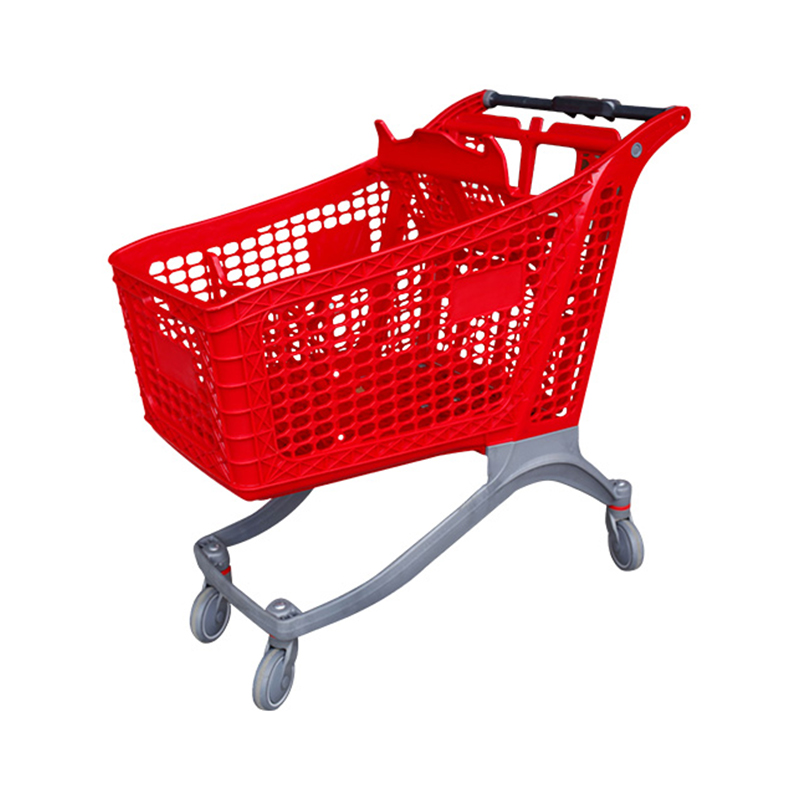
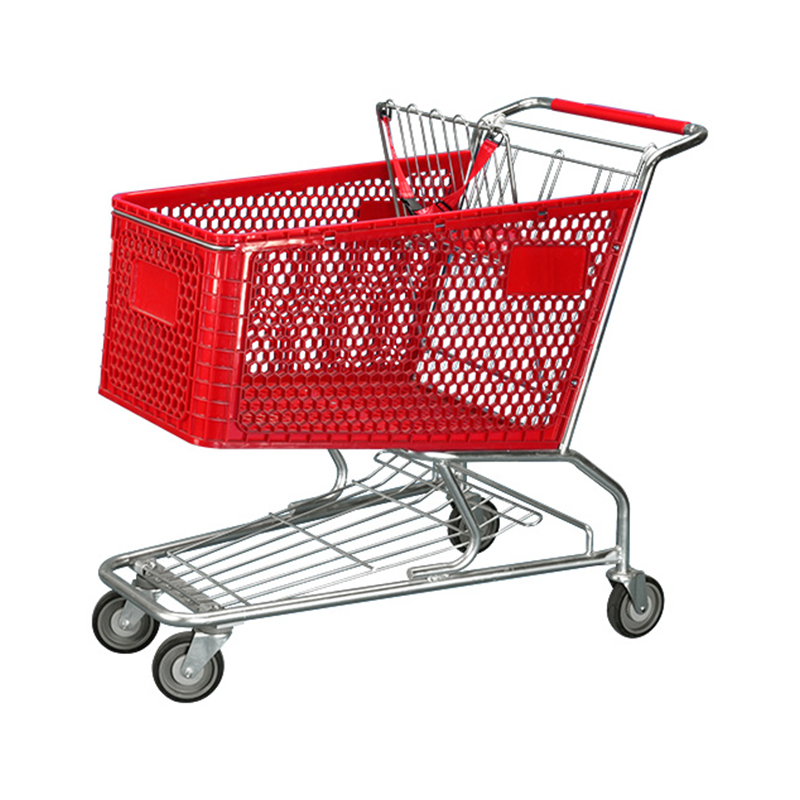
A modern shopping cart, by contrast, often incorporates lightweight materials such as high-grade plastics, composites, or hybrid steel-plastic designs. These materials reduce overall cart weight, making them easier to push and maneuver, particularly for elderly or mobility-limited shoppers. Plastic carts also resist dents and corrosion without requiring surface treatments, potentially lowering long-term maintenance costs. However, they may not match the load-bearing capacity or impact resistance of a well-engineered steel frame, making them better suited for lighter retail environments rather than high-volume warehouse clubs.
These numbers reflect the engineering trade-offs inherent in each design approach. Steel carts offer proven durability and load capacity, while modern material innovations prioritize weight reduction and corrosion resistance. The choice depends on the specific demands of your retail environment—high-volume stores with heavy loads may favor steel, while stores prioritizing customer comfort and maneuverability may lean toward lighter designs.
Motion Control: Caster Geometry and Wheel Engineering
The rolling performance of a shopping cart depends far more on caster geometry than most shoppers ever notice. Swivel casters mounted at the front allow tight turning in narrow aisles, while fixed or semi-swivel wheels at the rear provide directional stability when a cart is pushed at speed down a long aisle. The offset distance between the wheel axle and the swivel pivot point—known as trail—determines how quickly a cart self-centers after a turn. Too little trail results in a cart that feels twitchy and hard to control, while too much trail makes turning unnecessarily difficult.
Wheel material also plays a functional role beyond noise reduction. Thermoplastic rubber (TPR) compounds absorb vibration from uneven flooring transitions, such as the seams between tile and concrete common in large-format retail stores, which reduces wear on the wheel bearings over time. Polyurethane (PU) wheels offer superior wear resistance for high-frequency use, while nylon wheels provide a cost-effective option for lighter-duty applications. Bearing type is another factor that separates entry-level carts from higher-duty ones. Sealed ball-bearing hubs resist dust and moisture ingress far better than open bushings, which matters in high-traffic environments where carts may log several kilometers of rolling distance per day.
Steel carts show lower long-term cost despite higher initial investment, while modern carts may require replacement sooner.
For multi-level retailers or shopping centers with travelators, specialized caster designs incorporate guiding rings that engage with grooves on inclined conveyor belts. These systems automatically apply a braking force when the cart is on the conveyor, preventing unwanted rolling and ensuring safe transport between floors. At Suzhou CERS Commercial Equipment Co., Ltd., caster selection is treated as an engineering decision tied to expected floor conditions and duty cycle, not simply a bolt-on accessory.
Nesting Geometry and Its Impact on Store Layout Efficiency
The ability of carts to nest tightly together is one of the most underappreciated aspects of retail floor planning. Nesting reduction—the difference between a single cart's overall length and the length it occupies when stacked inside another—directly determines how much corral or entrance space a store needs to allocate. A well-designed steel shopping cart frame with a tapered basket profile can reduce a row of fifty nested carts by several meters compared to a poorly optimized design, freeing up valuable frontage space near the entrance.
Basket flare angle and rear panel curvature are engineered specifically to allow one cart's front section to slide beneath the basket of the cart ahead of it. Too shallow an angle prevents proper nesting; too steep reduces usable basket volume. Getting this balance right requires prototyping and iterative adjustment rather than a single fixed template applied across all cart sizes. For a steel shopping cart, the nesting depth also interacts with cart-lock and travelator compatibility systems, adding another layer of dimensional precision that must be accounted for during the design phase.
Steel carts with optimized nesting geometry can save up to 30% more floor space compared to poorly designed alternatives.
During nesting, the basket automatically rotates upward at its front end. This allows the front section of one cart to enter inside the rear portion of the next forward cart, enabling efficient stacking.
The rearwardly diverging side rails of the base frame guide the nesting cart into alignment. A flared chute-like opening at the rear allows for easier initial insertion, even with slight misalignment.
The tapered basket and optimized frame geometry reduce the overall footprint of nested carts. This allows retailers to store more carts in less space, maximizing valuable floor area.
The nesting process is a carefully engineered sequence of mechanical interactions. When one cart is pushed into another, the impact rod on the front of the basket deflects rearward, disengaging the latching mechanism. This allows the basket to tilt upward automatically under spring force, positioning it to slide into the forward cart's rear opening. The base frame's diverging side rails guide the cart into alignment, while the tray hinges upward to accommodate the nesting angle. This entire sequence happens in seconds, enabling store staff to gather and store dozens of carts efficiently.
Ergonomics, Accessibility, and Structural Safety Standards
Handle bar height, grip diameter, and push-force requirements are all shaped by ergonomic research into what a broad range of shoppers can comfortably operate. Standards such as ANSI/BIFMA and ASTM F2372 set reference ranges for push-pull force under a loaded cart, since excessive resistance disproportionately affects elderly or mobility-limited customers. The ASTM F2372 standard also covers performance requirements, test methods, and labeling requirements for shopping carts and restraint systems, specifically addressing children aged six months to four years who weigh up to 35 pounds (16 kilograms).
Child seat design has its own safety considerations, including harness anchor points, leg-opening dimensions, and load limits that must be tested independently from the main basket capacity. A low center-of-gravity frame design also reduces tip-over risk when a child seat is loaded near the front of the cart, a scenario that places uneven weight distribution on the front casters. Weld joint integrity at high-stress points—particularly where the handle bar meets the frame and where the basket connects to the chassis—is typically verified through cyclic load testing that simulates years of repeated use.
Steel carts excel in durability, safety, and nesting efficiency, while modern carts lead in smart integration and maneuverability.
Side-by-Side: Steel Shopping Cart vs. Modern Shopping Cart
| Feature | Steel Shopping Cart | Modern Shopping Cart (Plastic/Composite) |
|---|---|---|
| Material | High-strength carbon steel wire and tube | Plastic, composites, or hybrid steel-plastic |
| Load Capacity | 90–150 kg (typical) | 50–100 kg (typical) |
| Weight | Heavier, more stable | Lighter, easier to maneuver |
| Corrosion Resistance | Depends on surface treatment (powder coat, galvanized, zinc-epoxy) | Inherently corrosion-resistant |
| Durability | High impact resistance, long lifespan | Good, but may dent or crack under heavy impact |
| Maintenance | Requires rust prevention, weld inspection | Low maintenance, no rust |
| Customization | Wide range of colors, logos, and accessories | Highly customizable in design and color |
| Nesting Efficiency | Proven nesting geometry for space optimization | Often comparable, with potential for innovative designs |
| Safety Standards | Compliant with ASTM F2372 and similar | Compliant with ASTM F2372 and similar |
| Smart Technology | Can be retrofitted with RFID, sensors, etc. | Easier to integrate smart features from design stage |
| Typical Application | Supermarkets, hypermarkets, warehouse clubs | Boutique stores, supermarkets, retail chains |
The table above reveals a clear pattern: steel shopping carts are robust workhorses for high-volume environments where durability and load capacity are paramount, while modern shopping carts prioritize weight reduction, maneuverability, and design flexibility. The choice between them depends on the specific demands of your store—high-volume warehouses with heavy loads may favor steel, while stores prioritizing customer comfort and brand aesthetics may lean toward modern materials.
Making the Right Choice: Application-Driven Decision Points
Choosing between a steel shopping cart and a modern shopping cart requires answering five practical questions about your store environment and customer base.
1. What are the load and usage demands?
If your store regularly handles bulk purchases or heavy items, a steel cart with a higher load capacity is essential. High-volume warehouse clubs and hypermarkets typically require the 150 kg capacity of a steel cart. For lighter retail environments, a modern plastic or composite cart may be sufficient.
2. What is the store layout and aisle width?
Narrow aisles and tight corners demand excellent maneuverability. Modern carts with advanced caster geometry and lightweight materials are easier to push and turn in congested spaces. Steel carts with well-designed swivel casters can also perform well, but their heavier weight may require more effort.
3. How important is corrosion resistance?
Stores in coastal areas or with high humidity levels need carts that resist rust. Steel carts require robust surface treatments—powder coating, galvanizing, or zinc-epoxy—to prevent corrosion. Modern plastic carts offer inherent corrosion resistance without additional treatments.
4. What are the maintenance and lifecycle costs?
Steel carts have a longer proven lifespan, often exceeding 10 years with proper maintenance, but they require regular inspections for weld integrity, rust, and caster wear. Modern carts may have lower maintenance costs but may need replacement sooner due to material fatigue or impact damage.
5. Does the store need smart technology integration?
As retailers increasingly adopt RFID tracking, IoT sensors, and digital advertising screens, the cart's compatibility with these technologies becomes a factor. Modern carts can be designed from the ground up with these integrations, while steel carts may require retrofitting.
Beyond the Purchase: Lifecycle Cost and Reliability
The initial price of a steel shopping cart is typically higher than a comparable plastic model, but the total cost of ownership over a 10-year store lifecycle tells a different story. Steel carts are built with higher-grade materials—hardened steel gears, sealed bearings, and corrosion-resistant coatings—that extend service intervals and reduce unplanned downtime. Plastic carts with lower initial costs may require more frequent part replacements, especially if they are used in high-traffic environments with nightly cleaning regimes.
Maintenance is another differentiator. Steel carts are designed with service access in mind: weld joints, casters, and handle assemblies can be inspected and replaced individually without discarding the entire cart. This translates to shorter maintenance windows and less disruption to a busy store schedule. Plastic carts, while simpler to clean, may require full replacement if the frame is damaged, as repairs are less straightforward.
Control Ecosystem: Standalone vs. Networked Operation
While shopping carts are not typically networked in the same way as stage winches, the trend toward smart carts is changing this dynamic. Smart carts equipped with RFID tags and sensors can provide real-time inventory tracking, improve stock management, and enhance the shopping experience by providing real-time data on cart movements and product availability. Some systems also integrate digital advertising screens, offering new revenue streams for retailers.
Steel carts can be retrofitted with these technologies, but modern plastic carts are often designed with built-in compartments for electronics, making integration simpler and more seamless. The choice of material thus affects not only the cart's physical performance but also its potential as a node in the store's broader technology ecosystem.
Final Verdict: When to Choose Which
- Your store handles high-volume, heavy purchases.
- Durability and long lifespan are top priorities.
- Your store has high-traffic floors with demanding conditions.
- You have a maintenance program to manage rust and weld inspections.
- You need to support specialized casters for conveyor systems.
- You prioritize customer comfort and ease of maneuverability.
- Your store has narrow aisles requiring tight turning.
- Corrosion resistance is a concern without additional treatments.
- You want to integrate smart technology from the design stage.
- Low maintenance and easy cleaning are key operational goals.
In practice, many retailers use a combination of both: steel carts for heavy-duty bulk purchases and modern carts for customers who prioritize convenience and ease of use. The key is to apply each technology where its strengths matter most, rather than forcing one solution to fit every need.
Maintenance and Compliance: Protecting Your Investment
Regardless of which system you choose, a documented maintenance program is essential. For steel shopping carts, this includes quarterly inspections of weld joints, surface finishes, and caster assemblies, plus an annual load test to verify structural integrity. Many retailers also use non-destructive testing (NDT) on critical weld points to detect fatigue before it leads to failure.
Compliance with regional standards is another layer of responsibility. In North America, shopping carts are evaluated under ASTM F2372, which covers performance requirements, test methods, and labeling for shopping carts and restraint systems. European retailers typically reference EN standards for shopping cart safety. A reputable supplier will provide certification documentation that aligns with these standards, along with clear maintenance schedules and spare parts availability.
Working with a manufacturer that offers global support is especially important for export customers. The Suzhou CERS Commercial Equipment Co., Ltd. product line, for instance, includes multi-voltage motor options for smart cart features and region-specific compliance certifications, streamlining the regulatory process for international retailers. This kind of foresight reduces project delays and ensures that the equipment performs as specified from the first day of use.
Frequently Asked Questions
- ASTM F2372-15(2021): Standard Consumer Safety Performance Specification for Shopping Carts
- EN 1929-1: Shopping Trolleys — Requirements and Tests for Shopping Trolleys
- US Patent 4,286,795: Telescoping Shopping Cart
- US Patent 4,067,591: Base for Nestable Shopping Cart
- US Patent 4,250,593: Caster Wheel for a Carrying Apparatus such as a Shopping Cart

- Quick Links
- Home
- About Us
- Sustainable
- News
- Contact Us
- Products
- Supermarket shelf
- Storage rack
- Shopping cart
- Shopping basket
- Shelving Accessories
- Display rack
- Contact us
-
-
+86-18852916580

-
[email protected]

-
No. 9 Yongxin Road, Wangzhuang Industrial Park, Shanghu Town, Changshu City, Jiangsu Province, China

-

