- Tel: +86-18852916580
- Suzhou CERS Commercial Equipment Co., Ltd.
- Email: [email protected]
- Tel: +86-18852916580
- Suzhou CERS Commercial Equipment Co., Ltd.
- Email: [email protected]


 Español
  عربى
عربى  Deutsch


How Is a Single Wire Display Hook Transforming Modern Retail Display Solutions?
Content
- 1 Introduction
- 2 What Is a Single Wire Display Hook and How Does It Work?
- 3 The Importance of Single Wire Display Hook in Retail Merchandising
- 4 Different Types of Single Wire Display Hooks for Various Retail Needs
- 4.1 1. Standard Single Wire Display Hook: A Practical Solution for Everyday Retail Displays
- 4.2 2. Heavy Duty Single Wire Display Hook: Designed for Higher Load Requirements
- 4.3 Heavy Duty Single Wire Display Hook Advantages
- 4.4 3. Pegboard Single Wire Display Hook: Flexible Display Solution for Modular Retail Systems
- 4.5 4. Slatwall Single Wire Display Hook: Enhancing Premium Retail Displays
- 4.6 Comparison of Different Single Wire Display Hook Types
- 5 The Growing Demand for Custom Single Wire Display Hook Solutions
- 6 Why Custom Wire Display Hooks Are Becoming More Popular
- 7 How Single Wire Display Hooks Support Modern Retail Trends
- 8 Single Wire Display Hook vs Other Retail Hanging Solutions: Understanding the Differences
- 8.1 Single Wire Display Hook Compared with Traditional Shelving Systems
- 8.2 Single Wire Display Hook Compared with Display Baskets
- 8.3 Single Wire Display Hook Compared with Display Cabinets
- 8.4 Comparison Table of Retail Display Solutions
- 8.5 How Retail Businesses Choose the Right Single Wire Display Hook
- 8.6 1. Product Weight and Load Capacity
- 8.7 2. Display System Compatibility
- 8.8 3. Material Quality and Surface Treatment
- 8.9 4. Store Environment Requirements
- 8.10 Retail Buyer Selection Guide
- 9 Manufacturing Process of Single Wire Display Hooks
- 10 Why Wholesale Single Wire Display Hooks Are Important for Global Retail Supply Chains
- 11 Conclusion
Introduction
The global retail industry is shifting toward more efficient and flexible merchandising, with product display playing a key role in customer experience and store operations. Among various solutions, the single wire display hook stands out for its simplicity, adaptability, and cost-effectiveness, helping retailers organize products, boost visibility, and optimize space.
As stores become more compact and product ranges expand, retailers need adjustable displays that support vertical merchandising. The single wire hook enables modular setups on pegboards, slatwalls, and racks, while its customizable length, strength, and finish meet diverse product needs—from lightweight items to heavy-duty goods.
Driven by global supply chains and the demand for tailored retail experiences, the market for these hooks continues to grow. Their affordability, flexibility, and customization options make them a lasting and practical choice for retailers aiming to enhance presentation and operational efficiency.
What Is a Single Wire Display Hook and How Does It Work?
A single wire display hook is a metal hanging accessory designed to display packaged products in retail environments. Unlike traditional shelving systems that require products to be placed horizontally, this type of hook allows merchandise to hang vertically, creating a more organized and space-efficient presentation.
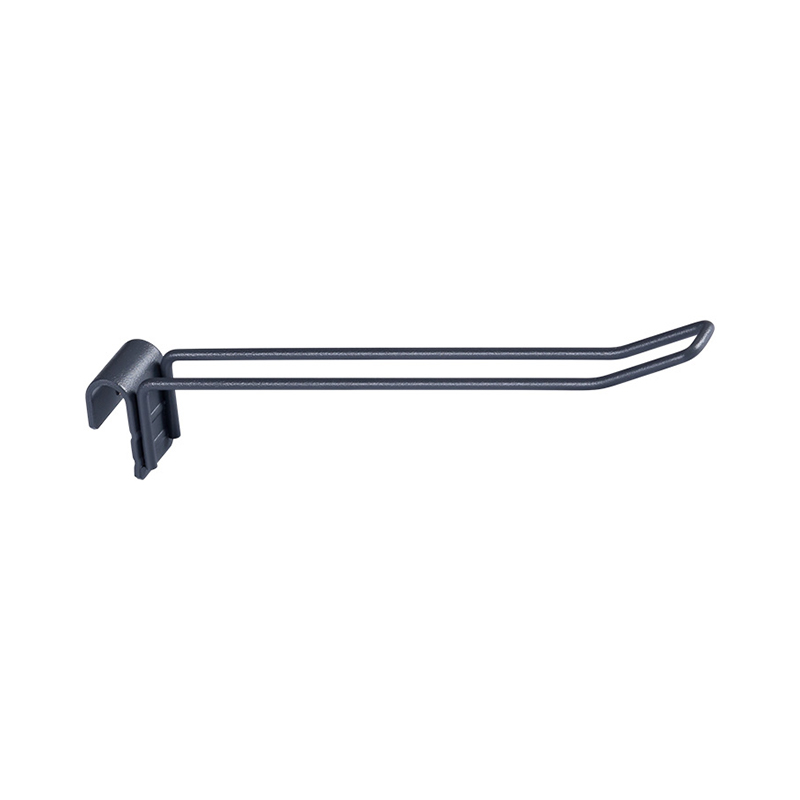
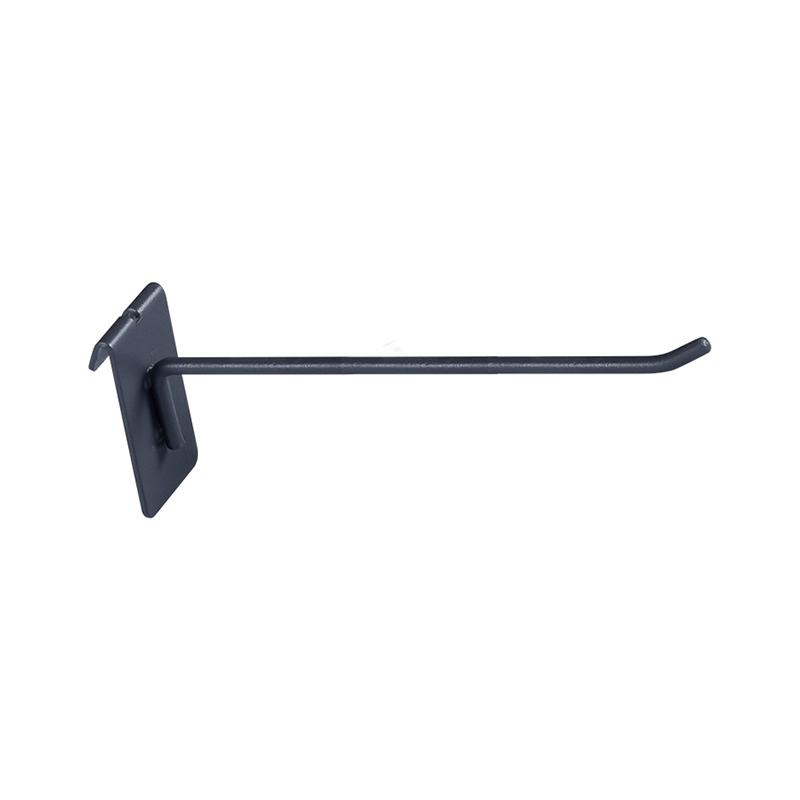
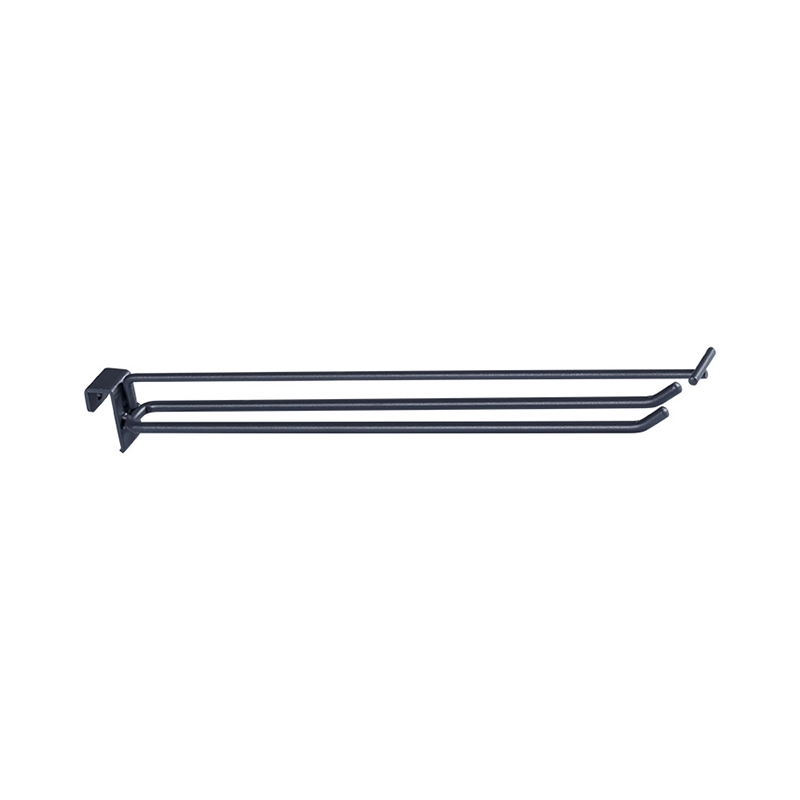
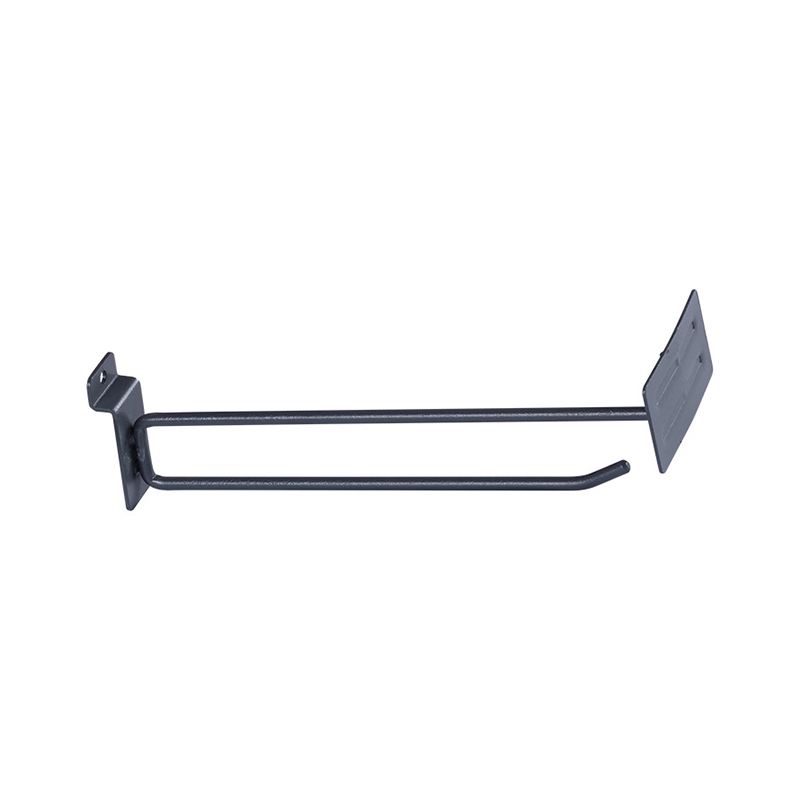
The basic design focuses on simplicity and functionality. A typical single wire display hook includes a mounting section connected to a horizontal wire arm. The rear mounting structure attaches securely to display panels or fixtures, while the extended hook section supports merchandise packages with hanging holes or retail packaging slots.
The main purpose of this design is to provide easy product access while maintaining a clean visual arrangement. Customers can quickly identify products, remove items from the display, and return products without affecting the overall organization.
The working principle is based on weight distribution and secure attachment. When installed correctly, the mounting section transfers product weight to the display structure, while the metal wire provides sufficient strength to support the merchandise.
Depending on product requirements, manufacturers can adjust several technical factors:
- Wire diameter
- Hook length
- Mounting style
- Load capacity
- Surface treatment
- Packaging method
Different retail environments require different specifications. For example, a convenience store displaying lightweight accessories may choose a standard wire hook, while a hardware retailer displaying heavier tools may require a heavy duty single wire display hook with increased material strength.
Product Structure and Specification Overview
| Product Feature | Description |
|---|---|
| Product Name | Single Wire Display Hook |
| Main Material | Steel wire / Metal wire |
| Surface Treatment | Chrome plating, zinc coating, powder coating |
| Installation Compatibility | Pegboard panels, slatwall systems, retail fixtures |
| Design Type | Single arm hanging display structure |
| Length Options | Customized according to product size |
| Load Capacity | Standard and heavy duty options available |
| Application Areas | Supermarkets, retail stores, hardware shops, exhibitions |
| Customization | OEM sizes, finishes, packaging, and designs |
The Importance of Single Wire Display Hook in Retail Merchandising
Retail merchandising is not only about placing products on shelves. It involves creating an organized environment where customers can easily discover, evaluate, and purchase products. Display accessories such as retail display hooks contribute significantly to this process by improving product arrangement and store efficiency.
Maximizing Retail Space Utilization
One of the biggest advantages of using a single wire display hook is its ability to maximize limited retail space.
Many modern stores operate in smaller areas where every square meter is valuable. Traditional floor shelving systems may occupy significant space, limiting the number of products that can be displayed. By using vertical display solutions, retailers can increase product capacity without expanding store size.
Wall-mounted display systems equipped with single wire display hooks allow businesses to transform unused wall areas into productive merchandising zones. This approach is especially useful for stores with large numbers of small products.
Common applications include:
- Hardware accessories
- Mobile phone accessories
- Beauty products
- Office supplies
- Kitchen tools
- Small household items
By arranging products vertically, retailers can create a more organized shopping environment while improving inventory visibility.
Improving Product Visibility and Customer Experience
Product visibility plays a major role in consumer purchasing behavior. When products are clearly displayed, customers can quickly identify available options and compare different items.
Compared with products placed inside drawers or crowded shelves, hanging merchandise provides several advantages:
- Better front-facing presentation
- Easier product comparison
- Faster inventory checking
- More attractive visual merchandising
A well-organized display using metal display hooks creates a professional store appearance. Customers are more likely to interact with products that are easy to access and clearly presented.
For retailers, this also improves staff efficiency. Employees can quickly identify missing products, replenish inventory, and maintain display standards.
Different Types of Single Wire Display Hooks for Various Retail Needs
As retail environments become increasingly diversified, businesses require display solutions that match different product categories, store layouts, and merchandising strategies. Although the basic concept of a single wire display hook remains simple, manufacturers have developed multiple variations to meet different application requirements.
From lightweight consumer goods to heavier industrial products, different hook designs provide different levels of support, flexibility, and visual presentation. Understanding these product variations helps retailers and distributors choose the most suitable display solution.
1. Standard Single Wire Display Hook: A Practical Solution for Everyday Retail Displays
The standard single wire display hook is the most commonly used version for general retail applications. It is designed for lightweight products that require simple hanging display methods.
This type of hook is widely used because of its:
- Easy installation
- Affordable production cost
- Flexible product arrangement
- Compatibility with common retail systems
Typical applications include:
- Small packaged accessories
- Stationery products
- Craft supplies
- Personal care items
- Household accessories
For retailers managing large quantities of small products, standard wire hooks provide an efficient way to organize merchandise while keeping shelves and counters less crowded.
The simple structure also allows store employees to quickly adjust product positions according to sales performance, seasonal promotions, or inventory changes.
2. Heavy Duty Single Wire Display Hook: Designed for Higher Load Requirements
For products with greater weight requirements, retailers often choose a heavy duty single wire display hook. Compared with standard versions, these hooks usually feature thicker wire materials, reinforced structures, and improved load-bearing capabilities.
Industries that frequently require heavy duty solutions include:
- Hardware stores
- Automotive accessory shops
- Industrial supply retailers
- Home improvement centers
Products displayed with heavy duty hooks may include:
- Tools
- Metal accessories
- Construction supplies
- Larger packaged items
The increasing demand for stronger display solutions reflects a broader trend in retail: businesses want flexible displays without sacrificing product security.
A strong and reliable hook system helps prevent product falling risks while maintaining a professional store environment.
Heavy Duty Single Wire Display Hook Advantages
| Feature | Benefit |
|---|---|
| Thicker Wire Structure | Provides higher support strength |
| Reinforced Mounting Area | Improves installation stability |
| Durable Metal Construction | Suitable for long-term retail use |
| Flexible Installation | Works with multiple display systems |
| Custom Dimensions | Matches different product requirements |
3. Pegboard Single Wire Display Hook: Flexible Display Solution for Modular Retail Systems
The pegboard single wire display hook is one of the most popular options for modular retail environments.
Pegboard systems are widely used because they allow businesses to reposition hooks, shelves, and accessories without replacing the entire display structure.
This flexibility makes pegboard solutions suitable for:
- Hardware shops
- Tool displays
- Supermarkets
- DIY stores
- Warehouse retail environments
A pegboard single wire display hook is typically installed through evenly spaced holes on a pegboard panel. Store operators can quickly adjust hook positions according to product size and sales requirements.
For example:
A store selling seasonal products may frequently change product layouts. During holidays, promotional items may require additional display space. After the promotion ends, the same display area can be reorganized for different merchandise.
This adaptability reduces operational costs and improves store management efficiency.
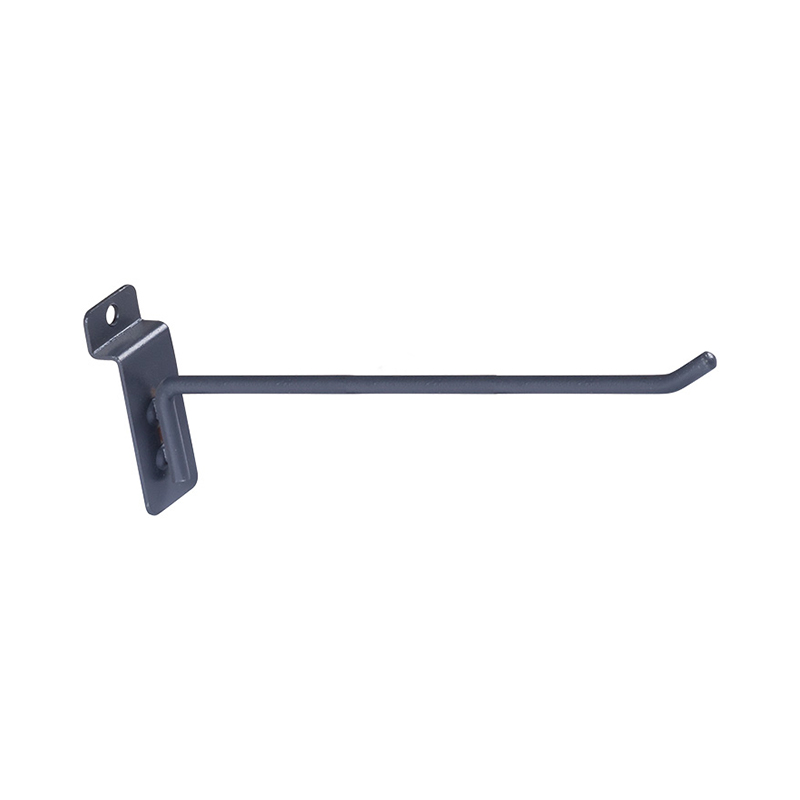
4. Slatwall Single Wire Display Hook: Enhancing Premium Retail Displays
Another important category is the slatwall single wire display hook, which is designed for slatwall display systems.
Unlike pegboard systems, slatwall panels feature horizontal grooves that allow accessories to be mounted at different positions.
Slatwall solutions are commonly found in:
- Fashion stores
- Electronics shops
- Specialty retailers
- Exhibition spaces
- Brand display areas
The main advantages include:
- Cleaner appearance
- More professional presentation
- Greater layout flexibility
- Compatibility with modern retail interiors
Many premium retail environments prefer slatwall systems because they provide a more refined visual effect compared with traditional display panels.
By combining slatwall panels with metal display hooks, retailers can create attractive product walls that improve both aesthetics and functionality.
Comparison of Different Single Wire Display Hook Types
| Product Type | Main Characteristics | Recommended Applications |
|---|---|---|
| Standard Single Wire Display Hook | Lightweight, economical, easy to install | General retail products |
| Heavy Duty Single Wire Display Hook | Stronger structure, higher load capacity | Tools, industrial products, heavier merchandise |
| Pegboard Single Wire Display Hook | Flexible positioning and easy adjustment | Hardware stores, supermarkets, DIY shops |
| Slatwall Single Wire Display Hook | Premium appearance and modular design | Specialty stores and brand displays |
| Custom Wire Display Hook | Designed for specific requirements | OEM retail display projects |
The Growing Demand for Custom Single Wire Display Hook Solutions
As retail competition increases, businesses are no longer satisfied with standard display products. Many retailers now require customized solutions that match their product characteristics, branding requirements, and store layouts.
This has increased demand for custom wire display hooks from professional manufacturers.
A custom solution allows buyers to modify:
- Hook dimensions
- Wire thickness
- Mounting structure
- Surface finish
- Packaging style
For global retailers and distributors, customization provides several advantages:
- Better product compatibility
- Improved display efficiency
- Stronger brand presentation
- Reduced installation problems
Why Custom Wire Display Hooks Are Becoming More Popular
1. Different Products Require Different Hook Designs
Retail products vary significantly in size, weight, and packaging design.
For example:
A small electronic accessory may require a short hook, while a larger hardware product may need a longer and stronger structure.
A universal hook design cannot always provide the best performance.
Custom manufacturing allows suppliers to create solutions based on actual product requirements.
2. Customized Dimensions Improve Display Efficiency
The length of a display hook directly affects:
- Product quantity per display area
- Customer accessibility
- Visual arrangement
If the hook is too short, products may overlap and become difficult to view.
If the hook is too long, valuable display space may be wasted.
Therefore, customized dimensions help retailers achieve better space utilization.
3. Surface Treatment Improves Appearance and Durability
Modern retail environments pay increasing attention to visual quality.
Common surface finishes include:
Chrome Finish
Chrome finishing provides:
- Bright appearance
- Professional look
- Improved corrosion resistance
It is commonly used in supermarkets, shopping malls, and premium retail environments.
Zinc Coating
Zinc coating provides:
- Additional protection against rust
- Cost-effective durability
- Suitable performance for industrial applications
Powder Coating
Powder coating allows more color options and can help match customized store designs.
Customization Options for Single Wire Display Hook
| Custom Option | Available Solutions |
|---|---|
| Size Adjustment | Customized hook length and diameter |
| Material Selection | Steel wire, reinforced metal options |
| Surface Finish | Chrome, zinc, powder coating |
| Mounting Design | Pegboard, slatwall, customized fixtures |
| Packaging | Bulk packaging, individual packaging, export cartons |
| Branding Support | Customized labels and product identification |
How Single Wire Display Hooks Support Modern Retail Trends
The retail industry is moving toward flexible, efficient, and customer-focused display strategies. This transformation is creating new opportunities for display accessories such as single wire display hook products.
Modular Retail Design
One of the biggest trends in modern retail is modular store design.
Instead of permanent fixtures, retailers prefer systems that can be adjusted according to:
- Seasonal promotions
- Product changes
- Sales performance
- Store remodeling
Single wire display hook systems support this trend because they are easy to install, remove, and reposition.
Space Optimization in Smaller Retail Locations
Urban retail spaces are becoming smaller due to higher operating costs. Businesses need solutions that maximize every available area.
Vertical merchandising using display hooks allows stores to:
- Increase product capacity
- Reduce floor clutter
- Improve customer movement
- Create cleaner layouts
This makes single wire display hook solutions particularly valuable for compact stores.
Faster Inventory Management
Retail efficiency depends heavily on inventory management.
A clear hanging display system makes it easier to:
- Identify missing products
- Restock quickly
- Monitor sales performance
- Maintain organized displays
This operational advantage is another reason why retail businesses continue adopting wire-based display solutions.
Single Wire Display Hook vs Other Retail Hanging Solutions: Understanding the Differences
Retailers have many choices when developing product display systems. While shelves, cabinets, baskets, and large display fixtures all have their own advantages, the single wire display hook remains one of the most practical solutions for products that require vertical hanging presentation.
Choosing the right display method depends on several factors, including product size, store layout, customer interaction, inventory management, and budget considerations.
A comparison of different display solutions helps retailers understand why wire hooks continue to maintain strong demand in global retail markets.
Single Wire Display Hook Compared with Traditional Shelving Systems
Traditional shelving remains widely used for large products and bulk merchandise. However, shelving systems often require significant floor space and may limit product visibility when too many items are placed together.
A single wire display hook provides a different merchandising approach by allowing individual products to be displayed separately.
Advantages include:
- Better product visibility
- Higher vertical space utilization
- Easier product access
- Faster inventory checking
For retailers selling many small packaged products, hanging displays often provide better organization than traditional shelves.
For example, a hardware store may use shelving for large power tools while using display hooks for smaller accessories such as screws, connectors, and replacement parts.
This combination creates a more efficient store environment.
Single Wire Display Hook Compared with Display Baskets
Display baskets are commonly used for loose products or promotional merchandise. They can hold large quantities of items but may reduce product visibility.
Products inside baskets are often stacked together, making it difficult for customers to quickly identify individual items.
In comparison, retail display hooks create a front-facing product arrangement.
Benefits include:
- Each product remains visible
- Packaging information is easier to read
- Products are easier to compare
- Displays appear more organized
For products where packaging design influences purchasing decisions, hanging displays can provide a stronger visual impact.
Single Wire Display Hook Compared with Display Cabinets
Display cabinets provide protection and a premium appearance, especially for high-value merchandise. However, they usually require more investment and may reduce direct customer interaction.
Single wire display hooks provide a more open shopping experience.
Customers can:
- Touch products
- Remove items easily
- Compare different options
- Make faster purchasing decisions
Therefore, many retailers use cabinets for expensive items while using display hooks for everyday products.
Comparison Table of Retail Display Solutions
| Display Solution | Advantages | Limitations | Best Application |
|---|---|---|---|
| Single Wire Display Hook | Flexible, affordable, space-saving | Limited capacity for very heavy items | Small and medium packaged products |
| Shelving System | Large storage capacity | Requires more floor space | Bulk merchandise |
| Display Basket | Suitable for loose products | Lower product visibility | Promotional items |
| Display Cabinet | Premium appearance and security | Higher investment cost | High-value products |
| Rotating Display Rack | High product exposure | Requires dedicated space | Small accessories |
How Retail Businesses Choose the Right Single Wire Display Hook
Selecting the correct display hook is an important decision for retailers and distributors. A suitable hook should match the product weight, display system, environmental conditions, and operational requirements.
The following factors are commonly considered when purchasing retail display hooks.
1. Product Weight and Load Capacity
The first consideration is product weight.
Lightweight merchandise can usually be displayed with standard hooks, while heavier products require reinforced designs.
A heavy duty single wire display hook is often selected when products require:
- Greater support strength
- Longer service life
- Increased safety
- More stable product positioning
Choosing the correct load capacity helps prevent product damage and improves customer safety.
2. Display System Compatibility
Before purchasing display hooks, retailers need to confirm compatibility with existing fixtures.
The two most common systems are:
Pegboard Systems
Pegboard hooks are widely used because they provide flexible positioning.
Advantages:
- Easy installation
- Simple adjustment
- Low maintenance
Slatwall Systems
Slatwall hooks are preferred for more professional retail environments.
Advantages:
- Modern appearance
- Flexible layout design
- Suitable for premium stores
A professional supplier should provide different mounting options to support various retail requirements.
3. Material Quality and Surface Treatment
The quality of the metal material directly affects product performance.
Important factors include:
- Wire strength
- Bending resistance
- Corrosion protection
- Surface appearance
High-quality metal display hooks should maintain structural stability after long-term use.
Surface treatment is also important because retail environments require products that are both functional and visually attractive.
Chrome finishes are often selected for their clean appearance, while protective coatings improve durability.
4. Store Environment Requirements
Different environments create different requirements.
For example:
A supermarket may prioritize cost efficiency and easy maintenance.
A premium retail store may prioritize appearance and customized design.
A warehouse-style retailer may require stronger hooks for heavier products.
Therefore, selecting the right hook depends on the specific application environment.
Retail Buyer Selection Guide
| Selection Factor | Important Consideration |
|---|---|
| Product Weight | Choose suitable wire thickness and structure |
| Display Type | Match pegboard, slatwall, or custom fixtures |
| Material Quality | Ensure durability and long-term performance |
| Surface Finish | Select suitable appearance and protection level |
| Order Quantity | Consider wholesale purchasing needs |
| Customization | Evaluate OEM manufacturing capability |
Manufacturing Process of Single Wire Display Hooks
Behind the simple appearance of a single wire display hook is a precise manufacturing process that determines product quality, strength, and consistency.
Professional manufacturers typically use multiple production stages to transform raw metal wire into finished display components.
1. Material Selection
The manufacturing process begins with selecting suitable metal wire materials.
Common materials include:
- Steel wire
- Stainless steel wire
- Coated metal wire
Material selection depends on:
- Required strength
- Application environment
- Cost considerations
- Surface treatment requirements
For heavy duty applications, manufacturers usually select stronger wire specifications to improve load performance.
2. Wire Cutting and Forming
After material selection, the wire is processed according to the required dimensions.
Production steps include:
- Measuring wire length
- Cutting material
- Bending into designed shapes
- Creating mounting structures
Precision forming is important because small dimensional differences may affect installation compatibility.
3. Surface Treatment
After forming, products usually undergo surface finishing.
Common treatments include:
Chrome Plating
Used when customers require:
- Decorative appearance
- Smooth surface
- Retail-friendly presentation
Zinc Coating
Used for:
- Rust protection
- Industrial applications
- Cost-effective durability
Powder Coating
Used for:
- Custom colors
- Enhanced protection
- Special design requirements
4. Quality Inspection
Quality control is an essential part of manufacturing.
Inspection processes may include:
- Dimension checking
- Surface inspection
- Load testing
- Packaging inspection
Reliable quality control ensures that products maintain consistent performance during transportation and daily retail use.
Why Wholesale Single Wire Display Hooks Are Important for Global Retail Supply Chains
The growth of international retail networks has increased demand for wholesale single wire display hooks.
Retail chains, distributors, and fixture suppliers often purchase display accessories in large quantities because they need consistent products across multiple locations.
Wholesale purchasing provides several advantages:
Cost Efficiency
Large-volume orders usually reduce unit costs and improve supply chain efficiency.
Product Consistency
Standardized manufacturing ensures that different stores receive matching display components.
Supply Stability
Reliable suppliers help businesses maintain inventory availability and avoid display system interruptions.
Wholesale Single Wire Display Hooks for Retail Shops: Key Market Requirements
International buyers typically evaluate suppliers based on:
| Evaluation Factor | Buyer Concern |
|---|---|
| Manufacturing Capacity | Ability to handle large orders |
| Product Quality | Stable performance and durability |
| Customization Ability | Ability to meet special requirements |
| Delivery Reliability | Consistent supply schedules |
| Packaging Quality | Safe international transportation |
Conclusion
The evolution of modern retail has created increasing demand for display solutions that combine flexibility, efficiency, and practicality. Among various retail accessories, the single wire display hook continues to play an important role because it provides a simple yet highly effective way to organize merchandise.
From improving product visibility to maximizing retail space, this small but essential component supports many aspects of modern merchandising.
The growing popularity of custom wire display hooks reflects a broader industry movement toward personalized and adaptable retail solutions. Businesses are looking for display components that not only hold products securely but also contribute to better customer experiences and more efficient store operations.
Different versions, including pegboard single wire display hook solutions, slatwall compatible designs, and heavy duty single wire display hook models, allow retailers to select products based on specific requirements.

- Quick Links
- Home
- About Us
- Sustainable
- News
- Contact Us
- Products
- Supermarket shelf
- Storage rack
- Shopping cart
- Shopping basket
- Shelving Accessories
- Display rack
- Contact us
-
-
+86-18852916580

-
[email protected]

-
No. 9 Yongxin Road, Wangzhuang Industrial Park, Shanghu Town, Changshu City, Jiangsu Province, China

-

